
When I speak with homeowners about insulation, many wonder if spray foam is essential. Some see it as just an optional upgrade. However, failing to choose the proper insulation can lead to higher energy bills and comfort issues over time.
Yes, spray foam insulation really makes a difference. It seals gaps, blocks air leaks, and keeps heated or cooled air inside where it belongs. This means lower utility costs, better temperature control, and added protection for a building’s structure and indoor air quality.
I’ve seen firsthand that quality insulation isn’t a luxury—it’s essential for both efficiency and comfort. If you’re considering an upgrade or planning new construction, it’s necessary to understand how spray polyurethane foam works and why the right type matters for your home or business.
What is Spray Foam?
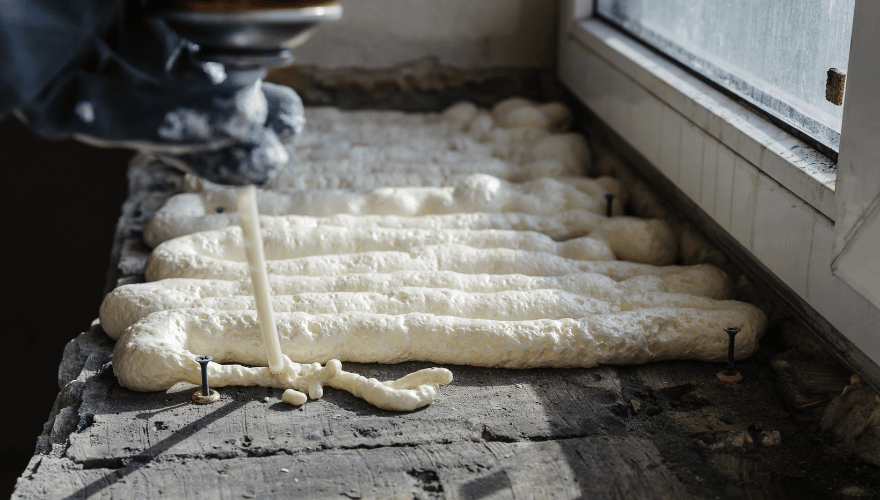
Spray foam insulation, or spray polyurethane foam (SPF), is a versatile insulation material applied as a liquid that expands into a solid foam. It’s created by mixing two chemical components, typically an isocyanate and a polyol resin, which react upon application. As the liquid is sprayed onto a surface, it expands rapidly to fill cracks, gaps, and cavities.
This expansion creates a continuous, airtight barrier. The material adheres firmly to nearly any substrate, including wood, steel, and concrete, forming a seamless layer of insulation and an air seal. This unique application process allows it to fit perfectly into irregular shapes and hard-to-reach areas.
Its ability to create a tight seal makes it highly effective at preventing air leakage. This contributes significantly to a building’s energy efficiency by reducing the workload on heating and cooling systems. The result is a durable, long-lasting insulation solution that helps control indoor climate and reduce energy costs.
This combination of properties makes spray foam a vital component in modern construction and retrofit projects, especially for creating energy-efficient, comfortable living or working spaces.

Types of Polyurethane Foam
When selecting spray foam insulation, it’s essential to understand the two main types available: closed-cell and open-cell foam. Each has distinct properties that make it suitable for different applications.
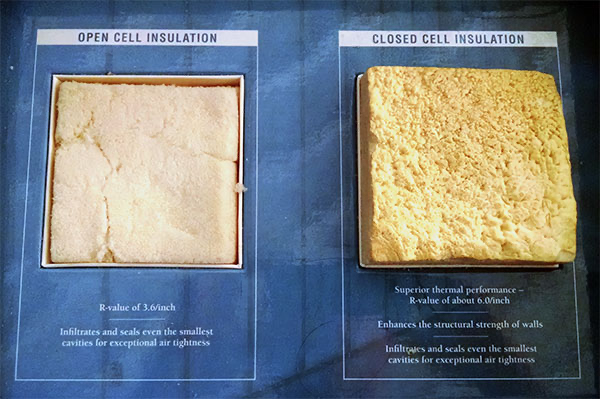
Closed-cell spray foam is dense and rigid. Its cell structure is completely enclosed, making it impermeable to both air and water. This type of foam has a higher R-value per inch, meaning it provides more insulation with less thickness. It also adds structural strength to the walls or roof where it is applied.
Open-cell spray foam is lighter, less dense, and more flexible. Its cells are not fully encapsulated, allowing it to act like a sponge that can absorb water. While it is an excellent air barrier, it is not a vapor barrier. It’s often used for sound-dampening applications due to its softer, more porous structure. The R-value per inch is lower than that of closed-cell foam.
Choosing the right type depends on the project’s specific needs. Factors like budget, location within the building, moisture exposure, and desired R-value all play a role in determining whether closed-cell or open-cell foam is the better choice.
Closed Cell vs Open Cell Spray Foam
The main differences between closed-cell and open-cell spray foam come down to density, R-value, moisture permeability, and structural integrity.
Closed-Cell Foam:
This type is known for its high R-value, typically ranging from R-6 to R-7 per inch. Its dense, rigid structure is made of tiny, enclosed cells filled with a gas that helps slow heat transfer. Because the cells are closed, they act as a powerful air and vapor barrier, making it ideal for exterior walls, crawl spaces, and basements where moisture control is crucial.
The rigidity of closed-cell foam also adds significant structural reinforcement to building assemblies. While it is more expensive than open-cell foam, its superior insulating properties and moisture resistance often justify the cost in specific applications. Its high density means it requires less space to achieve a high R-value.
Open-Cell Foam:
With an R-value of around R-3.5 to R-4 per inch, open-cell foam is less dense than closed-cell foam. The cells are intentionally left open, which creates a soft, flexible, and spongy texture. This structure makes it an effective air barrier but allows water vapor to pass through, so it is not recommended for areas prone to moisture.
It is an excellent sound absorber, making it a great choice for interior walls and media rooms to reduce noise transmission. Open-cell foam expands significantly more than closed-cell foam upon application, allowing it to fill every nook and cranny. It is also generally less expensive, providing a more budget-friendly option for projects where vapor control and structural rigidity are not primary concerns.
Applications of Spray Foam Insulation
Due to its versatility and superior performance, spray foam insulation is used in a wide range of settings, from new homes to large industrial buildings. Here are some of the most common applications for spray foam and the benefits it offers in each context.
Residential Insulation
A leading choice for homeowners, spray foam creates a complete air barrier, significantly improving energy efficiency and indoor comfort. It’s used to insulate walls, floors, and ceilings in both new construction and retrofit projects.
In residential settings, spray foam helps lower utility bills by sealing air leaks that traditional insulation might miss. It also acts as a barrier against pollen, dust, and other outdoor allergens, improving indoor air quality.
Commercial Uses of Spray Foam
Spray foam is highly valued in commercial construction for its durability and effectiveness. It is applied in warehouses, office buildings, retail centers, and agricultural structures to create a climate-controlled environment, protect inventory, and reduce operational costs.
Its ability to adhere to steel, concrete, and wood makes it ideal for metal buildings and large-scale projects. The seamless application ensures a consistent thermal barrier across vast roof and wall surfaces, preventing energy loss and condensation issues that can lead to mold and structural damage.
Specific Areas for Application: Attics and Roofs
Attics and roof decks are critical areas for insulation, and spray foam excels in these areas. When applied directly to the underside of the roof deck, it creates an unvented, or “conditioned,” attic space, shifting the building’s thermal envelope to the roofline.
This approach keeps the attic temperature closer to the living space below, which is beneficial for homes with HVAC equipment located in the attic. It also protects the roof structure from extreme temperature fluctuations and moisture, extending its lifespan.
In both residential and commercial buildings, insulating roofs with closed-cell spray foam can also add structural strength and provide a robust barrier against water intrusion, especially in regions prone to high winds and storms.
Components of Spray Foam Kits
For DIY projects or smaller professional jobs, spray foam kits provide a convenient way to apply insulation without the need for large, complex machinery. Here are the key parts of a typical kit and what they do.
Basic Components of a Spray Foam Kit
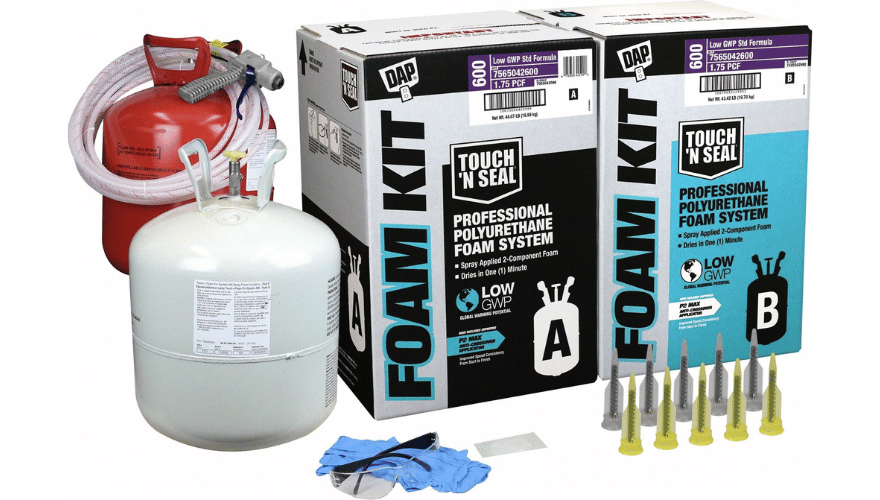
A standard kit includes two pressurized tanks containing the chemical components: the “A” side (isocyanate) and the “B” side (polyol resin). These tanks are connected to an application gun via hoses.
The kit also comes with extra nozzles, as the foam can quickly clog them. Users are provided with chemical-resistant gloves, eye protection, and sometimes a lubricant to maintain the dispenser gun.
Understanding the Dispenser
The dispenser, or application gun, is where the magic happens. It’s a tool that mixes the A and B components as they are released from the tanks. This mixing triggers the chemical reaction that creates the expanding foam.
The gun has a trigger that controls the flow of the chemicals. Different nozzles can be attached to the weapon’s tip to create various spray patterns, from a narrow stream for filling cracks to a broader fan for covering large surfaces. Proper handling and cleaning of the dispenser are crucial for a successful application.
Yield and Density of Spray Foam
The “yield” of a spray foam kit refers to the area it can cover, typically measured in board feet (one square foot at 1 inch thick). The yield depends on the foam’s density and the application conditions.
Closed-cell foam kits have a lower yield because the foam is denser, while open-cell kits cover more area because the foam is lighter and expands more. The final density impacts the foam’s R-value and structural properties, so choosing the right kit is essential for meeting project specifications.
Energy Efficiency and R-Value
One of the primary reasons property owners choose spray foam is its exceptional ability to improve energy efficiency, measured mainly by its R-value. Here’s a breakdown of how spray foam contributes to a more energy-efficient building and what R-value means in this context.
How Spray Foam Insulation Enhances Energy Efficiency
Spray foam’s key advantage is its ability to create a seamless air barrier. Unlike other insulation types that leave gaps, spray foam expands to fill every crack and crevice, preventing conditioned air from escaping and outside air from entering.
This air-sealing reduces the workload on HVAC systems, resulting in significant energy savings. It also helps maintain a more consistent indoor temperature, enhancing overall comfort and reducing drafts.
Comparing R-Values of Different Foam Types
The R-value of spray foam insulation varies significantly between open-cell and closed-cell types, making them suitable for different needs and budgets.
Closed-cell foam offers a much higher R-value, typically ranging from R-6 to R-7 per inch. Its dense structure and the blowing agent trapped within its cells make it a superior insulator. This high R-value means you can achieve excellent thermal resistance with less thickness, making it ideal for tight spaces.
Open-cell foam has a lower R-value, around R-3.5 to R-4 per inch. While it provides less thermal resistance per inch, its expansive nature ensures complete coverage and an effective air seal. It is often a more cost-effective choice for interior walls and areas where maximizing R-value in a thin layer is not the main priority.
Understanding R-Value in Foam Insulation
R-value is a measurement of thermal resistance, indicating how well an insulation material can resist the flow of heat. The higher the R-value, the greater the insulating power.
For foam insulation, R-value is determined by the material’s density and the type of gas trapped in its cellular structure. Closed-cell foam, for instance, contains a blowing agent that is more effective at resisting heat transfer than the air trapped in open-cell foam.
It’s essential to consider the total R-value needed for a specific application, as building codes often mandate minimum R-values for different parts of a structure, such as walls, roofs, and floors.
Installation Process and Best Practices
A successful spray foam application depends on proper technique and following best practices. Whether it’s a DIY kit or a professional job, understanding the process is key to achieving optimal results and ensuring safety.
Preparing the Area for Insulation
Before any foam is applied, the area must be clean, dry, and free of dust, grease, and debris. Any surface contaminants can prevent the foam from adhering properly, compromising the quality of the insulation barrier.
It is also crucial to cover any surfaces that should not be sprayed, such as windows, electrical outlets, and plumbing fixtures. Proper ventilation is required, and the applicator must wear appropriate personal protective equipment (PPE), including a respirator, goggles, and gloves.
Dispensing and Applying the Foam
The foam is applied using a specialized spray gun that mixes the two chemical components. The applicator should maintain a consistent distance from the surface, typically 18 to 24 inches, and apply the foam in smooth, even strokes.
The foam should be applied in thin layers, usually around one inch at a time, allowing each layer to cure before applying the next. This prevents the foam from overheating and ensures it cures properly throughout. The goal is to build up to the desired thickness without creating voids or overly thick spots.
Sealing Cracks and Gaps with Spray Foam
One of spray foam’s greatest strengths is its ability to seal air leaks. The applicator should pay special attention to common problem areas, such as joints where walls meet floors and ceilings, around window and door frames, and at any penetrations for wiring or plumbing.
Using a more focused nozzle, the foam can be precisely directed into these gaps. As it expands, it fills the space, creating an airtight seal that is far more effective than traditional caulking or weatherstripping at stopping air infiltration.
Maintenance and Safety Considerations
While spray foam is a durable, low-maintenance material, proper safety precautions during installation and periodic checks are essential. Here are some key considerations for maintaining your insulation and ensuring a safe application process.
Safety Tips for Using Spray Foam Kits
Working with spray foam chemicals requires strict adherence to safety protocols. Always wear personal protective equipment (PPE), including a properly fitted respirator, chemical-resistant gloves, and complete eye protection to prevent exposure to isocyanates.
Ensure the area is well-ventilated during and after application. Occupants and pets should vacate the premises during installation and for a recommended period afterward, typically 24 hours, to allow the foam to cure and off-gas fully.
Long-term Maintenance of Spray Foam Insulation
Once cured, spray foam insulation is incredibly stable and requires very little maintenance. It is inert and does not settle or degrade over time like some other insulation materials. It’s resistant to mold and pests, further reducing the need for intervention.
Periodically, visually inspect the foam for any signs of damage, such as cracks or punctures, especially after construction or renovation work in the area. However, under normal conditions, the foam should last the life of the building without requiring replacement or maintenance.
Addressing Common Issues with Spray Foam
Improper application is the source of most spray foam issues. If the foam is applied too thickly or in the wrong temperature conditions, it can pull away from studs or fail to cure correctly, resulting in a persistent chemical odor.
If you notice significant shrinkage or a lingering smell, it’s best to consult a professional insulation contractor. They can assess the situation and determine if the foam needs to be removed and reapplied. Choosing an experienced installer is the best way to prevent these problems.
Frequently Asked Questions
What is polyurethane spray foam, and how does it insulate?
Polyurethane spray foam, often called spray polyurethane foam insulation (SPF), is a two-component polymeric system (isocyanate and polyol) that expands and cures on contact to form a rigid or flexible foam. As it grows, it fills cavities, seals seams, and reduces air infiltration, creating a continuous barrier that improves energy efficiency by providing high thermal resistance — measured as r-value per inch — compared with many traditional insulation materials.
What is the difference between closed-cell and open-cell spray foam?
Closed-cell spray foam is a high-density, rigid formulation that uses a blowing agent to form small, closed cells, producing a strong, moisture-resistant barrier with a higher R-value per inch (often around 6–7) and structural benefits. Open-cell is lower in density and more flexible, making it better for interior sound absorption and filling irregular cavities. Closed-cell spray foam insulation is often chosen where a vapor and moisture barrier is required or where a fire-rated, rigid barrier is desired.
How do two-component systems, mdi and pmdi formulations, differ?
Component spray foam typically comes in a two-component container: an isocyanate (often a pmdi or mdi derivative) and a polyol blend with a catalyst and a blowing agent. pmdi-based systems are widely used for high-density, 2 lb and heavier foams; mdi variants can be used for specialized, low-viscosity or fast-cure applications. Formulation affects expansion, adhesion, cure speed, and final mechanical properties.
Can polyurethane spray foam be installed as a DIY insulation kit?
Insulation kits exist for small projects and typically include two containers, hoses, and a nozzle. While kits can be suitable for rim joists or small cavities, proper application requires attention to mixing ratios, ventilation, and technique to avoid bubbles, poor adhesion, or uneven cure. For large areas or where fire-rated insulation and NFPA compliance are needed, professional application is recommended.
How does spray foam affect moisture and ventilation in an interior space?
Closed-cell spray foam creates a moisture-resistant, impermeable barrier that can reduce condensation in walls and improve durability. However, because it seals air infiltration, proper ventilation planning is essential to maintain indoor air quality. Eliminating uncontrolled leaks can improve sustainability goals and reduce energy costs, but mechanical ventilation or HVAC adjustments may be needed after installation.
Is spray polyurethane foam safe regarding fire and flame spread?
Spray foam formulations can be made fire-resistant or require a fire-rated coating; many installations require an intumescent coating or thermal barrier to meet building codes and NFPA standards. Some high-density closed-cell foams offer better flame resistance, but the foam is typically protected with a protective coating or gypsum to achieve the required fire-rated insulation performance.
What are typical performance metrics — r-value per inch, density, and thickness?
Closed-cell foams often deliver R-values of about 6–7 per inch, while open-cell foams are lower. High-density 2 lb closed-cell systems are used where structural rigidity and higher R-value per inch are needed. Typical applications may specify 2 inches or more, depending on desired thermal resistance; installers calculate the required thickness to reach the target R-values and energy cost savings.
What are common problems during application, and how are they avoided?
Poor mixing, low viscosity, incorrect nozzle technique or contaminated substrate can cause bubbles, poor adhesion, rim or seam issues and incomplete cure. Using properly maintained containers, the correct catalyst levels, matched component temperatures, and following manufacturer application windows eliminates many defects. Skilled technicians also avoid over-spraying and ensure mechanical fastening where needed for structural or versatile installations.
What are the advantages and disadvantages of using polyurethane spray foam?
Advantages include high thermal resistance, air sealing, moisture resistance, reduced energy costs, and the ability to insulate irregular cavities and provide structural benefits. Disadvantages can consist of a higher upfront cost than some insulations, the need for trained installers, potential ventilation and code considerations, sensitivity to formulation and curing conditions, and the requirement for appropriate coatings or sealants to meet flame and NFPA requirements. Overall, spray foam remains a versatile insulation innovation when applied optimally.