
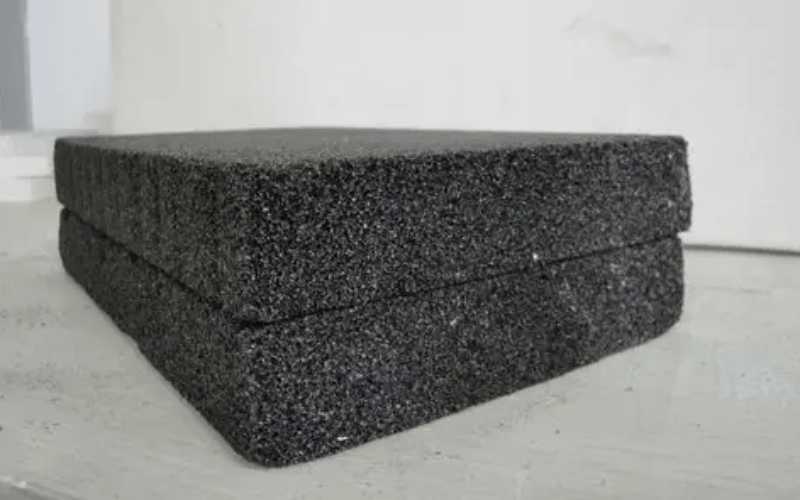
PU (Polyurethane) and PIR (Polyisocyanurate) are two prevalent types of insulation derived from similar chemical families, resulting in rigid foam boards or spray applications that often look pretty similar—but they are manufactured using distinct chemical ratios and processes.
When comparing the two, there is often confusion because they share a common lineage in urethane chemistry. Both are highly effective products, so when choosing which insulation is right for a project, the determining factor often comes down to specific performance metrics.
Thermal efficiency is a critical factor to consider when determining quality and suitability. PU and PIR insulation are both thermally efficient by nature, but is the difference in their thermal performance significant enough to dictate your choice?
We’ll look at how PU and PIR insulation are designed to perform thermally and determine whether the difference in efficiency is a necessary consideration for your specific needs. But first, let’s look at the composition of these foams.
What Are PU Foam and PIR Foam?
An everyday base chemistry found in high-performance insulation involves the reaction of diisocyanates and polyols. Both PU and PIR foams rely on these components, yet the resulting polymer structures differ significantly due to the chemical ratios used.
PU vs. PIR
PU (Polyurethane) foam typically uses a more balanced ratio of polyol to isocyanate (roughly 1:1). It creates a versatile insulation material known for its strong adhesive properties and flexibility. It is widely used in applications ranging from spray foam to refrigeration panels and structural insulated panels (SIPs).
PIR (Polyisocyanurate) foam, on the other hand, uses a significant excess of isocyanate in reaction to the polyol (often a ratio higher than 2:1). This excess isocyanate reacts with itself to form isocyanurate ring structures. These ring structures are highly stable and rigid. This chemical difference means that while PIR is technically a type of polyurethane, its distinct molecular structure gives it enhanced properties, particularly regarding thermal resistance and fire performance.
Both are generally closed-cell foams, which contribute to their high insulating value. However, the cross-linking in PIR is denser, resulting in a more rigid, more chemically stable foam compared to standard PU.
When Does Thermal Efficiency Matter?
So, when does the slight difference in thermal efficiency really matter in terms of insulation selection?
The honest answer is: it depends heavily on the space constraints and the specific thermal goals of the building envelope.
In modern construction, thermal efficiency is paramount for energy savings and reducing carbon footprints. For applications where space is at a premium—such as retrofitting older buildings or insulating shipping containers—every millimeter of thickness counts. Here, the material with the highest thermal resistance per inch becomes the critical choice.
For roofing, walls, and cold storage applications, thermal efficiency is critical. These areas are the primary sources of heat loss (or heat gain) in a structure. However, in standard cavity walls where there is ample room for insulation, the difference between PU and PIR might be negligible because you can increase the thickness of the PU foam to match the performance of the PIR.
While both PU and PIR foams are thermally efficient compared to materials like mineral wool or EPS, the choice often depends on the specific application and environmental conditions. If you are building a cryogenic freezer or a high-performance passive house, the superior thermal stability of PIR might be non-negotiable. For general residential insulation, standard PU might offer sufficient efficiency at a better price point.
Thermal Performance Testing
With industry-standard tests measuring thermal conductivity (lambda value) and thermal resistance (R-value), the results generally show a distinct advantage for PIR foam. PIR foam typically exhibits a lower thermal conductivity (around 0.022 W/mK) compared to standard PU foam (which often sits around 0.023 – 0.026 W/mK). This translates to a slightly higher R-value per inch for PIR.
When comparing R-values, PIR foam typically achieves R-6.0 to R-6.5 per inch, whereas standard PU foam generally ranges from R-5.5 to R-6.0 per inch. While these numbers might seem close, across a large surface area, such as a commercial roof, the difference in total insulation value can be significant.
However, it’s important to note the concept of “thermal drift.” Both foams rely on blowing agents trapped within the cells to provide insulation. Over time, some of this gas escapes and is replaced by air, slightly lowering the R-value. PIR’s stronger cross-linked structure can sometimes retain blowing agents more effectively, maintaining its high R-value longer.
While lab tests show apparent differences, the practical performance of both materials is often comparable in many standard applications. If a wall assembly allows 4 inches of insulation, the difference in total R-value between PU and PIR might be only R-2 or R-3. In real-world scenarios, installation quality—such as sealing gaps and preventing thermal bridging—often has a larger impact on the building’s overall energy performance than the minor difference in the foam’s intrinsic R-value.
PU Foam vs. PIR Foam: Which Is Right for Your Project?
PU foam and PIR foam are both excellent insulation choices that outperform many traditional materials in terms of thermal efficiency per inch. For most general construction purposes, including residential walls and standard gap filling, PU foam is an ideal choice due to its versatility, excellent adhesion, and cost-effectiveness.
However, if your project demands the absolute highest thermal resistance for a specific thickness, or if fire safety regulations require a material with better charring properties and lower smoke production, PIR is the superior option. It offers that extra edge in performance that critical infrastructure and high-efficiency buildings require.
Ultimately, the decision rests on balancing the budget against performance requirements. If you have the space, PU can do the job perfectly well. If space is tight and performance is king, PIR is the leader.