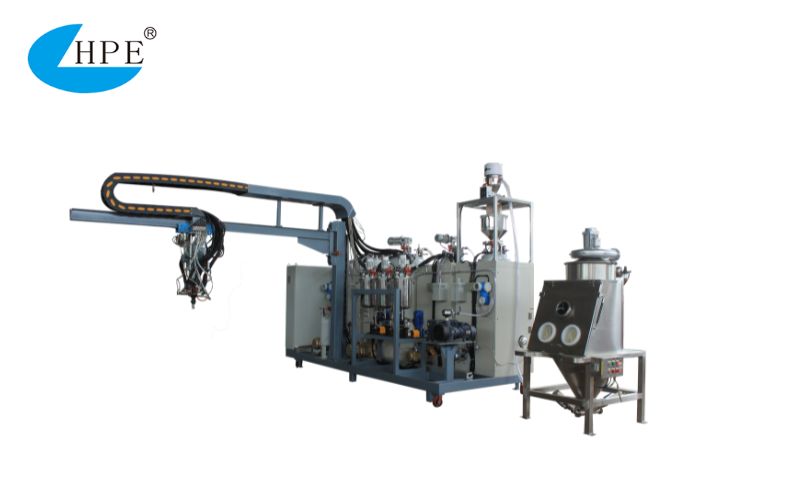
The working principle of polyurethane casting machines is mainly reflected in how different systems handle the mixing and dispensing of chemical components. These machines play a critical role in modern manufacturing, enabling the production of high-quality polyurethane products. Ensuring stable processing conditions directly impacts the final shape, durability, and performance of the molded materials.
To ensure optimal results in production, it is essential to understand the specific characteristics of various casting setups. This guide explains the working principles of different types of polyurethane casting systems. By examining non-metering, metering co-flow, and metering counter-flow setups, manufacturers can reasonably select the equipment that perfectly matches their unique material processing requirements.
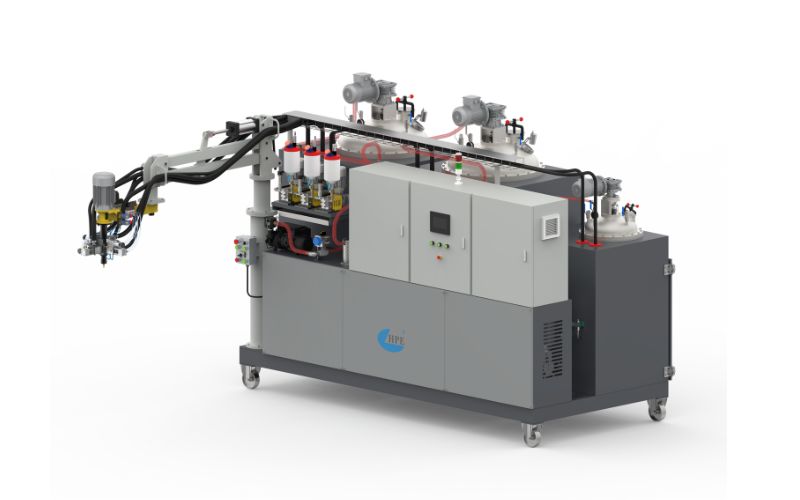
Non-Metering Polyurethane Casting System
Because these basic setups lack automated precision pumps, a non-metering polyurethane casting system relies heavily on manual or rudimentary mechanical flow control. Operators must physically measure and pour the polyol and isocyanate components into a central mixing chamber. The primary mode of operation depends entirely on the operator’s skill and timing to introduce the reactive liquids. This simplified approach eliminates complex electronic controls but introduces significant variables regarding the exact ratio of the chemical components entering the mix.
The material flow process in these systems involves directly gravity-feeding or manually pushing the chemicals together. Without the strict regulation of precise metering pumps, the flow rate can fluctuate wildly throughout the casting cycle. This lack of precise metering directly impacts the overall product consistency. The materials flow from their respective containers into the mixing vessel, where a standard mechanical stirrer attempts to blend them. Because delivery speed constantly changes, achieving a perfectly homogeneous mixture becomes incredibly difficult, leading to potential structural weaknesses.
Despite these inherent limitations in consistency, various non-metering systems still hold value in specific environments. They are generally only used for small-scale operations, basic laboratory testing, or experimental production runs. When high precision is not strictly required, these highly affordable setups provide a simple entry point for basic polyurethane mixing and limited-run prototyping.
Metering Co-Flow Polyurethane Casting System
The design of a metering co-flow polyurethane casting system introduces a highly structured approach to material handling. Because the system uses advanced gear or piston pumps, it can deliver precise ratios of polyol and isocyanate. The liquids move forward in the exact same direction and at carefully synchronized speeds. This highly controlled delivery ensures that the chemical balance remains perfect throughout the dispensing cycle, eliminating the unpredictable variables associated with manual pouring.
During the material flow process, the precision pumps continuously drive the exact volumes of liquid through separate lines directly into a dynamic mixing head. Because the pumps maintain a constant pressure, the materials are forcefully transferred into the mixing chamber together. Inside this chamber, high-speed rotors thoroughly blend the co-flowing liquids. This synchronized movement and forceful agitation are highly beneficial for material mixing and homogenization, ensuring that the chemical reaction occurs evenly throughout every drop of the dispensed liquid.
This kind of casting machine is mainly used for the high-volume production of incredibly consistent products. Because it guarantees a highly uniform cellular structure and exact physical properties, manufacturers rely on metering co-flow systems for demanding applications. They easily handle the continuous production of automotive parts, furniture cushions, and industrial rollers, where strict quality control is mandatory.
Metering Counter-Flow Polyurethane Casting System
In the highly advanced metering counter-flow polyurethane casting system, the machine utilizes a specialized injection method to handle highly complex formulations. The two reactive chemical streams are pumped at high pressure and directed to collide with each other from opposing directions inside the mixing chamber. Due to this aggressive collision, the machine can easily process high-viscosity materials and heavily filled resins that standard systems struggle to blend. This unique design ensures rapid, aggressive integration with the toughest chemical combinations.
When the material passes through the mixing head, the role of this counter-flow motion becomes immediately apparent. The opposing streams slam together, creating intense kinetic energy that forces the molecules to blend instantly. In this turbulent environment, the material is subjected to strong shearing and stirring forces without the need for traditional mechanical mixing blades. Therefore, the material’s plasticizing and blending are significantly better. This high-pressure impingement creates a perfectly mixed liquid that immediately flows out into the waiting mold.
Because the collision thoroughly shatters the chemical droplets, this setup delivers unmatched mixing quality. Metering counterflow systems are most often used for processing specialized or high-performance polyurethane products. They excel in the manufacturing of rigid insulation panels, structural composite materials, and advanced elastomers, where achieving absolute chemical perfection is required to ensure long-lasting structural integrity and extreme durability.
Conclusion: Choosing the Right Polyurethane Casting System
Selecting the correct equipment ultimately depends on your specific manufacturing goals. Non-metering systems offer an affordable solution for simple, experimental production where precision is not critical. Metering co-flow systems provide excellent consistency and homogenization for high-volume manufacturing. Meanwhile, metering counter-flow systems deliver intense mixing power, making them the absolute best choice for processing complex formulations and high-performance structural products.
At Henghui, we design industry-leading equipment tailored exactly to your unique processing demands. Explore our advanced polyurethane casting machine solutions today, and let our expert team help you optimize your production line for unmatched efficiency and superior product quality.