Polyurethane foam is a remarkably versatile and highly valuable material utilized extensively across a wide variety of modern industries. From insulating commercial buildings to providing cushioning for everyday furniture, this dynamic material plays an essential role in manufacturing countless consumer and industrial products. Its unique cellular structure allows manufacturers to adapt it for both flexible and rigid applications, making it a foundational component in global production and an indispensable asset for innovative product design.
This comprehensive guide explores the detailed production processes and the vast applications of polyurethane foam. We will delve into exactly what this material is, examine its foundational physical and chemical characteristics, and outline how specialized manufacturing equipment brings it to life. Furthermore, we will highlight the different types of advanced production lines available today, helping you understand how to optimize your manufacturing capabilities and meet diverse industrial demands effectively.
What is Polyurethane Foam?
Polyurethane foam is a synthetic, highly adaptable polymer created through a complex chemical reaction between specific liquid components. Scientists first discovered and developed polyurethane chemistry in the late 1930s, experimenting with various polymerization processes to create entirely new materials. They quickly realized that by altering the chemical structure, they could produce a unique cellular foam. This breakthrough led to widespread commercialization, initially providing critical lightweight insulation and later expanding into endless commercial and industrial uses.
What makes polyurethane foam truly stand out are its completely unique structural properties. Depending on the exact chemical formulation used during production, manufacturers can create foams that offer exceptional flexibility, long-lasting durability, and unparalleled thermal insulation. It can be engineered to be incredibly soft and resilient for comfortable seating or exceptionally rigid and tough for structural support. This incredible adaptability ensures that polyurethane foam remains a top choice for demanding engineering and manufacturing projects.
Characteristics of Polyurethane Foam
Flexible polyurethane foam exhibits outstanding elasticity, allowing it to compress, bend, and stretch freely without ever suffering permanent physical deformation. This remarkable resilience makes it an ideal choice for applications that require repeated cushioning, reliable shock absorption, and long-term ergonomic support in everyday consumer goods.
Rigid variations of polyurethane foam offer exceptionally high thermal resistance, creating a highly effective and reliable barrier against extreme heat transfer. Furthermore, the material naturally resists degradation from many harsh chemicals, oils, and greases, ensuring it remains highly durable and structurally stable even in challenging industrial environments.
Despite its incredibly low physical weight, rigid polyurethane foam boasts a remarkably high strength-to-weight ratio. This unique combination makes it highly valuable for demanding structural applications where engineers must actively minimize overall load weight while simultaneously maximizing the physical strength and stability of the finished product.
Polyurethane foam exhibits exceptional natural adhesion properties during its chemical curing process. It easily and permanently bonds with a wide variety of different substrates, including wood, metal, and heavy plastics. This strong adhesion capability actively enables the efficient production of highly durable, multi-layered composite materials and insulated structural panels.
How is Polyurethane Foam Produced?
Polyurethane foam is primarily produced by mixing two main liquid raw materials: polyols and diisocyanates. When combined, these chemicals undergo a rapid, exothermic polymerization reaction that forms the foundational polymer chains. To achieve the specific desired foam characteristics, manufacturers frequently add a carefully calculated blend of chemical catalysts, blowing agents, and specialized surfactants. These additives directly dictate whether the final foam product will cure into a flexible cushion or a highly rigid insulating panel.
Specialized polyurethane foaming machines play a critical and central role in this manufacturing process. These advanced machines feature highly precise pumps that draw the liquid chemicals from storage tanks and force them into a dynamic mixing head. Inside this mixing head, the components are vigorously blended together at specific ratios to ensure complete homogenization. The machine then directly dispenses the reacting liquid mixture into a waiting mold or onto a continuous conveyor for final shaping.
Maintaining precise temperature and pressure control throughout the entire dispensing process is absolutely vital. Accurate regulation ensures uniform chemical mixing, consistent cellular expansion, and defect-free curing. Proper control guarantees that the final foam product consistently meets strict quality, density, and performance standards.
Types of Polyurethane Foam Production Lines
Polyurethane Mold Foaming Liner Production Line
The Polyurethane Mold Foaming Liner Production Line provides an incredibly affordable and highly efficient solution perfectly suited for small-scale production needs. With a strong emphasis on equipment reliability and mechanical simplicity, this straightforward system actively helps small businesses maintain cost-effective manufacturing while consistently achieving high-quality foam output.
Polyurethane Mold Foaming Disk Production Line
Engineered for medium- to large-batch production, the Polyurethane Mold Foaming Disk Production Line is a fully automated, high-tech manufacturing system. It seamlessly integrates advanced PLC controls and pneumatic carriers to maximize overall production efficiency, dramatically minimize human labor, and consistently maintain exceptional product quality.
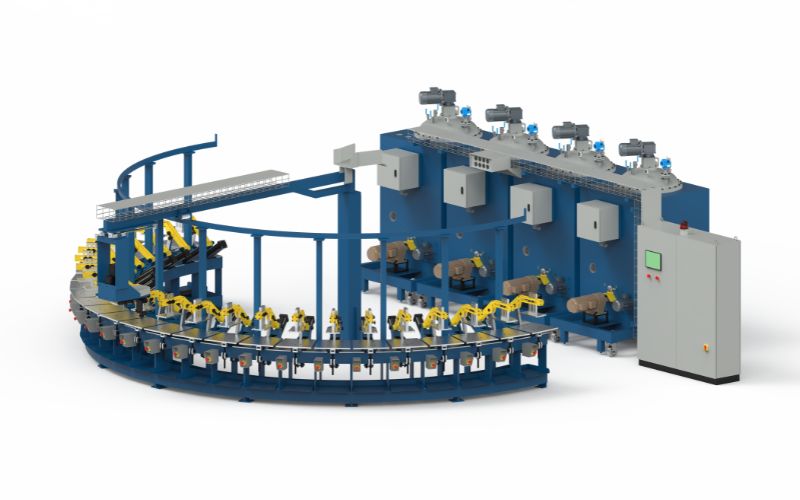
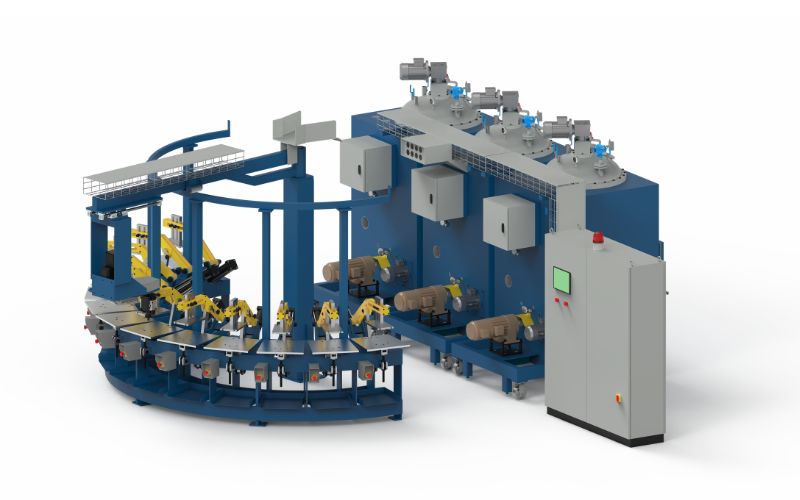
Polyurethane Mold Foaming Semicircular Line
Small-scale manufacturing operations and limited-activity businesses will deeply appreciate the Polyurethane Mold Foaming Semicircular Line. Featuring a highly simplified structural design and manual operation, this line is the absolute best option for executing an efficient, low-cost, low-investment foam production strategy.
Polyurethane Mold Foaming Ground Rail Production Line
Representing state-of-the-art manufacturing technology, the Polyurethane Mold Foaming Ground Rail Production Line is specifically designed for the mass production of medium- to large-sized products. It features automated ground-rail conveyors and highly precise temperature controls to deliver unmatched reliability, speed, and continuous production for demanding industrial applications.
Applications of Polyurethane Foam
In the modern construction industry, rigid polyurethane foam is heavily utilized to produce highly efficient thermal insulation and exceptionally durable structural panels. It actively minimizes energy loss in commercial buildings, effectively insulates roofing systems, and seals critical structural gaps to ensure long-lasting environmental protection and robust structural integrity.
The automotive and aerospace industries rely extensively on polyurethane foam to manufacture essential lightweight components. Manufacturers use it to create highly resilient car seating, shock-absorbing dashboards, and sound-dampening acoustic panels. This vital material actively reduces overall vehicle weight, improving fuel efficiency while significantly enhancing passenger comfort.
Flexible polyurethane foam is a foundational material within the global furniture, bedding, and protective packaging sectors. It provides the essential, long-lasting cushioning found in premium mattresses and comfortable sofa cushions. Additionally, custom-molded foam inserts offer superior shock absorption to safely protect delicate, high-value items during complex shipping processes.
Why Choose Henghui for Polyurethane Foam Production?
Polyurethane foam is a remarkably adaptable and valuable material, offering incredible benefits like superior thermal insulation, durable cushioning, and structural strength. Understanding its unique characteristics and mastering its precise production processes allows modern manufacturers to continuously innovate and efficiently produce high-quality goods across numerous demanding global industries.
Are you ready to elevate your manufacturing capabilities? We encourage you to explore Henghui’s advanced production lines and specialized polyurethane solutions tailored exactly to your unique operational needs. Contact Henghui today to discover how our industry-leading equipment can seamlessly optimize your foam production and drive your business forward.