
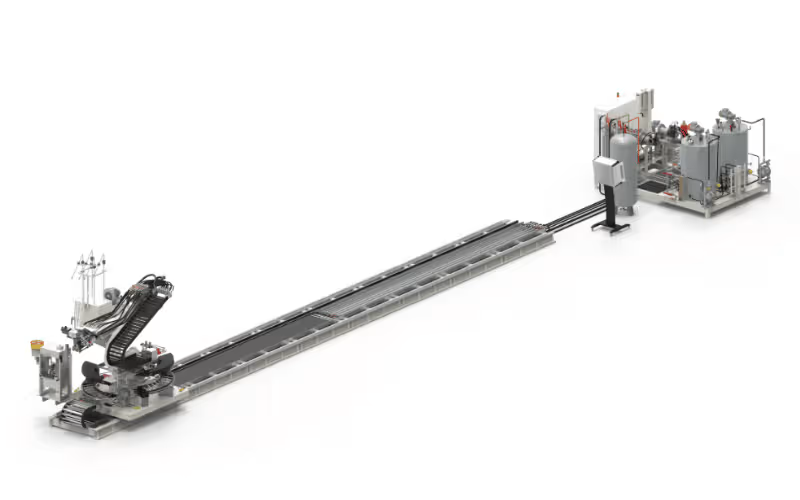
Long fiber injection molding (LFI) stands as a groundbreaking process in materials engineering. This innovative technique enhances fundamental material properties by seamlessly incorporating long continuous fibers into liquid polymers. Manufacturers rely on this advanced method to bridge the gap between traditional plastics and heavy metals. By integrating these elongated fibers, the resulting composites boast remarkable structural integrity without adding unnecessary bulk. This process is especially critical for developing lightweight, high-strength materials required by demanding sectors such as automotive manufacturing, aerospace engineering, and heavy construction. Mastering these concepts allows engineers to push the boundaries of modern product design.
Understanding LFI opens new doors for product design and manufacturing efficiency. In this comprehensive guide, we will explore the core mechanics of long-fiber injection molding and why it outpaces traditional methods. You will discover exactly how this technology transforms basic polymers into incredibly resilient composites. We will also examine its diverse applications across various major industries, from modern electric vehicles to life-saving medical devices. Finally, we will highlight the exciting future trends and technological innovations that will continue to shape the evolution of long fiber injection molding in the coming years. Let us dive into the essentials.
What is Long Fiber Injection Molding?
Long fiber injection molding is a specialized manufacturing process designed to create highly durable composite parts. The procedure begins by melting a base polymer resin until it reaches a precise liquid state. Next, continuous strands of fiber—rather than short, chopped fibers—are introduced into the molten polymer matrix. Specialized equipment carefully mixes these long fibers to prevent them from breaking or degrading during blending. Finally, the machine injects this fiber-rich mixture into a custom mold under high pressure. Once the material cools and solidifies, the resulting component retains the elongated fiber structure within its core.
The length of these embedded fibers plays a critical role in the final product’s performance. Because the fibers remain relatively long, they create an internal skeletal network that effectively transfers stress throughout the entire part. This interconnected matrix significantly improves key mechanical properties, including tensile strength, torsional stiffness, and overall impact resistance. When a physical load or a sudden force acts on the component, the long fibers absorb and distribute the energy, preventing cracks and structural failures. This makes the material exceptionally tough, even in extreme temperature environments.
Compared with traditional injection molding, LFI offers several distinct advantages. Traditional methods typically use short fibers, which improve basic stiffness but fail to provide substantial impact resistance. The short fibers cannot bridge microscopic gaps within the polymer, leading to brittle parts. Long fiber injection molding solves this problem entirely. By maintaining fiber lengths of several millimeters or more, LFI produces parts that rival the strength of lightweight metals like aluminum. This allows engineers to design thinner, lighter components without sacrificing structural integrity or overall safety.
Manufacturers utilize a variety of base materials and reinforcements depending on the application’s specific requirements. The most common base polymers include versatile thermoplastics like polypropylene, nylon, and polyurethane. These plastics melt easily and bond exceptionally well with reinforcing agents. For reinforcements, industrial glass fibers are the standard choice due to their excellent cost-to-performance ratio. However, for applications demanding extreme performance and minimal weight, engineers frequently opt for premium carbon fibers. The versatility of combining different thermoplastic resins with specific long fibers gives manufacturers unprecedented control over the final product. By tweaking the fiber concentration and polymer type, engineers can perfectly balance cost, weight, and durability for virtually any project.
.avif "LFI Long Fiber Injection Molding (1)")
Applications of Long Fiber Injection Molding
Automotive Industry
The automotive industry is one of the largest adopters of long-fiber injection molding technology. Automakers constantly seek innovative ways to reduce overall vehicle weight without compromising passenger safety or structural rigidity. LFI provides the perfect solution by enabling the creation of advanced polymer composites that successfully replace heavy traditional metal components. By replacing steel and aluminum with long-fiber-reinforced plastics, engineers significantly reduce the vehicle’s overall mass. This weight reduction directly translates to vastly improved fuel efficiency for combustion engines and extended battery ranges for modern electric vehicles.
Manufacturers apply this technology to a wide array of critical automotive parts. Lightweight bumper supports and crash absorbers heavily rely on LFI materials to provide superior impact resistance during collisions. The long internal fibers absorb crash energy effectively, protecting the vehicle’s occupants. Additionally, LFI composites frequently replace metal in large exterior body panels, such as tailgates, hoods, and door modules. These parts resist dents and corrosion while keeping the vehicle’s center of gravity remarkably low.
Furthermore, under-the-hood components benefit immensely from these advanced materials. Engine covers, battery trays, and intricate structural mounts must withstand intense vibrations, harsh chemical exposure, and extreme temperature fluctuations. Long fiber injection molding delivers parts that maintain their dimensional stability under these grueling conditions. By utilizing LFI, automakers streamline production, reduce manufacturing costs, and deliver safer, more efficient vehicles to consumers. This continuous push for efficiency ensures that long fiber composites will remain a cornerstone of automotive engineering for decades, driving the industry toward a lighter, greener future.
Aerospace and Defense
The aerospace and defense sectors demand materials that offer extreme performance under the most unforgiving conditions. Long fiber injection molding meets these rigorous standards by producing lightweight, high-strength components essential for modern aircraft and tactical defense systems. In aviation, every single ounce of weight directly impacts fuel consumption and payload capacity. LFI enables engineers to manufacture complex structural brackets, cabin seat frames, and overhead storage compartments that weigh a fraction of their metal counterparts while delivering equivalent structural integrity.
Beyond basic structural components, these advanced composites serve highly specialized functions within defense applications. LFI processes allow the integration of specific additives that enhance thermal insulation, protecting sensitive flight instruments from freezing at high altitudes. Additionally, specialized long fiber composites contribute to the development of radar-absorbing materials used in stealth aircraft technology. The precise distribution of fibers and additives within the polymer matrix helps dissipate radar waves effectively.
By leveraging long fiber injection molding, aerospace manufacturers reduce aircraft weight, enhance structural safety, and develop advanced defense capabilities that protect military personnel in the field. This technology also accelerates production cycles, enabling aerospace companies to manufacture complex, consolidated parts quickly, thereby reducing assembly time and lowering overall aerospace manufacturing costs.
Construction Industry
The construction industry benefits tremendously from the durability and weather resistance offered by long-fiber injection molding. Builders and architects constantly seek materials that can withstand harsh environmental exposure while remaining easy to transport and install. LFI produces robust polymer composites that resist rotting, rusting, and chemical degradation, making them far superior to traditional wood or unreinforced plastics. These materials maintain their structural strength even after decades of exposure to blistering sun, heavy rain, and freezing temperatures.
Manufacturers use LFI extensively to produce reinforced architectural panels and exterior cladding. These lightweight panels provide excellent impact resistance against hail and storm debris while drastically reducing the load on a building’s foundation. Furthermore, long-fiber composites are ideal replacements for traditional heavy roofing materials. Composite roof tiles offer superior weatherproofing and require significantly less routine maintenance over their lifespan.
Additionally, LFI processes can incorporate specialized foaming agents to produce structural components with built-in thermal insulation. These insulated beams and framing elements improve a building’s overall energy efficiency, reducing heating and cooling costs. Through these innovations, long fiber injection molding helps construct safer, more resilient, and highly sustainable infrastructure. As construction demands evolve, these advanced composites will continue replacing traditional building materials across commercial and residential development projects worldwide.
Consumer Goods and Packaging
Long fiber injection molding plays a pivotal role in enhancing the durability and functionality of everyday consumer goods. Manufacturers use this process to create lightweight, durable products that withstand daily wear and tear. In the realm of professional and recreational sports equipment, LFI technology proves invaluable. Sporting goods such as bicycle frames, ski bindings, and protective helmets require materials that can absorb sudden shocks without fracturing. The continuous fibers within LFI composites provide the necessary impact resistance to protect athletes and improve athletic performance.
Household goods also benefit significantly from the integration of long fiber composites. Items like heavy-duty tool handles, lawnmower decks, and robust furniture frames utilize these materials to replace heavier metals and brittle standard plastics. This transition results in consumer products that are highly ergonomic, incredibly long-lasting, and highly resistant to environmental degradation.
Furthermore, the packaging industry leverages LFI to develop rigid, reusable transport containers and heavy-duty industrial pallets. These reinforced packaging solutions protect valuable cargo during rough transit while minimizing shipping weight. By extending the lifespan of consumer products and packaging materials, long-fiber injection molding delivers greater value to users and reduces overall material waste in the consumer market. This makes LFI a crucial technology for modern consumer manufacturing.
Healthcare Industry
The healthcare industry relies on long fiber injection molding to produce highly precise, biocompatible materials for critical medical applications. Medical professionals require tools and devices that offer exceptional strength, precise dimensional stability, and resistance to repeated chemical sterilization. LFI meets these strict regulatory standards by utilizing high-performance, medical-grade polymers reinforced with specialized continuous fibers. These advanced composites replace heavy stainless steel in various applications, improving patient comfort and reducing physician fatigue during long procedures.
One of the most notable applications of LFI involves the manufacturing of advanced prosthetics and orthotic devices. The high strength-to-weight ratio of long fiber composites allows engineers to design prosthetic limbs that are incredibly lightweight yet robust enough to support a patient’s full body weight. This vastly improves the user’s mobility and overall quality of life.
Additionally, LFI technology is used to manufacture durable surgical instruments, specialized retractors, and robust external fixators. These composite tools maintain their structural integrity even after enduring high-temperature autoclave sterilization cycles. Furthermore, rigid medical packaging and equipment housings utilize LFI materials to protect sensitive diagnostic electronics from impact damage, ensuring life-saving equipment remains fully operational in emergency environments. This ensures ultimate reliability when patient health is at stake.
Electronics and Electrical Industry
The electronics and electrical industry relies on long-fiber injection molding to ensure the structural integrity and safety of sensitive devices. Electronic components require protective housings that resist severe impacts, dissipate heat, and prevent electrical interference. LFI produces highly durable, non-conductive polymer composites that perfectly shield delicate internal circuitry from physical damage and moisture ingress.
Manufacturers frequently use these advanced materials to create rigid protective casings for industrial computers, heavy-duty power tools, and outdoor telecommunication equipment. The long fibers prevent the plastic housings from cracking under stress, protecting the expensive electronics inside. Additionally, specialized LFI composites help manufacture robust structural supports for large circuit boards and electrical switchgears.
By incorporating flame-retardant additives into the long fiber matrix, engineers also produce safe, heat-resistant components for high-voltage wire insulation and electrical connectors. These LFI materials ensure consumer safety and device longevity in demanding electrical environments.
Future Trends in Long Fiber Injection Molding
The future of long-fiber injection molding centers on environmental sustainability and green manufacturing practices. As global industries push to reduce their ecological footprint, manufacturers are actively exploring bio-based polymers to replace petroleum-derived plastics. Engineers are successfully combining these eco-friendly resins with natural, renewable fibers like hemp, flax, and bamboo. Furthermore, the industry is heavily investing in highly recyclable thermoplastic composites. These recyclable materials enable end-of-life products to be melted down and reprocessed into new components without significant loss of structural integrity, creating a truly circular economy for advanced long-fiber composites and reducing global landfill waste.
Advancements in materials science will soon introduce revolutionary additives into the long-fiber injection molding process. Researchers are currently experimenting with incorporating advanced nanomaterials, such as graphene and carbon nanotubes, directly into the fiber-reinforced polymer matrix. These nanoscale additions exponentially enhance the material’s thermal conductivity, electrical shielding, and baseline mechanical strength. Concurrently, the development of smart materials represents a massive leap forward. Engineers are developing self-healing composites that can automatically repair microscopic internal cracks, as well as shape-memory polymers that return to their originally designed form after severe physical deformation, extending the lifespan of critical structural parts.
The integration of artificial intelligence and machine learning will fully optimize the manufacturing process for long-fiber composites. Advanced AI algorithms can actively monitor injection molding equipment in real time, instantly adjusting injection pressure, melt temperature, and fiber distribution. This smart automation drastically reduces material waste, minimizes cycle times, and ensures perfect consistency across thousands of production units. Machine learning models will also help engineers predict exactly how a specific fiber-polymer combination will perform under stress, eliminating the need for costly physical prototyping and accelerating the overall product development cycle, saving companies millions of dollars annually.
These technological leaps will drive massive industry-specific advancements over the next decade. In the automotive and aerospace sectors, the continuous refinement of ultra-lightweight carbon fiber LFI processes will enable the production of highly efficient, next-generation electric vehicles and commercial aircraft. Meanwhile, the healthcare industry will benefit from new biocompatible long fiber composites that actively resist bacterial growth while providing superior structural support for joint replacements. As manufacturing capabilities expand, long-fiber injection molding will undoubtedly remain at the forefront of industrial materials innovation, solving complex engineering challenges worldwide and pushing the boundaries of what modern manufacturing can achieve.
Conclusion
Long fiber injection molding represents a truly transformative process in modern manufacturing. By seamlessly combining versatile liquid polymers with continuous reinforcing fibers, LFI enables the creation of incredibly lightweight, high-performance materials. This technology has revolutionized product design, offering unparalleled strength, impact resistance, and durability across major sectors like automotive, aerospace, construction, and healthcare. As environmental sustainability and digital automation continue to shape the industrial landscape, long fiber composites will rapidly evolve. Driven by ongoing innovations in smart materials and eco-friendly resins, long-fiber injection molding will undoubtedly continue to advance global engineering excellence and build a stronger, more sustainable future.