
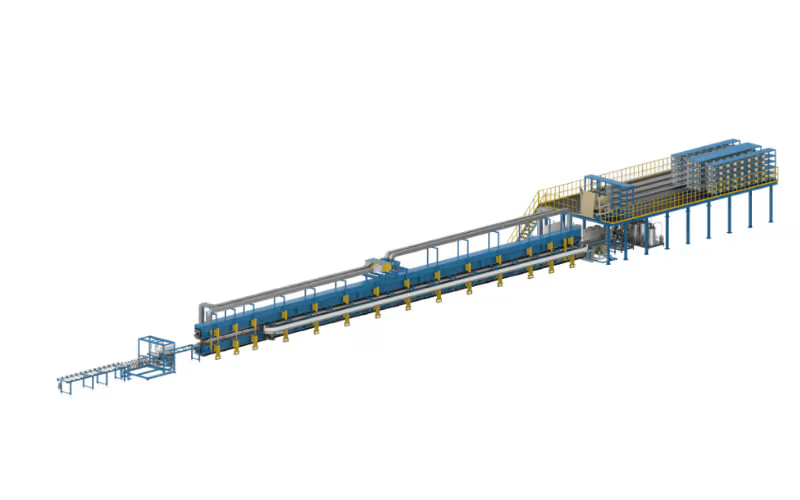
A composite profile extrusion production line is a highly advanced manufacturing system engineered to produce continuous composite profiles with significantly enhanced physical properties. By combining robust base polymers with reinforcing materials such as glass or carbon fibers, this continuous process produces structural shapes that offer exceptional strength, durability, and weight savings. Manufacturers rely heavily on this technology to supply critical, high-performance components to major sectors, including commercial construction, automotive, and aerospace.
As the demand for lightweight, high-strength materials continues to surge, understanding how these manufacturing systems operate becomes essential for industry professionals. This comprehensive guide will explain the fundamental mechanics of a composite profile extrusion production line, explore the different types of equipment available, and highlight its distinct operational benefits. You will also discover the diverse applications where these highly durable composite profiles are transforming modern engineering and product design.
What is a Composite Profile Extrusion Production Line?
At its core, a composite profile extrusion production line functions as a continuous manufacturing system that seamlessly processes advanced composite materials into perfectly shaped, continuous profiles. The entire operation relies on a series of carefully synchronized components working together to melt, blend, shape, and cool the composite mixture. The process begins with the precision feeding system, typically a volumetric or gravimetric hopper, which introduces raw polymer pellets and reinforcing fibers into the machine at a highly controlled rate.
From the feeding hopper, the material enters the main extruder. This core component features either a single or twin-screw mechanism housed inside a heavily heated, rugged metal barrel. As the screws rapidly rotate, they generate intense mechanical friction and thermal heat, efficiently melting the base polymer and thoroughly dispersing the reinforcing fibers. The screws then aggressively push this homogenous composite mixture forward until it reaches the custom-shaped die. The die acts as the primary molding tool, forcing the molten composite into its final, continuous shape.
Once the material exits the heated die, it immediately enters a dedicated cooling system, often consisting of chilled water calibration tanks. This rapid cooling locks the specific shape in place and actively prevents any structural deformation. Finally, specialized downstream equipment pulls, cuts, and safely stacks the finished composite profile for shipping. This brilliant setup offers spectacular versatility, allowing manufacturing facilities to efficiently handle a massive variety of complex materials, especially highly demanding fiber-reinforced polymers.
Types of Composite Profile Extrusion Production Lines
Single Screw Extrusion Lines
Single screw extrusion lines represent the most common and straightforward type of equipment found in composite manufacturing facilities. These machines use a single continuous rotating screw to melt the polymer and push the composite through the heated barrel. Because of their relatively simple mechanical design, they are incredibly cost-effective to purchase and exceptionally easy for factory staff to operate and maintain. Manufacturers frequently rely on single-screw setups for standard, high-volume applications that do not require intense distributive mixing. They are the perfect choice for producing basic composite profiles with excellent consistency and reliable structural integrity.
Twin Screw Extrusion Lines
Twin screw extrusion lines feature two intermeshing screws that rotate within the heated barrel, providing spectacular dispersive and distributive mixing capabilities. This highly advanced configuration makes them completely indispensable for processing highly complex composite formulations. The aggressive shearing action guarantees a perfectly homogenous blend of the base polymer, reinforcing fibers, colors, and specialized chemical additives. Consequently, twin screw machines excel in demanding applications where precise fiber dispersion is critical. They are the absolute preferred choice for manufacturing high-performance composite profiles for rigorous, heavy-duty industries that demand uncompromising material strength.
Specialized Extrusion Lines
Specialized extrusion lines are custom-engineered to handle highly specific composite materials that standard extruders cannot process effectively. These unique systems easily accommodate hybrid composites and co-extrusion processes, allowing manufacturers to seamlessly produce complex multi-layer profiles featuring distinct interior cores and protective exterior weather coatings.
Benefits of Composite Profile Extrusion Production Lines
Superior Material Properties
One of the most massive advantages of utilizing a composite profile extrusion production line is its ability to produce parts with truly superior material properties. By expertly combining thermoplastic or thermoset resins with high-strength reinforcements such as glass or carbon fibers, these machines produce profiles with exceptional structural integrity. The resulting composite components boast exceptional tensile strength, remarkable dimensional stability, and incredible resistance to environmental degradation. Most importantly, they deliver this extreme durability while remaining remarkably lightweight, outperforming traditional building materials such as heavy steel, solid wood, or unreinforced aluminum in demanding environments.
Flexibility and Modularity
Composite profile extrusion production lines offer completely unmatched flexibility and seamless modularity for growing manufacturing operations. Factory managers can quickly swap out the front die to change the product’s shape entirely, moving from manufacturing hollow structural tubes to producing flat composite decking panels in just a few hours. Furthermore, the modular design of the barrel and screw elements enables these machines to adapt easily to different composite materials and specific production requirements. This incredible adaptability helps businesses scale their daily production volumes and rapidly adjust to sudden shifts in commercial demand.
Cost-Effectiveness
Extrusion systems are remarkably cost-effective because they generate virtually zero material waste during standard continuous operation. Modern extrusion lines also feature excellent energy efficiency, lowering daily operational power costs while maximizing total production throughput, which translates directly to higher overall profitability.
Applications of Composite Profile Extrusion Production Lines
Construction Industry
The global commercial construction industry relies heavily on advanced composite profile extrusion production lines to manufacture a wide range of essential building products. Facilities utilize these robust machines to continuously extrude heavy-duty, weather-resistant window frames, rigid door profiles, and tough structural reinforcements. Unlike traditional wood or metal, these extruded composite profiles actively resist severe biological rotting, deep rust, and harsh chemical degradation. This ensures that modern infrastructure projects feature reliable, highly energy-efficient, and structurally sound components that require virtually zero routine maintenance over their extended operational lifespans.
Automotive Industry
In the fast-paced automotive industry, composite extrusion lines play a monumental role in producing lightweight vehicle components. Automakers leverage these extruded composite profiles to manufacture rigid chassis reinforcements and aerodynamic trim pieces, which drastically improve vehicle handling, safety, and overall fuel efficiency.
Aerospace Industry
The aerospace industry relies extensively on these advanced production lines to manufacture high-strength, lightweight structural profiles. By utilizing advanced carbon fiber composites, aerospace engineers can produce highly rigid interior cabin supports and complex fairings that significantly reduce total aircraft weight and maximize essential payload capacities.
Conclusion
Composite profile extrusion production lines remain a fundamental cornerstone of modern industrial manufacturing. By offering spectacular material strength, incredible production flexibility, and exceptional cost-effectiveness, these continuous processing systems allow companies to produce everything from heavy-duty construction frames to lightweight aerospace supports. They play an absolutely critical role in advancing global manufacturing efficiency and driving continuous product innovation across dozens of major industries. As advanced automation, smart sensors, and highly eco-friendly composite materials continue to evolve rapidly, composite profile extrusion technology will undoubtedly lead the charge toward a much smarter, more productive manufacturing future.