
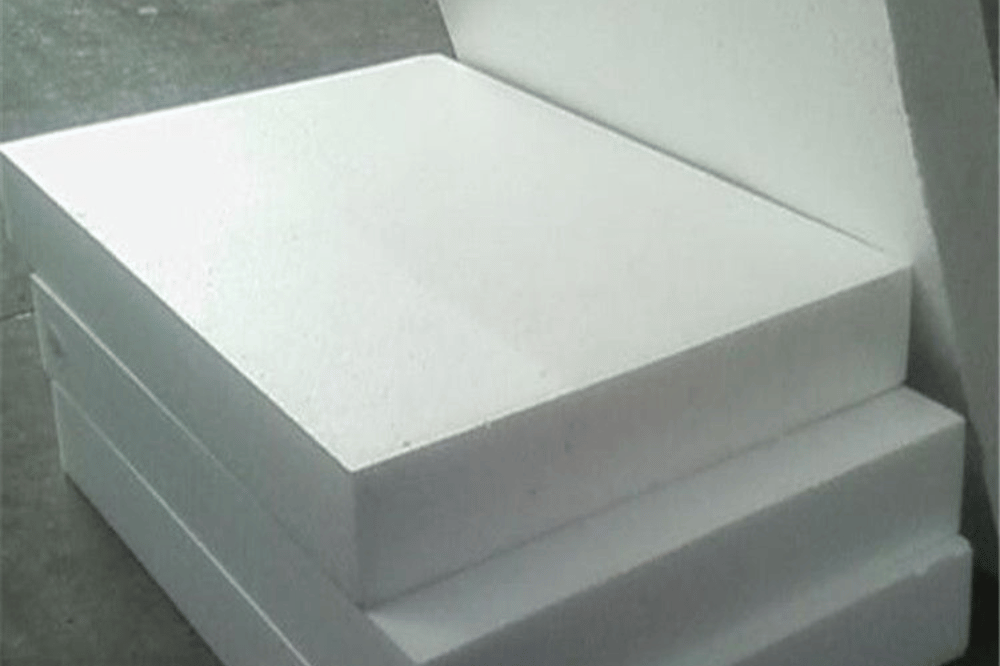
Polyurethane rigid foam delivers the highest thermal resistance of any commercial rigid board—up to R-8 per inch in closed-cell form—while resisting moisture, sealing air, and adding structural strength to panel systems. Whether it’s right for your project depends on your performance targets, climate zone, budget, and one factor most buyers overlook: the production equipment and process control behind the foam itself. For cold storage, sandwich panels, and performance-critical commercial builds, the case is strong. For budget-driven or below-grade jobs, cheaper boards may win.
Hold a piece of extruded polystyrene next to a piece of polyurethane rigid foam. They look almost the same—similar in size and weight, both rigid. But the chemistry underneath behaves completely differently once real operating conditions kick in. And that difference compounds over years of thermal cycling, moisture exposure, and mechanical load.
That’s the whole point of this guide. Picking rigid foam isn’t just a material spec. It’s a performance decision, an environmental decision, and—more than most people realize—a production-quality decision.
This article walks through what polyurethane rigid foam actually delivers, how it stacks up against XPS and EPS, where it fits best, when it doesn’t, and why the equipment producing the foam determines whether it performs as promised over 20 years or fails quietly after five.
What Is Polyurethane Rigid Foam Insulation?
Polyurethane rigid foam is a closed-cell insulation material made through a reactive process. A polyol component and an isocyanate component are metered, mixed at precisely controlled ratios, and dispensed against a facer or into a mold. The mixture reacts, expands, and cures into a dense cellular structure—typically 90% or more closed cells in a well-processed board.
That closed-cell structure is what gives polyurethane its exceptional thermal, dimensional, and moisture resistance. Trap gas inside sealed cells, and you get low thermal conductivity plus a physical barrier to water and vapor.
Polyurethane rigid foam belongs to a broader family of PUR (polyurethane) and PIR (polyisocyanurate) foams. Both come from the same polyol-plus-isocyanate chemistry. The difference is the isocyanate index: PIR uses a higher ratio and a different catalyst system, producing a more thermally stable foam with better fire performance. PUR offers greater processing flexibility and is often used in cold storage panels and structural applications.
In production, rigid foam usually takes three forms:
- Boardstock — continuous lamination lines produce panels bonded between facers (foil, glass mat, or coated kraft) for building insulation, roofing, and HVAC ductwork.
- Sandwich panels — structural insulated panels with metal skins and a rigid foam core, made on batch or continuous presses for cold storage rooms, industrial buildings, and refrigerated vehicles.
- Pour-in-place — foam dispensed into cavities or molds for appliances, water heaters, and specialty parts.
Here’s the part buyers miss: the foam is only as good as the equipment producing it. The polyol-to-isocyanate ratio—typically 1:1 to 1:1.3 by volume—must hold tight across the full output range. A 5% ratio deviation doesn’t just shift density. It changes cell structure, compressive strength, dimensional stability, and long-term R-value retention.
PUR vs PIR vs XPS vs EPS
Rigid board materials look interchangeable on a spec sheet. They aren’t. Here’s how the four main options compare on the factors that matter most.
|
Material |
R-value per inch |
Moisture Resistance |
Long-Term R Retention |
Structural Contribution |
Relative Cost |
Best Use |
|---|---|---|---|---|---|---|
|
EPS |
~R-4.6 |
Moderate |
Stable, but low baseline |
Low |
Low |
Budget insulation, below-grade with drainage |
|
XPS |
~R-5.0 |
Good initially |
Loses ~21% over 12 years |
Low |
Medium |
General rigid board, below-grade |
|
PUR |
R-6 to R-8 |
Very good |
Loses only 1.5–6% over ~12 years |
Strong in panels |
Medium-high |
Cold storage, sandwich panels, industrial |
|
PIR |
R-5.8 to R-7 |
Very good |
Strong retention |
Strong |
Medium-high |
Roofing, fire-code-driven specs |
The takeaway is simple. EPS wins on price and does fine where performance demands are modest. XPS is a solid mid-tier board but degrades more than people expect. PUR and PIR sit at the top for performance, moisture control, and long-term stability—and they’re the go-to when space, energy cost, or structural integration matters.
Why Polyurethane Rigid Foam Performs Better
Polyurethane earns its position through a combination of properties no single competitor fully matches.
Highest R-value per inch
Closed-cell polyurethane delivers up to R-8.06 per inch in optimized cold storage panel systems, according to KPS Global. Even standard boardstock hits R-6 to R-7 per inch—well above XPS at R-5 and EPS at R-4.6 (Insulfoam). Higher R per inch means you meet a thermal target with less thickness, which matters in refrigerated trucks, thin walls, ductwork, and roofing where every inch and every pound counts.
Long-term retention is where the gap widens
Initial R-value only tells part of the story. A DOW study on XPS found it lost an average of 21% of its insulating value over 12 years, dropping from R-5 to a net R-3.95 per inch (Chau & Paquet, 2004).
Polyurethane holds up far better. Research on decommissioned cold storage panels—samples with an average service life of 11.78 years—found polyurethane lost only 1.55% of thermal performance in freezer panels and 5.86% in cooler panels (Costanza, 2015). KPS Global’s freezer panels averaged a long-term value of R-7.93 per inch.
Put plainly: a wall spec’d at R-8 in polyurethane still performs near R-8 a decade later. The same wall in XPS may be quietly delivering the performance of a much thinner board.
Moisture resistance and air sealing
The sealed cell structure physically blocks liquid water and water vapor. Gas trapped at foaming stays put; outside moisture can’t diffuse through easily. That’s a real advantage over open-cell foams and EPS, which can absorb and hold water when drainage or vapor control falls short.
In metal-faced sandwich panels, the closed-cell core acts as a vapor retarder on its own, and foil facings create a near-impermeable barrier. For cold storage—where a constant temperature differential drives vapor pressure across the wall—this integrated moisture management is critical. Moisture in the core kills R-value, promotes hidden condensation, and corrodes metal components.
Structural bonding
Polyurethane does something other insulation doesn’t: it bonds. When foam is dispensed between metal skins, it expands and adheres to both faces during curing. That turns two steel sheets and a foam core into one unified structural element. The composite resists racking and carries load. Per KPS Global’s manufacturing data, this bonding can eliminate the need for structural steel supports in larger cold storage enclosures—cutting cost and thermal bridging at the same time.
Where Polyurethane Rigid Foam Works Best
Polyurethane shines where performance requirements are genuinely demanding.
- Cold storage and industrial refrigeration — the dominant global choice for walk-in coolers, freezers, and large cold storage warehouses. R-30 to R-40 is routine in 4–5 inch freezer panels, combining thermal, moisture, and structural performance in one system.
- Sandwich panels — factory-bonded metal skins with a foam core give you insulation, vapor control, structure, and cladding in a single unit that erects fast.
- Commercial roofing and walls — high R per inch and dimensional stability make it a reliable substrate for cladding and waterproofing systems.
- HVAC ductwork — thin, high-R insulation where space is tight and condensation control matters.
- Refrigerated vehicles — every inch of wall thickness is cargo space, so the highest R per inch directly increases payload.
When It May Not Be the Best Choice
Polyurethane isn’t the automatic answer for every job. Be honest about the tradeoffs.
It may not be the best fit if:
- Budget is the primary driver and performance demands are modest—EPS often wins on cost.
- The application is mainly below-grade, where XPS or EPS are more cost-effective and the structural and air-sealing advantages of polyurethane matter less.
- Fire-code constraints push you toward a different assembly strategy, though PIR closes much of that gap.
- Production quality can’t be tightly controlled—poorly made foam underperforms its own spec, which brings us to the section most buyers skip.
Why Production Equipment Matters
Here’s what separates foam that performs as specified for 20 years from foam that fails quietly after five: the equipment and process control behind it. Two boards can carry the same product datasheet and behave completely differently in the field. The reason is almost always production.
Mixing ratio accuracy
The polyol-to-isocyanate ratio drives everything. Hold it within about ±2% across the full output range and you get consistent cell structure, density, and adhesion. Let it drift, and you change cream time, rise profile, and closed-cell content—the exact properties that determine long-term R-value retention. That 21% XPS loss looks bad, but under-reacted polyurethane from a poorly controlled line can perform worse than the datasheet implies from day one.
Temperature control
Component temperature shapes the reaction. Off-temperature polyol or isocyanate reacts unevenly, producing irregular cells and a higher share of open cells. That quietly erodes both moisture resistance and R-value. Stable temperature control across the dispensing system isn’t a nice-to-have; it’s the difference between predictable foam and a gamble.
Output consistency
Foam quality depends on repeatability, not just formulation. A well-maintained continuous lamination line that holds ratio, temperature, and output steady across a full production run turns out boards that hold their R-value and structure for decades. Inconsistent output produces boards that vary within the same batch—and that variation shows up years later as uneven field performance.
Facer adhesion and cell structure
Strong, uniform bonding between the foam core and its facer or skins is a direct function of dispensing quality and reaction control. Weak adhesion creates delamination risk and moisture pathways. Uniform, high closed-cell content is what delivers the moisture resistance and thermal performance the material is known for.
The point for anyone specifying or producing rigid foam is this: the chemistry is only as good as the equipment delivering it. Precise metering, accurate mixing, stable temperatures, and consistent output are what make the difference between foam that meets its spec over its full service life and foam that doesn’t.
Climate Zone and Application Guide
The right specification shifts with climate and application. Use this as a practical starting framework, not a rigid rule.
|
Application / Climate |
Why PU Foam Works |
What to Watch |
|---|---|---|
|
Hot-humid (Zones 1–3) |
High R per inch cuts cooling loads; vapor resistance blocks inward moisture drive |
Facer compatibility; PIR foil-faced board common for roofing |
|
Mixed (Zones 4–5) |
Keeps sheathing above dew point as vapor drive reverses seasonally |
Foam thickness must match assembly to prevent condensation at sheathing |
|
Cold (Zones 6–8) |
Maximum R per inch; air barrier limits stack-effect losses |
Air sealing and thermal-bridge control at joints and penetrations |
|
Cold storage / refrigeration |
Thermal, moisture, and structural performance in one panel system |
Joint sealing and panel production quality |
The SPFA’s 2021 Life Cycle Assessment modeled hot-humid (Houston), mixed (Richmond), and cold (Minneapolis) zones and found consistent polyurethane performance advantages over fiber insulation across all three.
Common Mistakes to Avoid
|
Mistake |
Why It Matters |
What to Do Instead |
|---|---|---|
|
Specifying by initial R-value only |
XPS can lose ~21% over 12 years, so the wall underperforms silently |
Compare long-term retained R-value, not just day-one numbers |
|
Ignoring production quality |
Poorly mixed or off-temperature foam underperforms its own spec |
Source from producers with tight ratio and temperature control |
|
Skipping joint sealing |
Unsealed joints create thermal bridges and vapor bypass |
Seal every board and panel joint per system detailing |
|
Overlooking the blowing agent |
HFC foams carry high GWP and can fail environmental targets |
Confirm HFO or low-GWP blowing agent before specifying |
|
Leaving foam exposed indoors |
Polyurethane is combustible and needs a thermal barrier |
Add gypsum board or intumescent coating per code |
|
Using PU below-grade by default |
XPS/EPS are often more cost-effective there |
Match material to the actual load and moisture conditions |
Frequently Asked Questions
How does polyurethane rigid foam R-value compare to XPS and EPS long-term?
Short-term, closed-cell polyurethane leads—up to R-8 per inch versus R-5 for XPS and R-4.6 for EPS. Long-term, the gap grows. XPS loses roughly 21% of its R-value over 12 years (Chau & Paquet, 2004), while polyurethane loses only 1.55–5.86% over a similar span (Costanza, 2015). EPS holds its value better than XPS long-term but starts from a lower baseline.
What’s the difference between PUR and PIR rigid foam, and which should I specify?
Both come from polyol-isocyanate chemistry. PIR uses a higher isocyanate index, producing a more thermally stable structure with better fire resistance and sometimes slightly higher R-value. PIR is the common pick for roofing boardstock and fire-code-driven specs. PUR offers more processing flexibility and shows up often in cold storage sandwich panels.
Is polyurethane rigid foam suitable for below-grade applications?
Closed-cell polyurethane has low water absorption, but most below-grade jobs specify XPS or EPS because they’re more cost-effective where polyurethane’s structural and air-sealing strengths matter less. For high-moisture foundations, factor in drainage design and long-term soil pressure alongside the material choice.
What mixing ratio control is needed for consistent rigid foam production?
Most rigid foam systems run at ratios between 1:1 and 1:1.3 (polyol to isocyanate by volume). Holding ratio accuracy within about ±2% across the full output range is the practical target. Drift beyond that changes cream time, rise profile, density, and closed-cell content—all of which surface later in field performance.
How does blowing agent choice affect rigid foam environmental compliance?
Older HFC-blown foams carry global warming potential (GWP) values of 700–1,400. Current HFO-blown formulations achieve GWP below 1. For LEED projects, green building certifications, or embodied-carbon procurement limits, confirm the blowing agent type and its GWP rating before you specify or buy.
What installation details most commonly cause rigid foam system failures?
Joint sealing between boards or panels is the most common failure point—unsealed joints create thermal bridges, bypass the vapor layer, and allow air movement through the assembly. In sandwich panels, joints between adjacent panels and structural members need careful detailing. Penetrations for pipes, conduit, and equipment are the second most common failure point and must be sealed with compatible materials.
Does the equipment used to make the foam really affect the finished insulation?
Yes—more than most buyers realize. Mixing ratio accuracy, component temperature control, and output consistency directly shape cell structure, adhesion, and closed-cell content. Two boards with identical datasheets can perform very differently if one came off a tightly controlled line and the other didn’t. Long-term R-value retention is a production quality outcome, not just a formulation outcome.
Making an Informed Decision
Polyurethane rigid foam earns its spot at the top of the performance hierarchy: the highest R-value per inch among commercial rigid boards, a closed-cell structure that resists moisture and vapor, an adhesive bond that adds structure in panel systems, and long-term thermal performance that holds within a few percent of its initial value for over a decade.
The tradeoffs are real—higher upfront cost than EPS, combustibility that requires barrier systems in occupied buildings, blowing agent considerations for environmental compliance, and a process sensitivity that punishes poorly made foam. For context, professional closed-cell spray foam runs $2.50 to $4.50 per square foot in 2026 (Sprayman, 2026), but energy savings of 15–30% typically pay that back in 3–7 years.
Three takeaways to carry into your next spec:
- Compare long-term performance, not just day-one R-value. Retained R-value is what you actually pay for over the building’s life.
- Match the material to the job. Cold storage and sandwich panels favor polyurethane; budget and below-grade work may not.
- The foam is only as good as the equipment behind it. Consistent performance starts on the production line.
That last point is the one worth sitting with. Foam that performs as specified over 20 years comes from equipment that holds mixing ratios tight, keeps component temperatures stable, and delivers consistent output run after run. The chemistry is only as good as the metering, mixing, and dispensing systems delivering it.
If you’re producing polyurethane rigid foam—or planning a new line—the equipment is the difference between foam that meets its spec and foam that quietly falls short. Our team engineers high-precision metering, mixing, and dispensing systems built for stable ratios, tight temperature control, and repeatable output across full production runs. If you want foam that holds its R-value and structural integrity for the long haul, let’s talk about the equipment that makes it possible.