
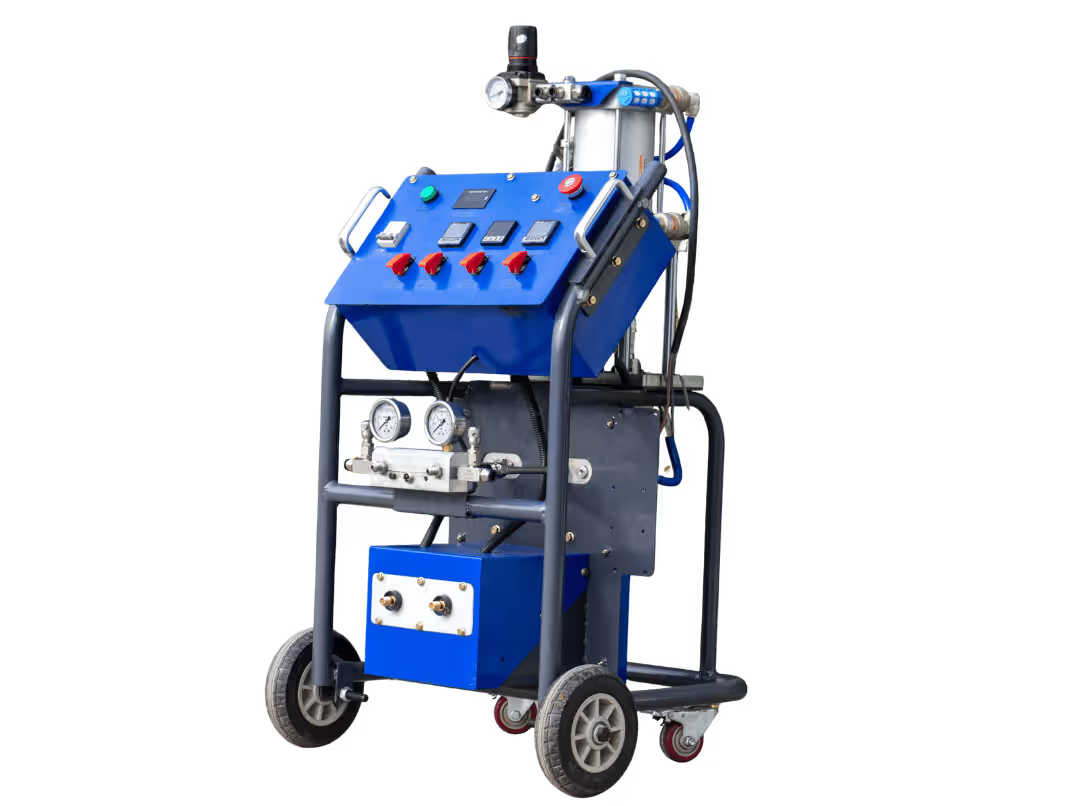
Choosing spray foam equipment starts with foam chemistry, not hardware. One-component (1K) foam requires minimal equipment; two-component (2K) systems require a proportioner, a heated hose, and a spray gun calibrated to the foam’s ratio, temperature, and pressure specifications. Match each component to your foam type and job volume before purchasing anything.
Most spray foam problems don’t start at the gun. They start before the first trigger pull — when a contractor builds a setup around what’s available or affordable rather than what the foam chemistry actually requires. Wrong proportioner, undersized hose heater, mismatched gun pressure: any one of these compromises the foam before it ever hits the substrate.
This guide follows a specific logic: equipment decisions are made sequentially, not in parallel. Foam chemistry comes first. Every hardware choice — proportioner type, hose configuration, gun selection, PPE — builds outward from that starting point. By the end, you’ll have a clear framework for sizing your spray foam insulation equipment to your foam system, your job volume, and your site conditions.
Start With the Foam — 1K vs. 2K Determines Everything
This is the decision gate. Getting it wrong makes every downstream equipment choice irrelevant.
One-component (1K) foam is moisture-cured and pre-packaged. It works well for gap sealing, crack filling, and small-area applications. The equipment requirement is minimal — a dispensing gun or straw applicator. Buying a proportioner for 1K work is a mistake. The chemistry doesn’t need it, and the maintenance overhead won’t be recovered.
Two-component (2K) foam combines isocyanate (the A-side) and polyol (the B-side) at a controlled ratio under specific temperature and pressure conditions. The equipment must hold all three variables — ratio, temperature, and pressure — consistently across the full run. Drift in any one of them produces defective foam regardless of operator skill.
The closed-cell vs. open-cell distinction matters here more than most contractors expect. Closed-cell two-component spray foam typically requires processing temperatures between 70°F and 90°F and operating pressures above 1,000 psi. Open-cell systems are more tolerant of variation. That difference determines whether a mechanical proportioner is even a viable option — and for closed-cell work, the answer is usually no.
Before selecting any hardware, read the foam manufacturer’s Technical Data Sheet (TDS). The TDS defines the equipment specification: required ratio, temperature range, minimum pressure, and shelf-life parameters. It’s not supplementary reading — it’s the source document for every equipment decision that follows. Equipment that falls outside the TDS parameters produces defective foam, regardless of how experienced the operator is or how well-maintained the hardware is.
Spray Foam Equipment: The Components That Determine Results
Proportioners — The Most Consequential Decision
The polyurethane foam proportioner is where two-component systems succeed or fail. No other piece of hardware in the setup has a higher impact on foam quality.
Mechanical proportioners meter at a fixed ratio without active heating. In warm ambient conditions with lower-viscosity chemical systems — where drums arrive within the manufacturer’s specified temperature range — they can perform adequately. The core failure mode becomes apparent when temperature drops: as ambient or chemical temperature falls, viscosity rises. Higher viscosity changes the effective ratio delivered to the gun, even without any adjustment to the proportioner’s settings. The machine reads correctly; the foam still comes out off-ratio.
Heated proportioners maintain active temperature control across both chemical streams throughout the run. For closed-cell foam, a heated proportioner is not a premium option or a convenience upgrade — it’s the only configuration that reliably meets the chemistry’s processing requirements. The same applies to any cold-weather work, regardless of foam type.
Single-hose vs. dual-hose configurations: a dual-hose system runs each chemical component through its own independently heated line. On long runs and full production days, the separate thermal control delivers more consistent material temperature at the gun and simplifies troubleshooting when problems arise. Single-hose configurations are simpler and lower cost, but introduce thermal risk on longer runs where one stream can influence the other.
Three factors determine whether a heated high-pressure proportioner is necessary: foam type, output volume, and ambient conditions. If you’re running closed-cell foam, operating in variable or cold temperatures, or working at sustained production volume — the heated unit is the right answer.
For contractors evaluating proportioner configurations for professional use, Henghui Machinery’s polyurethane foaming machine range covers both high-pressure and heated configurations, backed by over 25 years of manufacturing experience and responsive technical support suited to field conditions.
Hoses and Heated Lines — The Most Underspecified Component
Heated hose spray foam setups fail more often through undersized or underpowered hoses than through proportioner miscalibration — and the symptoms get misattributed constantly.
Even when the proportioner is correctly calibrated, chemical temperature drops through the hose run. A 50-foot run on a cold day can lose 10°F–20°F before material reaches the gun. That temperature drop raises viscosity and shifts the effective mix ratio outside the foam’s processing specification. The proportioner is doing its job. The hose is not.
Longer runs need more heating capacity — not just more hose length. An underpowered hose maintains temperature at the proportioner end while delivering off-spec material at the gun end. The result looks like a proportioner problem or a chemical problem. It’s neither.
When uneven cell structure, soft spots, or poor adhesion appear on the job, the diagnostic sequence matters. Check gun-end temperature first, not drum or proportioner readings. If the gun-end is below spec while the proportioner reads correctly, the fix is hose heating capacity — not proportioner recalibration.

Spray Guns
For two-component closed-cell work driven by a proportioner output above 1,000 psi, manual impingement guns are the standard. They deliver good output volume and trigger control. Maintenance cost is real: impingement guns require thorough flushing after every use without exception.
Airless guns with static mix nozzles operate at lower pressure and suit open-cell foam and smaller 2K kit applications. They are not appropriate for high-pressure closed-cell systems — the operating pressure range is mismatched, and foam quality suffers.
The selection logic is straightforward: match the PU foam spray gun to the proportioner’s output pressure and the foam’s chemistry. Price is not the deciding variable. A gun that’s undersized for the proportioner or mismatched to the foam type costs more in rework than any savings on the hardware.

Nozzle Tips and Fittings
Tip selection is the most frequently overlooked source of inconsistent spray in the field — and one of the easiest to correct.
Flat fan tips work for wall cavities and broad surfaces. Round or cone tips suit narrow cavities and targeted injection applications. Orifice size controls output per trigger pull. A mismatch between orifice size and system pressure produces surging or restricted output — symptoms that can’t be resolved by adjusting the proportioner.
Tip wear and partial clogging are unavoidable at production volume. Carry multiples. Nozzle tips are a consumable category; treating them as permanent components is a common and preventable mistake.
Safety Is Part of the Equipment Setup
Safety gear for spray foam work is not optional PPE added at the end of the job. It’s a required component of the spray foam equipment system — the same category as the proportioner and the gun.
Respiratory protection: isocyanate sensitization is irreversible. Once a worker becomes sensitized to isocyanates, continued exposure at any level — even trace amounts — can trigger severe respiratory reactions. Standard particulate filters do not protect against isocyanate vapors or aerosols. The correct options are a supplied-air respirator (SAR) or a full-face respirator equipped with OV/P100 combination cartridges. In enclosed or confined spaces, a SAR is the appropriate choice. There is no PPE shortcut that covers this gap.
Skin and eye protection: full coveralls, chemical-resistant gloves, and splash goggles form a complete protective system — not a menu of optional items. Gloves without coveralls leave the majority of the body exposed to isocyanate contact. Splash goggles (not safety glasses) are required during drum handling, gun clearing, and equipment flushing. Each of those tasks creates splash risk that safety glasses are not designed to contain.
Ventilation: required for all indoor applications without exception. “Feeling fine” during or after a spray application is not a reliable indicator of safe exposure. Many isocyanate sensitization cases develop through repeated low-level exposure over time, without acute warning signs in the early stages. When adequate ventilation cannot be confirmed through airflow assessment, air monitoring is the correct next step.

Support Tools That Keep the Job from Falling Apart
These tools don’t determine foam quality on their own, but skipping them creates problems that no equipment adjustment will fix.
Surface preparation — scrapers, wire brushes, and moisture meters — addresses the substrate before the first trigger pull. Wet, contaminated, or cold surfaces prevent reliable adhesion. The majority of adhesion failures trace back to substrate condition, not foam chemistry or equipment settings.
Masking and covers protect adjacent surfaces from overspray. The cleanup time and materials cost of overspray on windows, HVAC registers, and finished trim consistently exceeds the cost of proper masking. Budget masking as a line item, not an afterthought.
Solvents must be chemistry-compatible with the foam system in use. The wrong solvent leaves residue that cures inside fittings and mix chambers — creating blockages that look like equipment failure.
Generator sizing affects proportioner output directly. Voltage fluctuations from an undersized generator produce inconsistent proportioner performance even when the unit is correctly set. Confirm total system power draw before every job — heated hoses draw more current than most contractors expect when first commissioning a setup.
Drum heaters bring chemicals to the processing temperature range before the job starts. Cold drums produce off-spec results from the first shots of the day, and waiting for material to warm up mid-job loses time and wastes product.
Matching Equipment to the Job — Three Scenarios
Scenario 1: Occasional Repair Work
Profile: gap sealing, penetrations, small void fill — intermittent and low-volume.
Disposable or reusable 2K kits with a manual dispensing gun cover this scope without a proportioner. Cost-per-board-foot is higher than bulk chemical, but at low annual volume, that’s an acceptable trade-off when there’s no proportioner maintenance overhead to absorb.
The mistake to avoid: buying a proportioner for a workload that can’t sustain it. A unit that sits idle between jobs, requires servicing before the next one, and ties up capital in chemical inventory costs more than it saves at this volume level.
Scenario 2: Small Contracting Operation
Profile: regular monthly volume, a mix of open-cell and closed-cell work, residential and light commercial applications.
An entry-level plural-component proportioner, impingement gun, and basic heated hose cover this range. For open-cell foam in stable, warm ambient conditions, a lightly heated or mechanical unit may be adequate. Add closed-cell to the service mix, and a heated proportioner becomes necessary — not an option.
Total cost of ownership matters more than purchase price at this level. A proportioner that produces off-ratio foam or requires frequent field service costs more over a season than a higher-spec unit that runs without issues. The proportioner typically pays for itself within one active season at two or more jobs per week, factoring in material savings, reduced waste, faster per-job output, and access to bulk chemical pricing.
Scenario 3: Full-Time Insulation Contractor
Profile: high-volume closed-cell and open-cell work, full production days, variable and cold ambient conditions.
The correct setup at this level is a high-pressure heated proportioner, dual-hose system, full PPE kit (SAR or full-face OV/P100), a generator sized to actual system load, and a complete inventory of on-site spares. Reliability and field serviceability matter more than initial specifications — downtime on a commercial job site costs more than the price difference between equipment tiers.
At full production volume, the proportioner needs to be diagnosable and serviceable in the field, with manufacturer parts availability and responsive technical support. Henghui Machinery’s polyurethane foaming machine range covers high-pressure and heated configurations designed for sustained production volume, with manufacturer support that full-time contractors can rely on when it matters.

Maintenance and Troubleshooting
How and When Should You Flush the Spray Gun?
Residual mixed material begins curing inside the mix chamber within minutes of the last shot. Cured material bonds to internal surfaces. The repair is expensive; the outcome is often a complete write-off of the mix chamber assembly.
Flush with manufacturer-specified solvent immediately after the last shot of the day — not at the end of the shift, not after cleanup. The clock starts when the A-side and B-side make contact inside the gun.
What Spare Parts Should You Carry on Every Job?
- Mix chambers and impingement ports — the most frequently replaced field components at production volume
- Nozzle tips — wear and partial clogging are unavoidable; carry multiples
- O-rings and seals — chemical exposure and pressure cycling degrade these; failures are abrupt and can halt a job
- Inline strainers — drum sediment clogs guns faster than mechanical wear; inspect and replace regularly
Chemical Storage
Isocyanate is moisture-reactive. Improperly sealed drums or storage with significant temperature fluctuation degrades the A-side before it reaches the gun — producing off-spec foam even when all equipment settings are correct. Verify manufacture dates against the TDS shelf-life specifications before every job. Aged chemical is one of the most commonly overlooked root causes of foam quality problems in the field.
Troubleshooting Table
|
Symptom |
Most Likely Cause |
|---|---|
|
Uneven expansion or inconsistent cell structure |
Mix ratio drift or chemical temperature out of spec at the gun end |
|
Poor adhesion to substrate |
Surface moisture, contamination, or substrate temperature below minimum |
|
Repeated gun clogging |
Insufficient flushing, tip mismatch, or degraded chemical |
|
Foam discoloration or weak structure |
Aged or improperly stored chemical |
|
Surging or restricted output |
Tip orifice mismatched to system pressure |
|
Soft spots despite correct proportioner readings |
Hose temperature loss — check gun-end temperature, not drum readings |
The proportioner is the last thing to adjust when foam quality problems appear. Work through the symptom table before touching calibration settings.
Frequently Asked Questions
What is the difference between a 1K and 2K spray foam system?
One-component (1K) foam is moisture-cured, pre-packaged, and requires minimal equipment — suited to small-scale gap filling and crack sealing. Two-component (2K) foam combines isocyanate and polyol at a controlled ratio and requires a proportioner to hold ratio, temperature, and pressure within the foam manufacturer’s specification. Two-component spray foam is the appropriate system for insulation work and any application requiring consistent R-value and structural performance.
Do I need a heated proportioner for closed-cell spray foam?
Yes. Closed-cell foam typically requires processing temperatures between 70°F and 90°F and pressures above 1,000 psi. Mechanical proportioners meter at a fixed ratio without active heating — when chemical temperature drops, viscosity rises and the effective ratio delivered to the gun drifts out of spec. For closed-cell work or any cold-weather application, a heated proportioner is the only configuration that reliably meets the chemistry’s processing requirements.
How often should I flush the spray foam gun?
Flush the gun immediately after every use — not at the end of the shift. Mixed A-side and B-side material begins curing inside the mix chamber within minutes of the last shot. Delayed flushing leads to cured residue bonding to internal surfaces, which is expensive to repair and often results in a component write-off. Use only the solvent specified by the gun manufacturer to ensure compatibility.
Can I use the same spray gun for both open-cell and closed-cell foam?
Not reliably. Manual impingement guns are designed for high-pressure closed-cell systems operating above 1,000 psi. Airless guns with static mix nozzles suit open-cell foam and lower-pressure 2K kit applications. Using a gun outside its designed pressure range degrades foam quality. Match the gun to the proportioner output pressure and foam chemistry — not to what’s available on the truck.
What respirator is required for spray foam application?
A standard particulate filter does not protect against isocyanate vapors or aerosols. The correct options are a supplied-air respirator (SAR) or a full-face respirator fitted with OV/P100 combination cartridges. In enclosed spaces, a SAR is the appropriate choice. Isocyanate sensitization is irreversible — once sensitized, a worker cannot safely continue spray foam application at any exposure level.
How do I confirm my proportioner is delivering the correct mix ratio?
Start with gun-end temperature: confirm that both chemical streams are reaching the gun within the TDS processing temperature range. Off-ratio symptoms include uneven cell structure, inconsistent expansion, and poor adhesion. If symptoms persist after confirming correct temperature at the gun end, consult the proportioner manufacturer for a ratio verification procedure specific to the unit. Do not adjust calibration settings before completing the symptom checklist — most ratio-related problems originate in hose temperature loss or chemical condition, not proportioner miscalibration.
Build the Setup Right the First Time
The selection sequence is clear once the logic is in place: foam chemistry first, then proportioner and hose, then gun and tip, with PPE as a non-negotiable constant throughout every application.
For occasional repair work, a 2K kit is the right scope. For a small contracting operation adding closed-cell to the service mix, an entry-level heated proportioner pays for itself within one active season. For full-time production volume with variable site conditions, a high-pressure heated proportioner with a dual-hose system and full PPE setup is the only configuration that holds up.
Every defective foam outcome has a root cause in the setup — and most of those causes are preventable before the first trigger pull.
For proportioner configurations matched to professional production volume, visit Henghui Machinery’s polyurethane foaming machine range, or contact the team directly for a configuration recommendation matched to your foam chemistry and output requirements.