
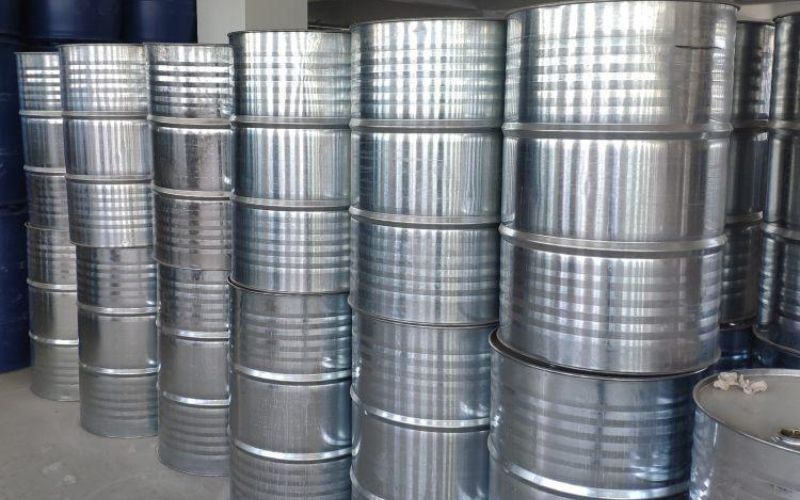
Pentane blowing agents have been widely used as a primary expansion mechanism in the production of high-performance insulation foams due to their excellent technical performance, superior insulation properties, and overall cost-effectiveness. As the global construction and appliance industries shift toward more sustainable materials, hydrocarbons like pentane have emerged as a vital alternative to legacy fluorocarbons that previously dominated the commercial market.
The very low global warming potential (GWP) of pentane isomers used as foam-blowing agents provides insulation performance that enables the permanent replacement of environmentally damaging blowing agents, such as early-generation hydrofluorocarbons (HFCs). Furthermore, pentane has proven potential to replace other costly components in the foam manufacturing sector, owing primarily to its reliable thermal properties and widespread availability.
Recent international environmental regulations have increasingly banned the use of synthetic blends with high global warming potentials in the manufacture of all continuous and discontinuous foams. Consequently, manufacturers are actively transitioning to pentane-based systems to meet strict safety and environmental requirements. This shift also stipulates new operational requirements for the renovation, refurbishment, and safe demolition of building foams containing pentane: emissions must be managed carefully by handling the cellular foams to ensure proper site safety and minimize accidental releases during industrial recovery processes.
What makes a good insulation foam blowing agent?
The foam blowing agent is deliberately selected to provide a robust closed-cell structure, which significantly minimizes heat transfer, in large part due to the physical properties of the foam blowing agent itself, which is retained within the foam matrix essentially for the entire lifetime of the foam’s structural use. Because insulation panels often remain in buildings for decades, the stability of this entrapped gas is absolutely paramount. Emissions of the foam-blowing agent from closed-cell foam are typically designed to be less than a fraction of a percent per year, so that critical thermal performance is maintained consistently over time.
The blowing agent can be a liquid or a highly pressurized gas that is completely dissolved in the liquid foam precursors and expands to form the cellular foam once it is injected, poured, or sprayed, initiating the chemical foaming reaction. Optimization is crucial because final thermal efficiency and overall physical performance depend heavily on the precise chemical formulation. The foam blowing agent and the rigid foam matrix, which may be securely bonded to impermeable metal or foil facings, are selected specifically to minimize outward migration of the blowing agent, which would otherwise gradually increase the matrix’s thermal conductivity. Foam blowing agents with naturally low thermal conductivity improve the baseline insulation properties of the finished foam, allowing either noticeably better overall insulation performance or much thinner building profiles for the exact same insulation value.
How do Pentane Hydrocarbons compare to HFOs and HCFOs?
The very low global warming potentials of both modern hydrofluoroolefins (HFOs) and hydrocarbon blowing agents like pentane mean that any blowing agent emissions that occur during the initial foam blowing process, or during the long-term use phase, and at the eventual end of life, have an extremely small impact on global warming. In fact, the overall atmospheric impact of these non-halogenated pentane blowing agents is widely considered negligible compared to that of legacy synthetic refrigerants. Pentane offers an incredibly cost-effective expansion solution for major manufacturers, delivering exceptional thermal performance without the severe environmental penalties associated with older, heavily regulated chemical generations.
While the insulating properties of modern HFOs and HCFOs are generally excellent, as evidenced by their very low thermal conductivity, pentane remains highly competitive and is vastly superior in terms of raw material cost and chemical availability. HFOs are entirely non-flammable, which simplifies factory handling. Pentane, however, is a flammable hydrocarbon, requiring specialized explosion-proof manufacturing equipment and strict safety protocols during production. Despite this flammability limitation, pentane blowing agents are likely to be targeted mostly where there is a massive requirement for economical, high-volume thermal efficiency, particularly in continuous board stock production and appliance manufacturing where factory safety can be tightly controlled.
Note: Isomers of pentane (n-pentane, isopentane, and cyclopentane) are widely blended to optimize both the boiling point and the thermal conductivity of the resulting foam for specific manufacturing applications.
| Blowing Agent | GWP (AR5) | Thermal conductivity λ (mW/m.K) | Boiling point (°C) | Flammability |
|---|---|---|---|---|
| HFO-1336mzz(Z) | 2 | 10.7 | 33 | No |
| HFO-1336mzz(E) | 7 | 11.5 | 7.5 | No |
| HCFO-1233zd(E) | 1 | 10.0 | 19 | No |
| n-Pentane | <5 | 14.0 | 36 | Yes |
Blowing Agent Blends
Hydrocarbons like pentane are frequently blended with HFOs, HCFOs, and a wide range of other specialized blowing agents to achieve the required balance of physical properties, thermal performance, and overall chemical loading in the final foam products. Blending allows manufacturers to harness the incredible cost-efficiency of pentane while leveraging the superior non-flammability and enhanced thermal resistance of more expensive synthetic molecules. This strategic blending process is incredibly important for optimizing the final cell structure of the foam, ensuring that the trapped gases provide the maximum possible resistance to heat flow.
For instance, mixing cyclopentane with specific isopentane ratios is a standard practice in the appliance industry to perfectly balance the blowing agent’s boiling point with the polyurethane curing reaction. When navigating the strict regulatory landscape, these advanced chemical blends offer a highly flexible pathway. Manufacturers can dial in the exact performance metrics required for different types of foam—from continuous insulated metal panels to block foams—by carefully adjusting the ratios. This meticulous balancing act significantly reduces total production costs while perfectly maintaining the environmental integrity and structural performance expected in modern construction materials.
The different foam insulation types and their uses
Polyurethane (PU), extruded polystyrene (XPS), expanded polystyrene (EPS), and phenolic foams significantly reduce total energy consumption in commercial and residential buildings, while XPS and PU rigid foams remain the primary cellular foam types widely used in the demanding global cold chain. The successful integration of pentane blowing agents into these materials has enabled the construction sector to meet increasingly aggressive energy-efficiency targets without dramatically increasing building costs.
The relative demand for each specific type of foam depends heavily on the final end use, raw material costs, regional availability, and required thermal performance. XPS is widely preferred for thoroughly insulating foundation perimeters, exterior building facades, and large flat commercial roofs because it offers consistently good mechanical properties, such as incredibly high compressive strength and a completely water-repellent surface texture. It is also frequently used as a highly reliable load-bearing insulation material in heavy civil engineering projects, primarily due to its durable, lightweight nature. EPS has countless long-standing applications in everyday construction and protective packaging; however, fluctuating global prices of raw chemical materials and increasingly stringent local environmental regulations may occasionally hamper global demand growth.
Conversely, the rapidly growing global demand for highly efficient, pentane-blown polystyrene products is projected to deliver substantial new growth opportunities in the immediate future. Because EPS and PU foams utilize pentane effectively to create their lightweight cellular structures, they remain completely free of heavily regulated fluorocarbons. This makes pentane-blown insulation boards a highly preferred, sustainable choice for architects and builders prioritizing green building certifications and long-term environmental stewardship.
Comparing insulation foam to other Insulation materials
There is a remarkably wide range of traditional insulation materials currently available on the market, such as fiberglass batts, rock wool, blown-in cellulose, natural fibers, rigid foam boards, and reflective radiant foils. For many modern structural applications, rigid insulation foams blown with pentane have distinct and measurable advantages over these older alternatives.
- The baseline insulation performance of closed-cell foam is vastly superior to a wide range of other traditional, air-permeable insulation materials.
- The exact thermal insulation and physical structural properties can be precisely designed and chemically engineered for highly specific building applications.
- For a strictly defined thermal insulation performance target, a pentane-blown insulation foam can be significantly thinner, much lighter, and use far less total material space than most other conventional options.
- It can be formed conveniently in situ using specialized equipment or utilized as highly consistent, prefabricated board stock delivered directly to the site.
- Foam systems can be used to thoroughly insulate existing building stock or other complex structures as a highly efficient means of sealing gaps that would be incredibly difficult to achieve with fibrous materials due to awkward structural shapes or hidden locations.
- It inherently provides an exceptionally good continuous water- and vapor-barrier. Extruded polystyrene (XPS), in particular, has a significant advantage in terms of its absolute moisture resistance, which makes it especially useful and highly preferred for demanding under-floor foundation insulation and industrial cold storage applications.
High-performance insulation reduces energy consumption
High-quality, high-performance cellular insulation improves overall energy efficiency primarily by drastically reducing structural heat transfer through the building envelope. For residential and commercial building insulation, it significantly reduces winter heat loss or summer heat gain, which greatly improves daily occupant comfort and can permanently lower monthly utility energy costs. For commercial cold storage facilities and refrigerated transport vehicles, pentane-blown foam effectively reduces external heat gain and reliably maintains stable temperature control for sensitive goods.
The recently revised international energy performance directives for buildings mandate significantly improved energy efficiency in new structures and strongly encourage deep building renovations. Consistent with these pressing global energy performance issues, for both modern new construction and historical renovation, the worldwide demand for advanced thermal insulation has increased substantially as the critical role of buildings in reducing national energy dependency and lowering greenhouse gas emissions has been fully recognized. Strategically retrofitting high-performance pentane insulation into the exterior shells of existing, older buildings can significantly cut their ongoing energy consumption and carbon footprint for decades to come.
Pentane in Polyurethane Spray Foam
While highly volatile pentane is traditionally more challenging to use in on-site spray applications due to strict flammability concerns, advanced formulations and specialized equipment are increasingly making it a viable component for high-insulation-performance spray foam applications where strict factory-level safety controls can be meticulously replicated. Specialized polyurethane spray foam using modified hydrocarbon blowing agents has been used successfully as an incredibly efficient means of rapidly insulating large structures that would otherwise be notoriously difficult to insulate effectively, largely because of complex geometric shapes or highly inaccessible locations.
An excellent example would be the rapid structural insulation of large industrial storage tanks or commercial agricultural silos. Another heavy-duty application would be the seamless exterior insulation of massive, commercial flat roofs, which require a monolithic, waterproof thermal barrier. More recently, however, high-performance polyurethane spray foams have emerged as a critical component of aggressive deep-energy renovation strategies for outdated existing buildings. The incredible speed, structural efficiency, and total versatility of liquid application, as well as the unparalleled durability and extreme thermal efficiency, are premium characteristics that have strongly contributed to the continued rapid growth of PU spray foam systems across both developed and rapidly developing regions worldwide.