
In the world of modern construction and industrial manufacturing, polyurethane (PU) sandwich panels are one of the most versatile and widely used materials. Whether for insulated walls, cold storage facilities, or prefabricated buildings, these panels appear everywhere. However, PU panels are not all made the same way. They are produced using two primary methods: continuous and discontinuous panel lines. Both technologies create high-quality panels, but their production processes, applications, and machinery requirements differ significantly.
In this article, we’ll explore the key differences between continuous and discontinuous PU panel lines, helping manufacturers choose the right technology for their production needs. If you’re in search of reliable solutions for panel production, Henghui offers high-quality equipment tailored to your needs.
What Is a Continuous PU Panel Line?
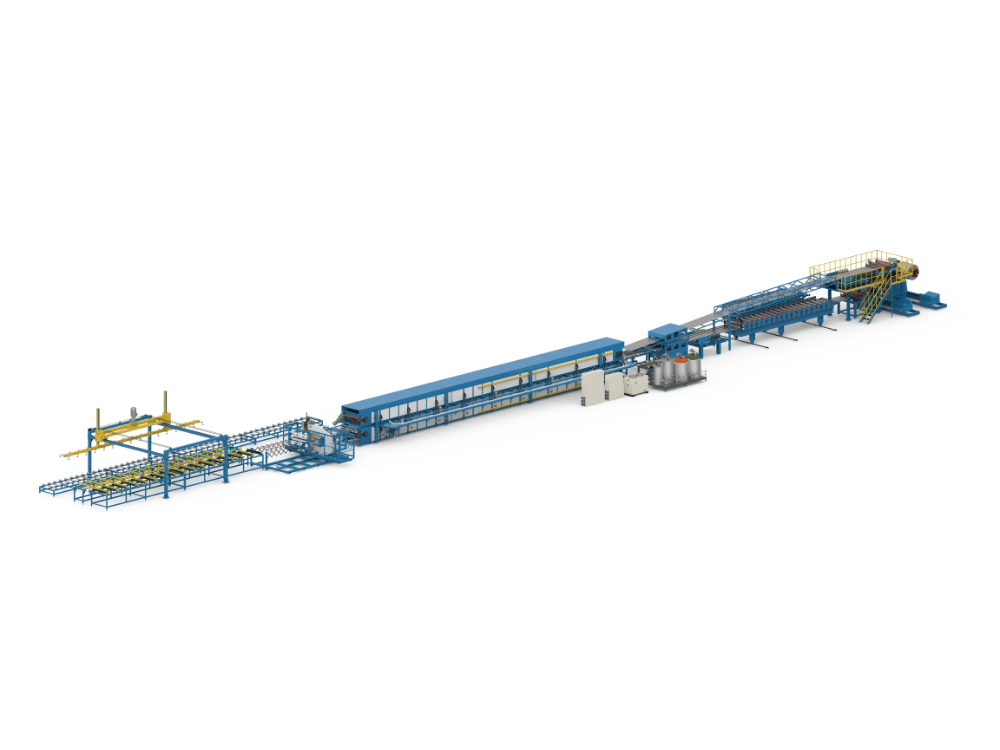
A continuous PU panel line refers to a highly automated manufacturing process that produces uninterrupted lengths of sandwich panels. In this setup, two coils of facing material (typically metal) are unwound and fed through a series of rollers. As the facings move along a conveyor, a mixing head dispenses liquid polyurethane foam between them. The entire assembly then passes through a heated press section where the foam expands and cures, bonding securely to the facings. The result is a continuous, long panel that is then cut to the required lengths without stopping the line, enabling massive production volumes.
Properties of Continuous PU Panel Lines:
- High production efficiency and speed
- Consistent and uniform product quality
- Lower labor costs due to automation
- Ideal for standardized, large-scale orders
Common Applications of Continuous PU Panel Lines:
- Insulated roofing and wall panels for large buildings
- Walls for industrial warehouses and factories
- Panels for commercial cold storage facilities
- Prefabricated and modular housing components
To achieve the best results, manufacturers rely on sophisticated machinery designed for continuous operation. These lines must provide stable temperature control, precise chemical metering, and robust conveyor systems to ensure consistent quality at high speeds.
What Is a Discontinuous PU Panel Line?
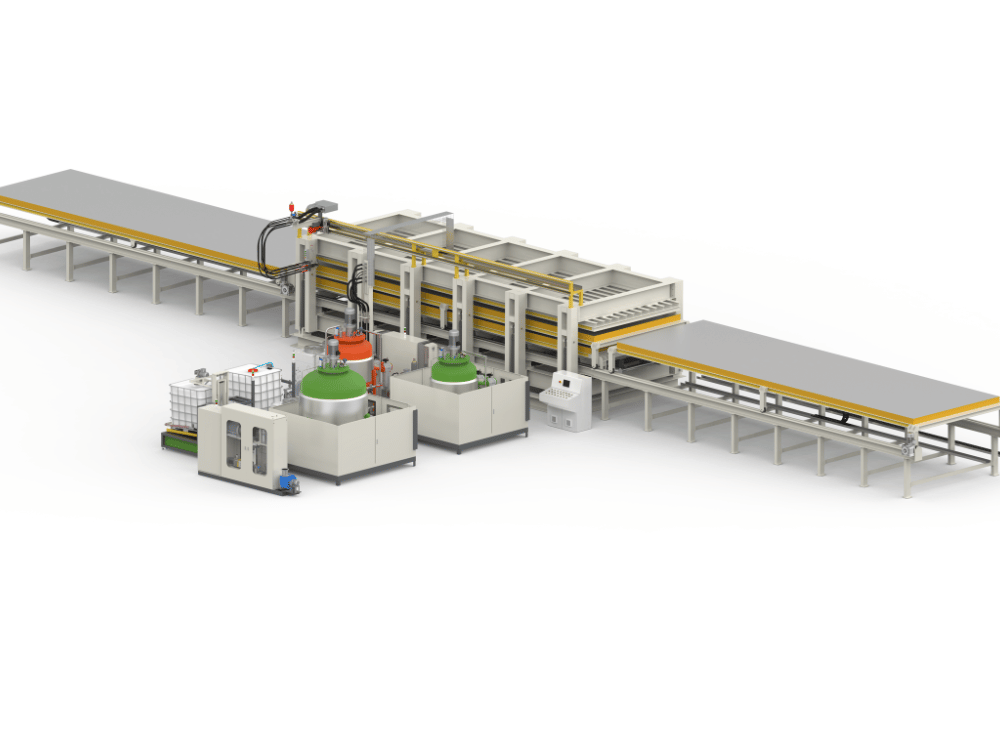
In contrast to a continuous line, a discontinuous PU panel line involves producing panels one at a time in a batch-based process. In this method, pre-cut facings are placed into individual molds or presses. A mixing head, often mounted on a movable gantry, injects the liquid polyurethane mixture between the facings. The press is then closed, and the foam expands and cures under pressure. Once the panel is fully cured, the press is opened, and the finished panel is removed manually. This cycle is then repeated for the next panel, making it ideal for customized production.
Properties of Discontinuous PU Panel Lines:
- High flexibility for custom sizes and shapes
- Lower initial investment and smaller footprint
- Ability to use different facing materials easily
- Suitable for small to medium production volumes
Common Applications of Discontinuous PU Panel Lines:
- Custom-sized insulated doors and garage doors
- Specialized architectural panels with unique designs
- Small-scale production runs for specific projects
- Prototyping and testing new panel designs
Discontinuous lines are built with a focus on flexibility. They allow for quick changes in panel dimensions and are more forgiving with different material types, providing a versatile solution for operations that prioritize customization over sheer volume.
Continuous vs. Discontinuous PU Panel Lines: Key Differences
Both production methods require careful control over chemical ratios and curing conditions, but continuous lines place a greater emphasis on automation and speed, while discontinuous lines focus on flexibility and customization.
Material Handling and Production Efficiency
Continuous lines are designed for maximum efficiency. They use large coils of facing material and operate continuously, making them ideal for producing thousands of square meters of standardized panels daily. This high-speed, automated approach is ideal for large-volume orders. In contrast, discontinuous lines produce panels in batches, which is inherently slower. However, this method excels at handling custom orders, small batches, and panels with complex shapes or inserts, offering greater manufacturing versatility.
Process Characteristics and Cooling
Continuous lines depend on a long, heated double-belt conveyor to ensure the foam cures properly while moving at a constant speed. The temperature profile along the conveyor is precisely controlled to guarantee consistent bonding and dimensional stability across the entire panel length. Discontinuous lines use individual heated presses. This allows for more flexible curing times and temperatures, which can be an advantage when working with non-standard materials or creating panels with varying thicknesses that require specific curing cycles.
Machinery Setup and Line Configuration
A continuous line is a massive, integrated system that can be over 100 meters long. It includes decoilers, roll formers, a double-belt press, and automated cutting and stacking systems, all synchronized to work seamlessly. Discontinuous lines have a much simpler and more compact setup. They typically consist of one or more hydraulic presses and a separate injection machine. This modular and less complex configuration makes them easier to install and operate in facilities with limited space.
Cost and Investment
The initial investment for a continuous panel line is significantly higher due to its size, complexity, and level of automation. However, for large-scale production, its high efficiency and lower labor requirements result in a lower per-panel cost over time. Discontinuous lines are much more affordable to set up, making them an accessible entry point for smaller businesses or companies focusing on specialized, high-margin products rather than mass production.
Conclusion: Which PU Panel Line Is Right for You?
Choosing between a continuous and a discontinuous PU panel line depends entirely on your business model and product application. If your focus is on mass-producing standardized panels for the construction or refrigeration market, the high efficiency and low per-unit cost of a continuous line are unmatched. The investment will pay dividends through high-volume output and automated operation.
For manufacturers involved in producing custom-sized panels, specialized doors, or architectural components, the flexibility of a discontinuous line is a clear winner. For either production need, Henghui provides high-performance PU panel lines engineered for precision, durability, and high output. Contact us to find the perfect solution for your manufacturing goals.