Polyurethane production is a fundamental process in materials engineering that involves reacting specific chemicals to create a vast range of high-performance materials. This allows manufacturers to tailor polyurethane to meet the demanding requirements of industries such as construction, automotive, and consumer goods. By tailoring the physical and chemical properties of polyurethane, its range of applications can be significantly increased, making it one of the most versatile polymers available today.
In this blog, we delve into the basics of polyurethane production, its crucial role in enhancing material properties, and its diverse applications across key industries. We will explore how this essential process drives innovation and delivers superior performance in countless everyday products.
What is Polyurethane Production?
Polyurethane production is the process of mixing two primary liquid components, polyols and isocyanates, which triggers a chemical reaction to create the polyurethane polymer. By carefully controlling the reaction, manufacturers can produce materials with a wide spectrum of properties, from soft, flexible foams to hard, rigid plastics. This process improves product quality, reduces costs, and enhances productivity by creating materials perfectly suited for their intended purpose.
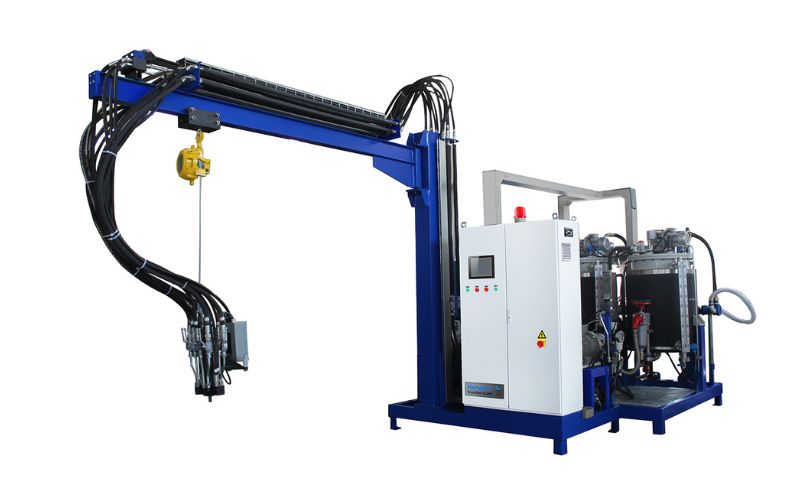
The core of the process involves several key stages: precisely metering and mixing the liquid chemicals, managing the foaming or casting reaction, allowing the material to cure into a stable solid, and finally cutting or trimming it into its finished shape. These steps usually occur in a continuous or batch process using specialized machinery that ensures a uniform dispersion of all components and a consistent final product.
The most common additives used in polyurethane production are crucial for tailoring the material’s final properties. Catalysts are added to control the speed of the chemical reaction, while surfactants help manage the foam’s cell structure. Blowing agents are used to create the foam itself, expanding the liquid mixture into its final low-density form. Additionally, manufacturers can include flame retardants to reduce flammability, UV stabilizers to enhance resistance to sunlight, and colorants to improve aesthetics, making polyurethane an incredibly customizable material.
Applications of Polyurethane Production
Polyurethane production has been used in a variety of industries to develop customized materials that meet specific standards critical for industrial use. Some of the key industries where polyurethane production has made a significant impact include:
1. Construction
The construction industry benefits from polyurethane production due to the material’s exceptional durability, weather resistance, and insulation properties. Rigid polyurethane foam is used extensively in insulation panels for walls and roofs, providing superior thermal insulation that significantly improves a building’s energy efficiency. Polyurethane spray foam is also used to seal air gaps and create a seamless building envelope. Furthermore, polyurethane coatings and sealants protect concrete and steel structures from corrosion and environmental degradation, extending their longevity and reducing maintenance costs.
2. Automotive
The automotive industry has used polyurethane production to develop novel materials that replace heavier components, reducing vehicle weight and improving fuel efficiency without sacrificing safety. Applications include flexible foam for comfortable, durable seating, headrests, and armrests. Rigid foam is used for soundproofing and vibration dampening. High-performance polyurethane elastomers are used for bumpers, suspension bushings, and seals due to their excellent impact resistance and durability. Polyurethane coatings also provide a glossy, scratch-resistant finish for car exteriors.
3. Furniture and Bedding
Polyurethane production is essential for creating comfortable and long-lasting furniture and bedding products. Flexible polyurethane foam is the primary material used in mattresses, sofa cushions, and upholstery padding. Its ability to be formulated in various densities and firmness levels allows manufacturers to create products that offer customized ergonomic support and superior comfort. The foam’s resilience ensures these products retain their shape and supportive qualities even after years of continuous use, enhancing consumer satisfaction and product longevity.
4. Electronics and Electrical Industry
The electronics industry relies on polyurethane for materials that provide excellent electrical insulation, protection, and durability. Polyurethane is used for potting and encapsulating sensitive electronic components like circuit boards and sensors, protecting them from moisture, heat, dust, and mechanical shock. Flexible and durable polyurethane coatings are also used for wire and cable insulation, providing protection against abrasion and environmental exposure. Its adhesive properties make it suitable for bonding components securely within electronic devices.
5. Consumer Goods and Packaging
Polyurethane production enhances everyday products by improving their functionality, durability, and aesthetics. It is used to create lightweight, impact-resistant sports equipment, such as skateboard wheels and protective gear. In household products, durable polyurethane coatings protect surfaces from scratches and wear. For packaging, custom-molded polyurethane foam provides superior shock absorption to protect delicate, high-value items like electronics and medical equipment during shipping, ensuring they arrive safely at their destination.
6. Aerospace and Defense
The aerospace industry has developed lightweight, high-strength polyurethane composites that improve fuel efficiency and structural integrity. Rigid foam cores are used in sandwich panels for aircraft interiors, providing excellent thermal and acoustic insulation while adding minimal weight. Polyurethane coatings and sealants are used to protect exterior surfaces from extreme temperatures and atmospheric conditions. In defense applications, specialized polyurethane elastomers are used for their high-impact resistance in armor and protective equipment.
Future Trends in Polyurethane Production
The polyurethane production industry is evolving rapidly, driven by advancements in material science, sustainability goals, and the demand for high-performance applications. Growing environmental concerns have led to a significant industry shift toward sustainable and bio-based polyurethane materials. The use of polyols derived from natural oils and other renewable sources is gaining popularity, reducing the industry’s reliance on fossil fuels.
The development of smart polyurethane materials with self-healing, shape-memory, and conductivity-enhancing properties is opening new possibilities in healthcare, wearable technology, and advanced manufacturing. These innovative materials can repair minor damages on their own or change shape in response to stimuli, paving the way for the next generation of intelligent products.
Conclusion
Polyurethane production is a transformative process that enables the development of customized materials for a wide range of applications. By enhancing mechanical, thermal, and chemical properties, polyurethanes play a crucial role in industries such as automotive, construction, healthcare, electronics, and consumer goods, driving innovation and improving product performance.
The future of polyurethane production centers on sustainability, high-performance materials, and technological advancements. As industries push for greener solutions and enhanced material capabilities, polyurethane will remain at the forefront of material science. For more information on innovative production solutions, explore what Henghui can offer for your specific needs.