

If you’re in the world of manufacturing or just curious about industrial processes, you’ve likely come across polyurethane. It’s one of the most versatile and essential materials used to produce a vast array of products. From insulation panels to automotive seats, the machines that process this polymer power countless industries with their efficiency and adaptability. They are the unsung heroes behind many everyday items.
In this guide, we’ll dive deep into the mechanics of polyurethane processing machines, explore the different types, discuss their advantages, and provide practical insights on overcoming common challenges. We will also cover their wide-ranging applications. Whether you’re a seasoned professional or just learning, you’re in the right place to understand this foundational technology.
What are Polyurethane Processing Machines?
Polyurethane (PU) processing machines are sophisticated systems designed to meter, mix, and dispense the chemical components—typically a polyol blend and an isocyanate—that react to form polyurethane. These machines manage the entire creation process, from handling raw liquid chemicals to producing a finished solid or foam product. The versatility of this technology allows manufacturers to produce everything from soft, flexible foams for furniture to rigid, durable panels used in the construction and refrigeration industries. Their precise control over the reaction ensures consistent quality and performance in the final product. At their core, these machines are the engines that turn liquid chemicals into an endless variety of useful polyurethane goods, making them indispensable in modern manufacturing.
Polyurethane Processing Machine Workflow Overview
The polyurethane processing workflow consists of several key steps, which are essential to producing consistent, high-quality products. Each stage must be carefully controlled to ensure the final item meets all specifications.
Material Feeding
The process begins when raw materials, typically a polyol blend and an isocyanate, are loaded into separate, temperature-controlled tanks on the machine. These tanks keep the chemicals stable and ready for processing. From there, precision pumps draw the liquids and feed them toward the mixing head at specific, controlled ratios.
Mixing and Reaction
Inside the mixing head, the two chemical streams are combined under high or low pressure. This initiates a rapid exothermic chemical reaction. The quality of the mix is critical, as it determines the uniformity and physical properties of the final polyurethane product, ensuring a consistent cellular structure.
Molding or Shaping
Immediately after mixing, the reactive liquid is dispensed into a mold or onto a surface. This shapes the polyurethane into its final form, whether it’s a complex automotive part, a large insulation panel, or a simple foam block. The mold holds the material as it expands and begins to solidify.
Curing and Finishing
The polyurethane is left to cure, a process where the chemical reaction completes, and the material hardens to achieve its final strength and stability. This can happen at room temperature or in a heated chamber. Afterward, the product is demolded and any necessary finishing touches, such as trimming, are applied.
Types of Polyurethane Processing Machines
The beauty of polyurethane processing is its adaptability. Manufacturers can choose from a wide range of specialized machines, each designed for specific products and applications. Let’s break down some of the most common types.
PU Foaming Machines
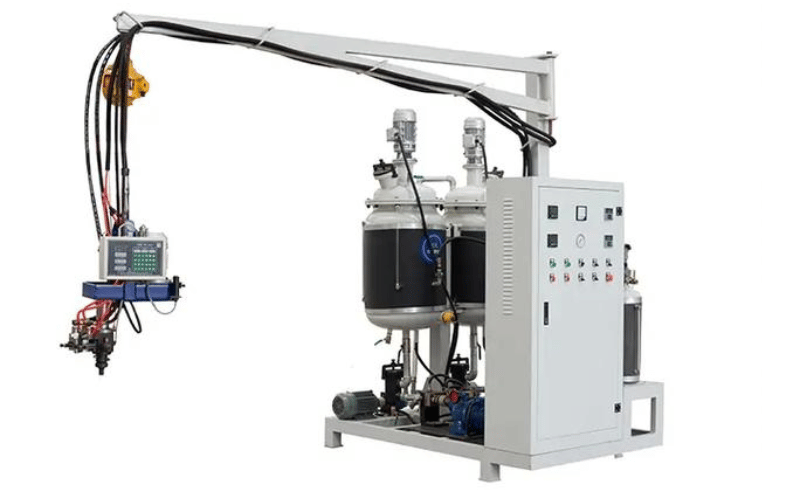
These machines are the workhorses for producing both flexible and rigid polyurethane foams. By precisely mixing polyol and isocyanate, they create foams used in everything from comfortable mattress toppers and car seats (flexible foam) to highly effective insulation panels for buildings and refrigerators (rigid foam). They are essential in industries where cushioning, support, or thermal insulation properties are required.
Polyurethane Casting Machines
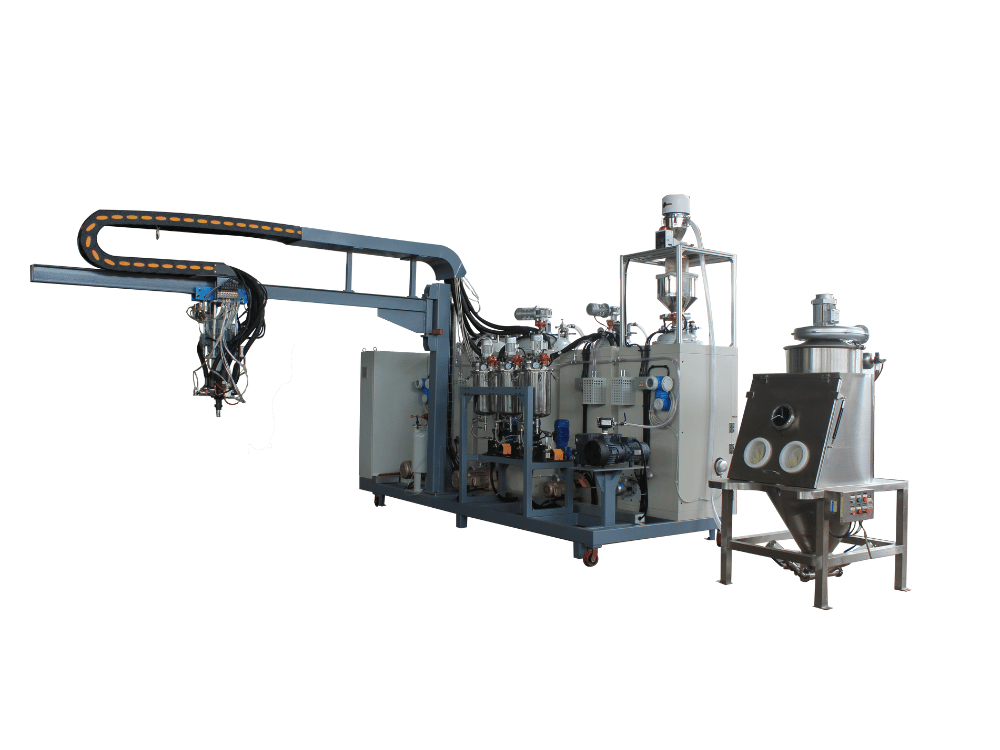
Polyurethane casting machines are used to create solid, durable polyurethane products through a molding process. These systems are ideal for manufacturing wheels, rollers, seals, and other industrial components that require high abrasion resistance and toughness. The machine carefully dispenses the mixed liquid into a mold, where it cures into a solid, non-foam elastomer part with specific, high-performance physical properties.
Polyurethane Sandwich Panel Lines
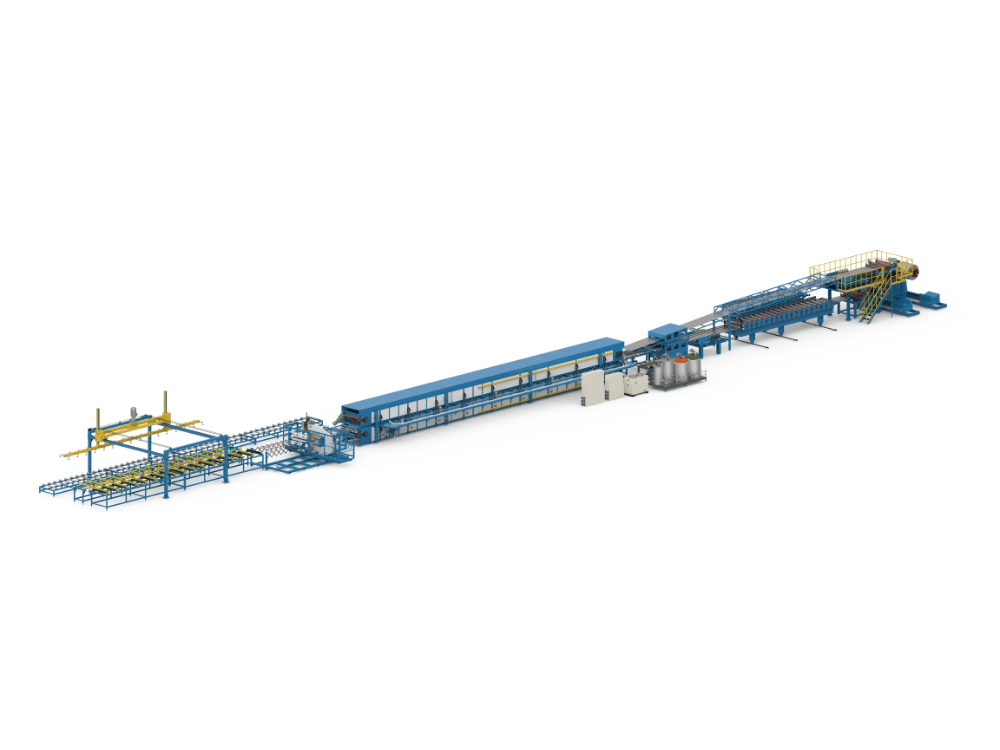
These are large, continuous production lines designed to manufacture insulated sandwich panels. The line dispenses a layer of rigid polyurethane foam between two facings, which can be metal, wood, or another material. As the foam cures, it adheres to the facings, creating a strong, lightweight, and highly insulating composite panel used extensively in the construction industry for walls, roofs, and cold storage facilities.
Advantages of Polyurethane Processing Machines
If you’re still wondering why you should opt for polyurethane processing, let’s look at some of the benefits.
Cost-Effective Production
One of the biggest advantages of these machines is their ability to produce large quantities of polyurethane products quickly and with minimal waste. The precise metering and mixing systems optimize chemical usage, making it a highly cost-effective solution for many industries looking to scale their operations efficiently.
Customization Options
Whether you need a specific density, hardness, color, or shape, the polyurethane process allows for significant customization. Manufacturers can easily adjust chemical formulations, mixing ratios, and molds to meet precise customer specifications, creating tailored products for niche applications without significant retooling.
Consistency in Quality
The automated and continuous nature of polyurethane processing ensures consistent product quality from batch to batch. You won’t have to worry about variations in density, structure, or performance, which is crucial in industries like automotive or medical, where strict standards and reliability are non-negotiable.
Versatility in Applications
Polyurethane products created by these machines can be used in a broad spectrum of applications, from soft-touch furniture to robust construction materials. This incredible flexibility in creating materials with diverse properties makes it a go-to solution for many manufacturers seeking innovation and market expansion.
Key Components in a Polyurethane Processing System
To understand the ins and outs of polyurethane processing, it’s essential to know the equipment involved. Here’s a quick rundown:
| Component | Description |
|---|---|
| Material Tanks | Temperature-controlled tanks that store the polyol and isocyanate components separately. |
| Metering Pumps | High-precision pumps that deliver chemical components in exact ratios. |
| Mixing Head | Mixes the components under high or low pressure to initiate the chemical reaction. |
| Molds/Conveyor | Shapes the liquid mixture into the final product or supports continuous panel production. |
| Curing System | Provides a controlled environment (often heated) for the polyurethane to fully cure. |
| Control Panel | The PLC-based interface is used to monitor and adjust all process parameters. |
Challenges in Polyurethane Processing
Like any industrial process, polyurethane processing comes with its own set of challenges. Here’s what manufacturers should keep an eye on:
Material Inconsistencies
Sometimes, raw chemical batches can vary in quality or reactivity, leading to inconsistent foam density or curing times. This can affect the strength, dimensional stability, and overall performance of the final product, requiring frequent process adjustments.
Equipment Maintenance
Polyurethane chemicals can be corrosive and prone to crystallization, especially isocyanates. Clogged filters, worn pump seals, or buildup in the mixing head can disrupt production and result in poor-quality products. Regular, preventative maintenance is crucial.
Process Control Issues
Maintaining precise control over temperature, pressure, and mix ratios is essential for consistent results. Any fluctuations can cause defects like voids, poor cell structure, or surface imperfections. A stable operating environment is key to achieving uniform products.
Optimizing the Polyurethane Processing Workflow
For manufacturers looking to optimize their polyurethane processing workflow, consider the following strategies:
Invest in High-Quality Raw Materials
Starting with top-quality, consistent chemicals from a reliable supplier ensures fewer defects and a smoother, more predictable reaction. This reduces the need for constant adjustments and improves the overall quality and performance of the final product.
Regular Equipment Maintenance
Keeping your machines well-maintained is non-negotiable. A proactive schedule for cleaning mixing heads, checking seals, and calibrating pumps can prevent costly breakdowns, minimize downtime, and ensure your system operates at peak efficiency for consistent output.
Implement Real-Time Monitoring
Advanced sensors and monitoring systems can detect issues like temperature fluctuations, pressure drops, or ratio deviations before they become major problems. This allows for immediate corrective action, ensuring a stable process and preventing the production of off-spec material.
Applications of Polyurethane Processing Machines in Different Industries
Construction Industry
The construction sector is a major beneficiary of polyurethane processing. These machines are used to produce high-performance rigid foam insulation panels for walls and roofs, as well as spray foam for sealing gaps. This improves energy efficiency, provides structural integrity, and offers excellent moisture resistance, making buildings more sustainable and durable.
Automotive Industry
In automotive manufacturing, polyurethane processing machines are vital for creating a wide range of components. They produce flexible foam for comfortable and durable seating, dashboards, and headrests. They also create rigid foam for sound and vibration dampening, as well as tough elastomers for bumpers and seals, enhancing both safety and comfort.
Furniture and Bedding
The furniture and bedding industries rely heavily on polyurethane for comfort and support. These machines produce flexible foams of various densities for sofa cushions, office chairs, and mattresses, including viscoelastic “memory foam.” This allows manufacturers to create products that offer superior comfort, durability, and ergonomic support.
Conclusion
In a nutshell, polyurethane processing is an incredibly versatile and efficient technology, serving a variety of industries around the world. Whether you’re producing insulation panels, automotive components, or comfortable furniture, understanding and optimizing this process is key to success. With advancements in machine technology and a growing focus on sustainability, the future of polyurethane processing is not only promising but also more innovative than ever. By following best practices and staying up to date on trends, manufacturers can keep their operations running smoothly and efficiently for years to come.
If you have any needs for polyurethane processing machines, please contact our team at Henghui