Polyurethane (PU) panel and foam production is a highly efficient and versatile manufacturing process that plays a pivotal role in the construction, automotive, and furniture industries. With an increasing global demand for energy-efficient building materials and lightweight structural components, PU panel and foam production has gained widespread attention for its superior performance, cost-effectiveness, and design flexibility.
In this article, we will explore the essentials of polyurethane production, including the manufacturing process, key advantages, and diverse applications. We will also cover how Henghui’s advanced production lines provide a reliable, cutting-edge solution for your industrial manufacturing needs, ensuring you can meet market demand with high-quality products.
What is Polyurethane Panel and Foam Production?
Polyurethane panel and foam production is a chemical manufacturing process where liquid components are reacted to create a durable, lightweight polymer. This material is then formed into panels or molded shapes. These products are widely used in insulation, structural support, and cushioning applications due to their excellent physical properties and adaptability in manufacturing.
There are primarily two main types of polyurethane foam used in production:
- Rigid Foam: Offers exceptional thermal insulation and structural strength. It is most often used to create insulated panels for building walls, roofs, and cold storage facilities.
- Flexible Foam: Provides excellent cushioning, comfort, and durability. This type is commonly found in furniture, automotive seating, and mattresses.
Polyurethane Panel and Foam Production Process Overview
- Raw Material Preparation: The process begins with the preparation of the primary chemical components—polyols and isocyanates. These liquids, along with specific additives like catalysts, blowing agents, and surfactants, are stored in temperature-controlled tanks. They are then precisely metered to ensure the correct ratio for the desired foam properties before being sent to the mixing head.
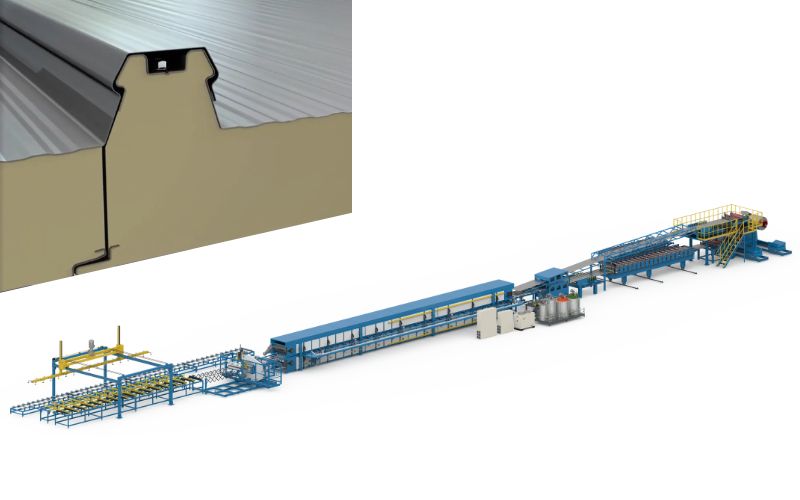
- Foaming Process: The prepared raw materials are injected into a high-pressure or low-pressure mixing head, where they are thoroughly blended. The resulting chemical reaction causes the mixture to expand and form a foam. This reacting liquid is then dispensed into a mold or onto a continuous conveyor, where it takes its final shape as a panel or part.
- Curing and Cutting: The newly formed foam is allowed to cure, a process in which the chemical reaction completes and the material hardens to achieve its final strength and stability. For continuous panel lines, this happens as the panel moves along a heated conveyor. The cured foam is then precisely cut into the desired lengths, shapes, and sizes using automated saws.
- Final Assembly: After cutting, the panels or molded parts move to the final assembly stage. For sandwich panels, this may involve laminating the foam core with metal or other facing materials. The finished products are then stacked, packaged, and prepared for shipment to their final applications.
Key Features and Advantages of Polyurethane Panels and Foam
- Thermal Insulation: Polyurethane foam has one of the highest R-values per inch among commercially available insulation materials. This excellent thermal resistance makes it the ideal choice for creating energy-efficient buildings, reducing heating and cooling costs, and maintaining stable indoor temperatures in any climate.
- Lightweight and Durable: Despite its low density, polyurethane foam possesses a remarkable strength-to-weight ratio. This makes it suitable for structural applications where reducing weight is critical without compromising on durability or load-bearing capacity. Its toughness ensures a long service life even in demanding conditions.
- Versatility: The polyurethane production process is incredibly versatile. The foam’s density, hardness, and shape can be easily customized to meet specific application requirements. This allows for the creation of everything from soft, flexible cushions to large, rigid structural panels, all from the same basic chemical process.
Applications of Polyurethane Panels and Foam
Polyurethane panels and foam produced through advanced manufacturing lines are used across diverse industries:
- Construction: In the building industry, rigid PU panels are used for wall and roof insulation, structural insulated panels (SIPs), and exterior cladding. Spray foam is also used to seal air gaps and improve building envelope performance.
- Automotive: Polyurethane foam is widely used in vehicles for seating cushions, headrests, dashboards, and soundproofing. Its lightweight nature helps improve fuel efficiency while enhancing passenger comfort and safety.
- Furniture and Bedding: Flexible foam is a primary component in mattresses, sofa cushions, and upholstery padding. It provides long-lasting comfort and ergonomic support, making it a staple in the home furnishings market.
Why Choose Henghui Polyurethane Production Lines?
Henghui is a trusted manufacturer of polyurethane production lines, offering cutting-edge technology tailored for various industrial applications. Here’s why Henghui stands out:
- High-Efficiency Machines: Equipped with high-precision metering pumps and advanced mixing heads, Henghui’s machines ensure uniform chemical mixing and precise control over the foaming process. This guarantees consistent product quality and minimizes material waste, thereby enabling cost-effective production.
- Advanced Technology: Our production lines feature intelligent PLC control systems and HMI interfaces for easy operation, full automation, and real-time process monitoring. Features like automated mold carriers and energy-efficient designs help streamline production and reduce operational costs.
- Sustainability: Henghui production systems are designed with the environment in mind. They are compatible with a range of modern, eco-friendly blowing agents and can be configured to promote sustainable manufacturing practices, helping your business reduce its environmental footprint.
Polyurethane Panels and Foam vs. Other Materials
Compared to alternative materials like polystyrene or fiberglass, polyurethane offers superior performance in several key areas:
- Polyurethane vs. Polystyrene: Polyurethane provides significantly better thermal insulation per inch of thickness. This means a thinner PU panel can achieve the same R-value as a much thicker polystyrene panel, saving space and material.
- Polyurethane vs. Fiberglass: Polyurethane foam is much lighter than fiberglass insulation and poses no risk of skin irritation during handling. Its rigid form also adds structural strength, a benefit that fiberglass batts do not offer.
Conclusion
Polyurethane panel and foam production is a forward-looking solution for industries demanding high-performance, lightweight, and versatile materials. With its excellent insulation properties, structural integrity, and customizability, polyurethane has become the material of choice for construction, automotive, and consumer goods applications worldwide.
Henghui’s state-of-the-art polyurethane production lines provide manufacturers with the tools they need to stay competitive, reduce their environmental footprint, and produce superior-quality products. Investing in efficient polyurethane production technology ensures long-term value and market success. For inquiries or technical support, contact Henghui today and explore tailored solutions for your production needs.