
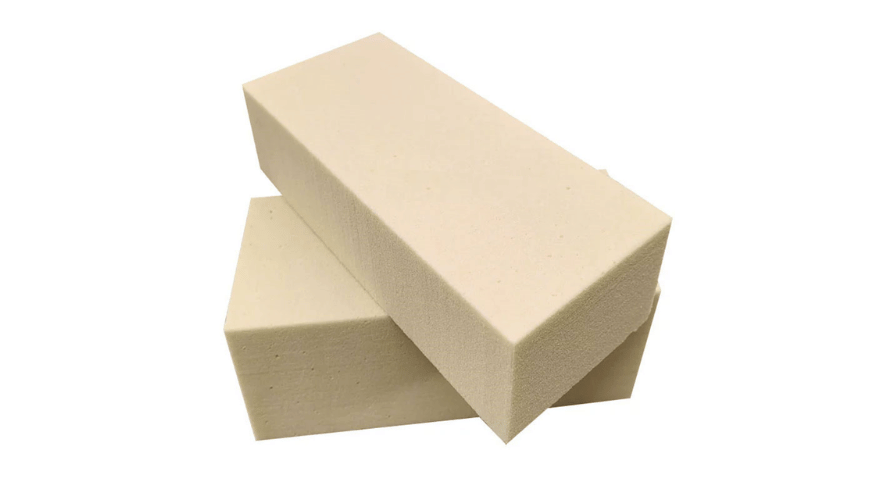
Polyurethane (PU) foams are among the most versatile and widely used materials in modern industries.
These foams are found in countless applications, from furniture and bedding to automotive and construction. If you’ve ever sat on a cushioned chair or used an insulated cooler, you’ve experienced the benefits of PU foams firsthand.
While consumers may not often consider the science behind PU foams, industries rely heavily on their unique properties and adaptability.
Let’s explore what PU foams are, how they’re used, and the different types of foams utilized across industries like furniture, construction, and automotive.
What Is a PU Foam?
PU foam is defined by its chemical composition and structure, which can be tailored to meet specific needs. Foams are produced by the reaction of polyols and diisocyanates, yielding a lightweight, durable, and flexible material.
They can also be manufactured in a range of densities and stiffness levels, making them suitable for diverse applications. Because the material is so adaptable, it can be customized for texture, strength, and thermal or acoustic insulation.
This versatility enables specialized solutions tailored to individual product requirements.
This results in a material that provides superior comfort, protection, and energy efficiency for a variety of uses, from furniture cushioning to building insulation.
All these factors combine to make PU foam a vital component in modern manufacturing, providing solutions for comfort, safety, and performance across many industries.
What Are Density and Compression Strength?
When evaluating PU foams, density and compression strength are two key metrics to consider.
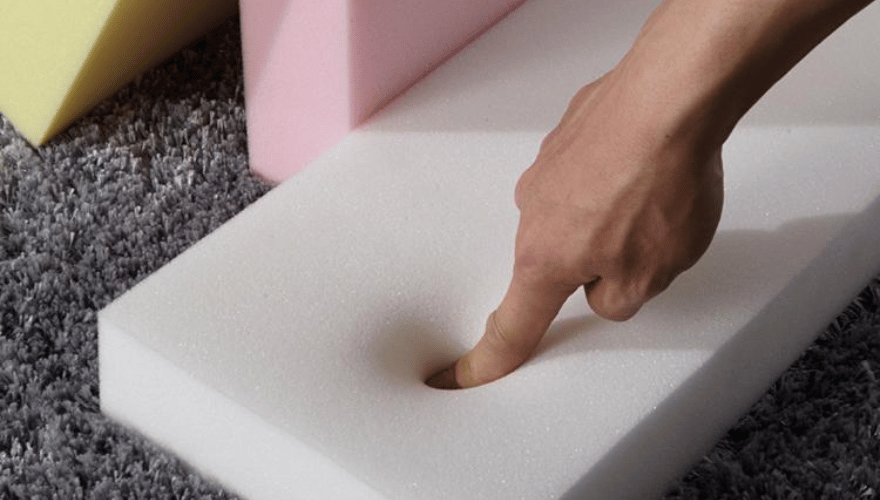
Density measures the foam’s mass per unit volume, which impacts its durability, comfort, and insulation properties, while compression strength refers to its ability to withstand pressure without deforming. These are relevant metrics for industries like construction, automotive, and furniture, where performance and longevity are critical.
Both measurements are essential for determining a foam’s suitability for a specific use, particularly in load-bearing applications. A few hours of use may not affect the foam’s shape or quality, but what about a few weeks, months, or even years? These extended durations are when these properties matter most.
To ensure optimal performance, manufacturers must select PU foams that balance density and compression strength to meet the demands of specific applications and deliver a reliable user experience over time.
What Are the Different Types of PU Foams?
With many variations of PU foams available, it helps to categorize them by structure and performance. Here are the main types of PU foams and the properties they’re known for in typical applications.
Flexible PU Foam
Significant cushioning is expected from flexible PU foam, which delivers comfort in applications such as furniture, bedding, and automotive seating.
Lightweight and adaptable, flexible foams are ideal for creating ergonomic and comfortable products. These materials fall short when high levels of rigidity or thermal insulation are required.
At most, you may see flexible foam used as a secondary comfort layer in combination with other materials, but it doesn’t serve as a primary structural or insulating component.
Rigid PU Foam
With a closed-cell structure as a standard base, rigid foam is manufactured to create a stable material with superior insulating properties.
This is how producers achieve an excellent barrier to heat transfer, which cannot be accomplished with flexible foam alone.
For example, its moisture resistance combined with its structural integrity makes it ideal for construction and refrigeration applications, protecting interiors and withstanding harsh conditions.
The advantage here is that rigid foams are durable and strong, yet still lightweight. However, these foams are not suitable for applications requiring softness and flexibility.
High-Resilience (HR) Foam
Examples of high-resilience foams are often found in premium furniture and mattresses. These foams offer firm support and durability, including better comfort and shape retention.
These foams also have a better feel that adds value for consumers. What’s more, they can deliver a superior user experience after purchase.
Customization options are greater, and while production costs are higher, they are excellent intermediate options for high-end seating, bedding, and other premium products.
Integral Skin & Spray Foams
At the top of the range for specialized PU foams are advanced materials produced through specialized manufacturing processes for targeted applications.
Integral skin foam, with its dense outer layer and soft core, is engineered for automotive applications such as dashboards and armrests. Spray foam is designed to expand and fill gaps, providing insulation in construction.
The result is a highly customized end product, created with precision to the producer’s exact specifications.
Frequently Asked Questions
Why Are PU Foams Popular in Various Industries?
Manufacturers aim to bring products to market that offer performance, durability, and cost-effectiveness, all while meeting specific consumer and industry demands.
Only the most versatile materials can balance all these factors simultaneously, which explains why companies in the furniture, construction, and automotive industries rely on PU foams.
The proper selection of foam can lead to superior product performance and customer satisfaction, making it a critical part of the manufacturing decision-making process.
What is PU foam, and how is polyurethane foam made?
PU foam, short for polyurethane foam, is a cellular polymer produced by the chemical reaction of polyols and isocyanates often with a blowing agent and additives. During foam production these reactants expand to form a foam morphology—either open-cell or closed-cell—resulting in flexible polyurethane foam or rigid polyurethane foam depending on formulation. The reaction of polyols and isocyanates, together with catalysts, surfactants and flame retardant or resilience-enhancing additives, determines properties of polyurethane foam such as density, thermal conductivity and mechanical properties.
What are the main types of polyurethane foam and their uses?
The main types of foam are flexible foam (flexible PU foam) and rigid foam (rigid polyurethane foam). Flexible polyurethane foam is widely used as cushioning material in mattresses, furniture, automotive seating and moulded foam products. Rigid PU foam and rigid foam panels are typically used as insulation material and building insulation because of low thermal conductivity and good insulating properties. There are also specialty formulations—polyurethane elastomer for durable parts and foam packaging or foam blocks for protective packaging and mold-in-place applications.
How does foam density affect performance and applications?
Foam density is a key physical property that affects resilience, compression, durability and insulating performance. Low density flexible foam is softer and used for soft foam cushions and bedding, while higher density foams give greater load-bearing capacity, longer life and improved mechanical properties for automotive or molded foam applications. For rigid PU foam, density influences thermal insulation, structural strength and sound insulation—higher density rigid foam usually gives lower thermal conductivity and better durability.
Is PU foam good for thermal and sound insulation?
Yes—PU foam products are effective as both thermal insulation and acoustic insulation materials. Rigid polyurethane foam is widely used for heat insulation in building insulation, refrigerated transport and insulating material panels because of low thermal conductivity and high insulating value. Open-cell flexible foam and certain foam articles can also be used as acoustic insulation or used as acoustic insulation in interiors, providing sound absorption in addition to cushioning.
Are polyurethane foams safe and do they require flame retardants?
Safety depends on formulation and intended use. Many PU foams include flame retardant additives to meet building or automotive fire safety standards; rigid foam used in construction often must meet specific flame spread and smoke criteria. During production and curing, isocyanate handling requires precautions; cured foam is generally stable but foam scrap and offcuts should be managed. Manufacturers often follow guidelines from organizations like the polyurethane foam association to ensure safety and regulatory compliance.
How is PU foam used in automotive and mattress industries?
Flexible polyurethane foam is commonly used in automotive seating, headrests and interior trim because of its cushioning material properties, resilience and durability. In the mattress industry PU foam—moulded foam or slab stock foam—is used for comfort layers, support cores and mattress toppers. Foam density, compression characteristics and resilience are tailored to give the desired comfort, support and life expectancy for each application.
Can PU foam be recycled or reused and what happens to foam scrap?
PU foam recycling and reuse are active areas in foam fabrication and waste management. Foam scrap from production can be rebonded into foam blocks or used as filler; chemical recycling and reclaiming polyols are options at industrial scale. Some foam products are downcycled into carpet underlay or packaging material, while research into new PU material chemistries aims to improve recyclability and reduce environmental impact.
What additives and blowing agents are used in foam production?
Blowing agents create the cellular structure and can be physical (gases) or chemical; older CFCs have been replaced by lower global warming potential alternatives. Additives used in foam production include catalysts, surfactants, flame retardant, colorants and performance modifiers that change resilience, mechanical properties and thermal insulation. The choice of polyol, isocyanate and blowing agent defines whether the product becomes flexible foam, rigid pu foam or a molded foam article tailored for specific foam applications.
How do the properties of polyurethane foam compare to other insulating materials?
Properties of PU foam—such as low thermal conductivity, good strength-to-weight ratio, and versatile foam-based fabrication—make it a competitive insulating material compared with mineral wool, polystyrene and other plastics. Rigid PU foam offers excellent heat insulation and is an efficient insulator per thickness, while flexible foam shines in cushioning and packaging applications. Selection depends on required insulation properties, mechanical properties, cost and regulatory needs for flame retardancy and durability.
The Bottom Line
There’s a specialized foam for any application you can imagine, from creating comfortable furniture to insulating buildings for energy efficiency. These materials can be customized to your exact specifications, boosting product quality to help keep your customers happy.
Choose the right PU foam and use the right material to deliver comfort, safety, and performance.