
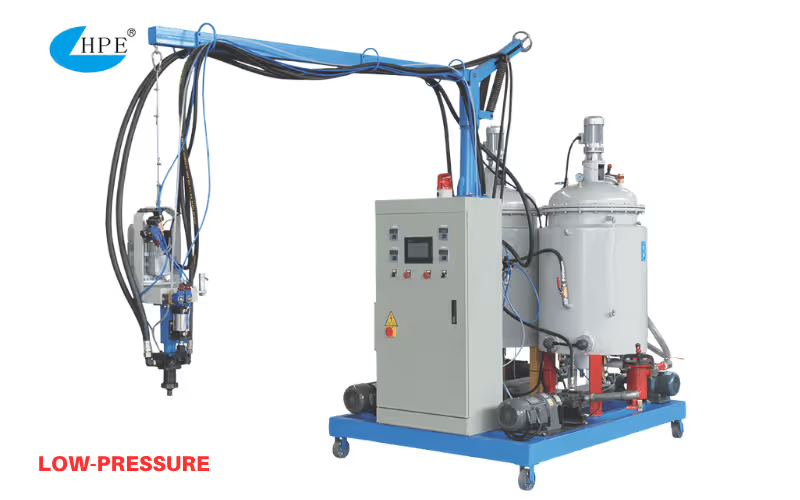
In this article, we will explore the main characteristics of this machine, how it works, and in detail what happens during the foaming process.
Let’s start with a clear definition: a low-pressure polyurethane (PU) foaming machine is an industrial device used to produce polyurethane foam. This technology underpins many industries and plays a crucial role in creating the insulated, cushioned objects we use every day.
Low-pressure foaming is a process in which liquid materials are mixed and dispensed to create a continuous or molded foam product. This material, usually consisting of a polyol and an isocyanate, is fed into a specialized mixing chamber fitted with a dynamic mechanical agitator that blends the chemicals through the system.
The applications of this technology are surprisingly vast. In many manufacturing industries, these machines are used to produce insulation, furniture cushions, and automotive parts. The versatility of the low-pressure PU foaming machine makes it an indispensable tool across sectors ranging from construction to the appliance industry.
What is a Low-Pressure Polyurethane Foaming Machine?
These foaming machine models are fitted with distinct components that work in tandem to mix and dispense polyurethane components under low pressure. The main configurations rely on mechanical mixing, offering a highly reliable method for blending the reactive chemicals.
Low-pressure mixing mechanics:
- In a low-pressure PU foaming machine, the components are blended using a dynamic mechanical agitator inside the mixing head.
- This configuration is the most common for applications requiring precise, smaller pours and offers greater versatility in producing a wide range of foam materials.
- Rotation of the mechanical mixer helps maintain good contact between the chemicals, contributing to improved blending and consistency in the liquid mixture before it expands.
Key system components:
- raw material tanks store the individual polyol and isocyanate chemicals at optimal temperatures before processing;
- low-pressure pumps carefully deliver these materials to the mixing chamber, ensuring precise dosing and accurate chemical ratios;
- A dedicated control system monitors the entire operation, contributing to improved dispersion of additives and chemical substances throughout the foam.
In general, the choice of a low-pressure polyurethane foaming machine depends on the specific requirements of the production process and the type of foam material being produced. Both rigid and flexible foams have unique processing advantages, and the choice depends on factors such as material viscosity, mixing requirements, process temperature, and the desired properties of the end product.
How Does a Low-Pressure Polyurethane Foaming Machine Work?
Now let’s look—in a clear and simple way—at the four steps in the process:
- Feeding in the material: the material, consisting of liquid polyol and isocyanate, is fed into the machine from dedicated storage tanks. These highly regulated tanks maintain the exact temperature and viscosity needed before the low-pressure pumps gently draw the liquids out and send them toward the main processing unit.
- Low-pressure mixing: the materials are introduced into a dynamic mixing chamber housing a high-speed rotating mechanical agitator. The low-pressure pumps deliver the separate chemicals into this chamber, where the physical blades vigorously blend them. Thanks to this mechanical technology, we can significantly reduce the pressure required to achieve a perfectly homogeneous mixture, thereby enabling optimized, sustainable production processes that handle highly viscous chemical combinations with absolute ease.
- Dispensing: the dynamic mixer continues to push the blended liquid through the machine. This low pressure allows the material to flow smoothly through a pouring nozzle, taking on the required shape. The mixed polyurethane is carefully dispensed directly into open molds or poured onto specific surfaces, depending on the manufacturing application. Accurate flow control is vital for guaranteeing the quality of the end product, ensuring that the exact amount of liquid is deposited to prevent messy overflows.
- Foam expansion and curing: once poured, the liquid chemicals undergo an immediate chemical reaction that causes the material to rapidly expand, filling the entire mold. This process solidifies the material, fixing its permanent shape. The final result is a continuous or molded foam product with the desired structural integrity, which can be trimmed or used as it is, ultimately forming rigid insulation boards or soft, flexible cushioning.
Applications of Low-Pressure Polyurethane Foaming Machines
The applications of low-pressure foaming machines are surprisingly vast across various manufacturing sectors.
- Construction Industry: These machines are used in the construction sector to produce highly efficient insulation panels, durable roofing materials, and energy-saving wall cladding. The precise pouring capabilities ensure excellent thermal resistance for modern building infrastructure.
- Furniture Industry: The furniture industry relies on this technology to manufacture soft, flexible polyurethane foam. This material is perfectly suited for creating comfortable mattresses, supportive sofa cushions, and high-quality upholstery that retains its shape over years of heavy use.
- Appliances and Refrigeration: Additionally, these machines are indispensable for injecting rigid insulating foam into modern refrigerators and commercial freezers.
The Future of Low-Pressure Polyurethane Foaming Machines
In the current context, the overriding challenge is sustainability, a demanding and urgent issue that involves everyone who works in the polyurethane manufacturing sector. To tackle this challenge, it is key to focus our efforts on reducing the environmental impact, starting with limiting waste through energy-efficient machines and recyclable chemical materials. Aware of this requirement, manufacturers are actively committed to developing advanced precision control and automation to improve operational efficiency. This progress reduces material waste and is a testament to our genuine commitment to promoting green initiatives. Ultimately, the role of low-pressure PU foaming machines in sustainable manufacturing demonstrates that it is possible to perfectly combine industrial production with long-term environmental responsibility.