
Polyurethane foaming machines are among the most versatile and essential pieces of processing equipment used across the construction, automotive, furniture, and packaging sectors. They provide the extreme precision and flexibility needed to handle complex chemical formulations effectively. By offering superior mixing capabilities, enhanced process control, and effortless scalability, polyurethane foaming machines have become absolutely indispensable in industries where high performance, durability, and product consistency are critical to success.
This article explores the fundamentals of a polyurethane foaming machine, the most common operational configurations, their wide-ranging applications across industries, and the significant manufacturing benefits they deliver. Whether you operate a large-scale industrial plant or a specialized custom fabrication shop, understanding how these systems work will help you make informed decisions about your production line.
What is a Polyurethane Foaming Machine?
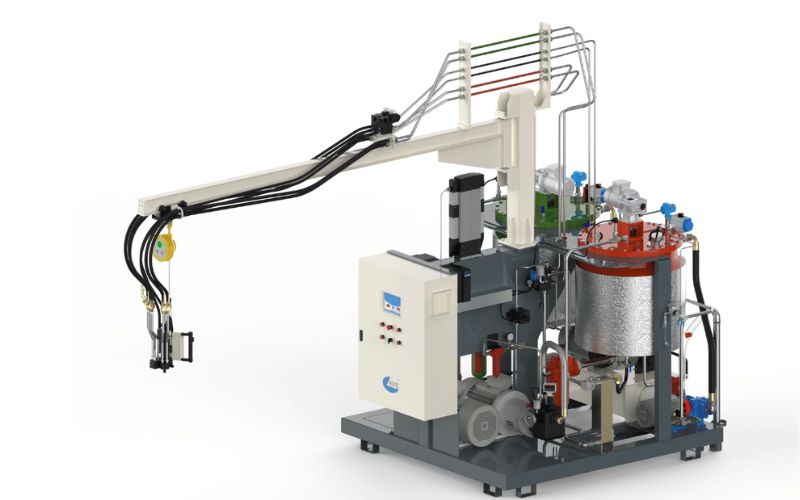
A polyurethane foaming machine is specialized industrial equipment designed to continuously mix, dispense, and process specific chemical components to create high-quality polyurethane foam. The primary function of this machine is to draw two main liquid components, typically a polyol resin and an isocyanate, from separate storage tanks. The machine precisely meters these chemicals, heats them to the optimal processing temperature, and forces them together inside a highly engineered mixing head. The resulting chemical reaction causes the mixture to expand rapidly and cure into a solid foam structure. Unlike basic dispensing tools, industrial polyurethane foaming machines are engineered for complex formulations, allowing manufacturers to incorporate specific additives, blowing agents, and flame retardants with absolute precision.
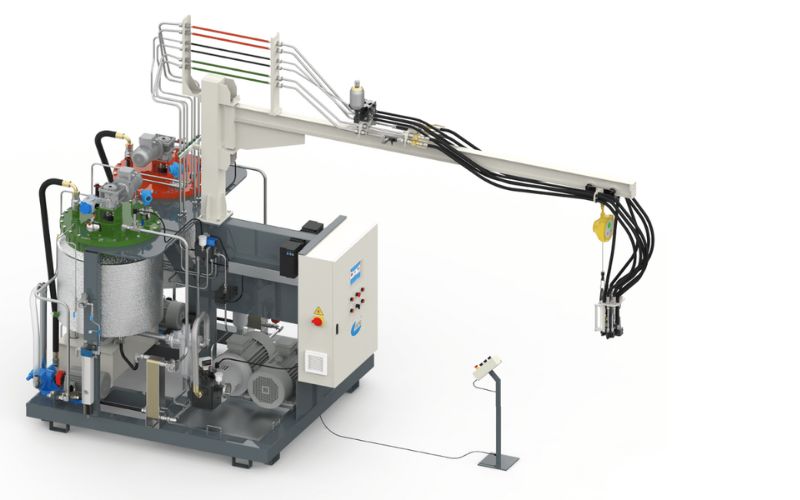
A standard polyurethane foaming machine consists of a sophisticated material feeding system, precision metering pumps, advanced heating and cooling units, a high-performance mixing head, and a computerized control panel. The feeding system uses heavy-duty pumps to move the raw chemical liquids from their respective holding tanks through specialized temperature-controlled hoses. Heating and cooling elements remain essential to the design to maintain precise temperature control, as the polyol-isocyanate reaction is highly sensitive to thermal fluctuations. The mixing head serves as the heart of the machine, utilizing high pressure or mechanical agitation to blend the chemicals homogeneously before dispensing them into a mold or onto a surface. The computerized control system actively monitors and adjusts all process parameters, regulating temperature zones, pump speeds, pressure levels, and dispensing times to ensure perfect reproducibility and compliance with strict quality standards.
Types of Polyurethane Foaming Machines
Polyurethane foaming machines are broadly categorized by mixing methods, output capacity, and specific application design. Choosing the correct type depends entirely on the desired foam density, production scale, and required material properties.
High-Pressure Foaming Machines
High-pressure foaming machines utilize extreme hydraulic pressure to force the polyol and isocyanate components through tiny nozzles inside the mixing head, where they collide and blend flawlessly without the need for mechanical agitators. This impingement mixing process delivers outstanding dispersive mixing, making high-pressure machines the preferred choice for demanding, large-scale production runs. They excel in creating high-density rigid foams and molded flexible foams used in automotive seating and industrial insulation. Furthermore, because the mixing head cleans itself automatically after every shot using system pressure rather than chemical solvents, these machines offer superior efficiency, lower operating costs, and a more environmentally friendly manufacturing process.
Low-Pressure Foaming Machines
In low-pressure foaming machines, the chemical components are pumped at much lower pressure into a mixing chamber, where a dynamic mechanical stirrer blends them. This design generates a gentler mixing environment, making it especially well-suited for processing lower-volume production, highly viscous materials, or specialized formulations containing heavy solid fillers. Low-pressure machines are generally more cost-effective to purchase and maintain, making them highly accessible for smaller fabrication shops. However, they require a regular flushing cycle with chemical solvents or water to clean the mechanical mixing head after dispensing, which can increase consumable costs and necessitate proper waste management protocols.
Continuous vs. Batch Foaming Machines
Continuous foaming machines operate without interruption, constantly dispensing the mixed polyurethane liquid onto a moving conveyor belt, where it rises into a massive, continuous block, or “slabstock,” that is later cut into specific shapes. These massive systems are ideal for ultra-high-throughput applications like mattress manufacturing and bulk furniture upholstery. In contrast, batch foaming machines dispense specific, pre-measured “shots” of the chemical mixture directly into individual molds or cavities. Batch machines provide the precise control needed for smaller, customized production runs, allowing manufacturers to create distinct, intricate products such as steering wheels, decorative architectural moldings, or specialized protective packaging items.
Specialized Machines
Many manufacturers utilize highly specialized polyurethane foaming machines designed for very specific operational environments. For example, mobile spray foam machines are engineered specifically for the construction industry, allowing contractors to apply rigid polyurethane insulation directly onto walls and roofs on-site. Other specialized systems include panel pressing machines that continuously inject polyurethane foam between two metal or plastic sheets to create rigid structural insulation panels used in cold storage facilities and modular building construction.
Applications of Polyurethane Foaming Machines
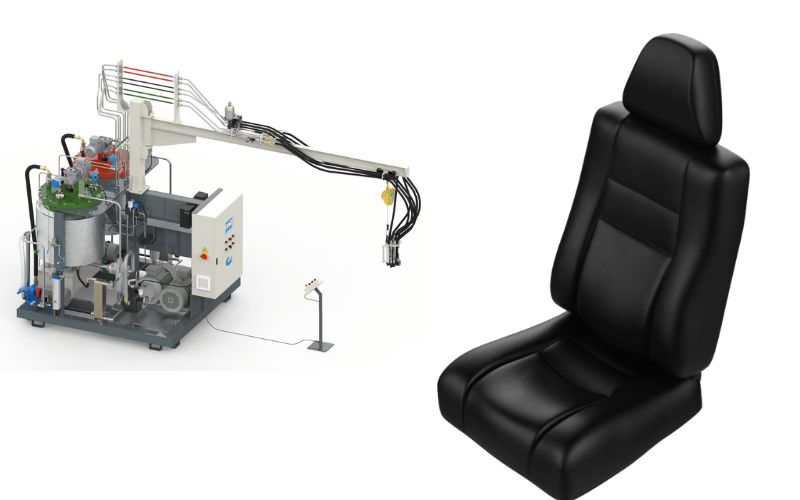
Polyurethane foaming machines remain central to industries where precise chemical mixing, scalable production, and structural efficiency are essential. In the construction industry, these machines are widely used to produce high-performance structural insulation panels, durable roofing materials, and specialized industrial sealants that significantly improve building energy efficiency. The automotive sector relies extensively on polyurethane foaming equipment to produce comfortable seat cushions, impact-absorbing dashboards, interior headliners, and advanced soundproofing materials that enhance the overall driving experience while reducing vehicle weight.
Beyond construction and automotive uses, the furniture and packaging industries rely entirely on the consistent output of these machines. Furniture manufacturers use continuous foaming lines to produce the soft, resilient, flexible foam required for premium mattresses, sofa cushions, and ergonomic office chairs. Meanwhile, the packaging industry utilizes specialized batch machines to create custom-molded, shock-absorbing protective foam that safely secures fragile electronics, delicate medical instruments, and high-value consumer goods during global transit. In all these applications, the ability to tightly control the foam’s precise properties—whether it needs to be highly flexible, incredibly rigid, or impact-resistant—makes these machines an invaluable asset.
Benefits of Polyurethane Foaming Machines
Precision and Consistency:
Polyurethane foaming machines are highly sophisticated tools that ensure absolute uniformity and exceptional foam quality across hundreds of production batches. By automating the metering, mixing, and dispensing processes, these machines eliminate the high risk of human error associated with manual chemical handling. The advanced computerized control systems actively monitor the precise ratio of polyol to isocyanate and adjust pump speeds in real time to ensure that every product meets strict structural and density specifications.
Versatility:
These machines are highly versatile, making them perfectly suitable for processing an incredible variety of polyurethane formulations. By simply adjusting the chemical ratios, temperature settings, and introducing specific blowing agents, a single high-quality machine can often be adapted to produce entirely different types of foam. Manufacturers can seamlessly transition from pouring soft, flexible memory foam for bedding products to injecting tough, rigid structural foam for industrial applications, all while maintaining strict quality control.
Efficiency and Scalability:
Polyurethane foaming machines operate with incredible speed and accuracy, minimizing costly production downtime and delivering significantly greater material efficiency compared to manual mixing methods. Advanced injection heads reduce material waste by ensuring that exactly the right amount of chemical mixture goes into each mold. This precise delivery system dramatically lowers raw material costs over time. Furthermore, the inherent scalability of these machines enables manufacturers to ramp up production volumes to meet growing market demand without compromising product integrity.
Customization:
Modern foaming machines can be tailored to diverse manufacturing applications through highly modular designs. Production lines can be equipped with additional colorant injection ports, separate catalyst tanks, or auxiliary filler dosing systems. Independent temperature zones along the material lines, combined with highly adjustable output pressures, provide operators with complete process control. This mechanical flexibility allows facilities to adapt rapidly when working with brand-new chemical formulations or when trying to achieve highly customized foam properties for niche clients.
Conclusion
Polyurethane foaming machines stand as incredibly advanced processing tools that provide unmatched chemical control, manufacturing flexibility, and operational scalability. Whether deployed in heavy construction material production, automotive parts manufacturing, furniture assembly, or protective packaging, they consistently deliver superior results and enable continuous product innovation. By thoroughly understanding the distinct types of foaming machines available, their widespread applications across major global industries, and the substantial financial and operational benefits they offer, manufacturers can select the perfect equipment configuration to optimize their production efficiency, enhance product quality, and accelerate their overall business development.