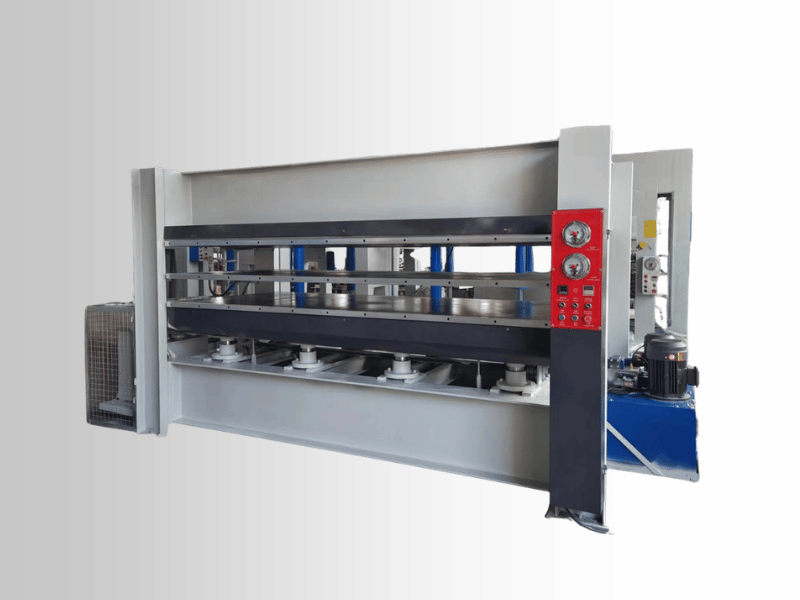
Choosing the right production equipment shapes your output quality, costs, and ability to scale. Among the most widely used machines in modern manufacturing, the hot press machine plays a central role in bonding, forming, and laminating materials with precision. This guide explains what a hot press machine is, the main types available, where it delivers value across industries, and the benefits it offers—so you can make a confident, informed purchasing decision for your business.
What is a Hot Press Machine?
A hot press machine is industrial equipment that applies controlled heat and pressure simultaneously to bond, form, mold, or laminate materials. It relies on heated platens, a pressing mechanism—hydraulic, pneumatic, or mechanical—and precise temperature and pressure controls to deliver consistent, repeatable results. By combining thermal energy with compressive force, the machine cures adhesives, fuses layers, and shapes parts that would be difficult to produce by other means. You’ll find hot press machines at work across many sectors, including woodworking, composites manufacturing, electronics assembly, textile processing, and rubber production, where reliable bonding and forming are essential to product quality.
The working principle is straightforward but precise. Materials are placed between heated platens, and the machine applies pressure and heat for a set cycle time to cure adhesives, fuse layers, or shape components. Three core variables—temperature, pressure, and dwell time—determine the quality of every finished piece, and skilled operators adjust them to match each material and application. Getting this balance right ensures strong bonds, smooth surfaces, and consistent dimensions. Understanding these fundamentals helps your business match the right machine to your specific production needs and avoid costly mismatches.
Types of Hot Press Machines
Hot press machines come in several types, distinguished mainly by their pressing mechanism and intended application. Knowing how each one works helps you identify the best fit for your production scenario.
Hydraulic Hot Press Machines
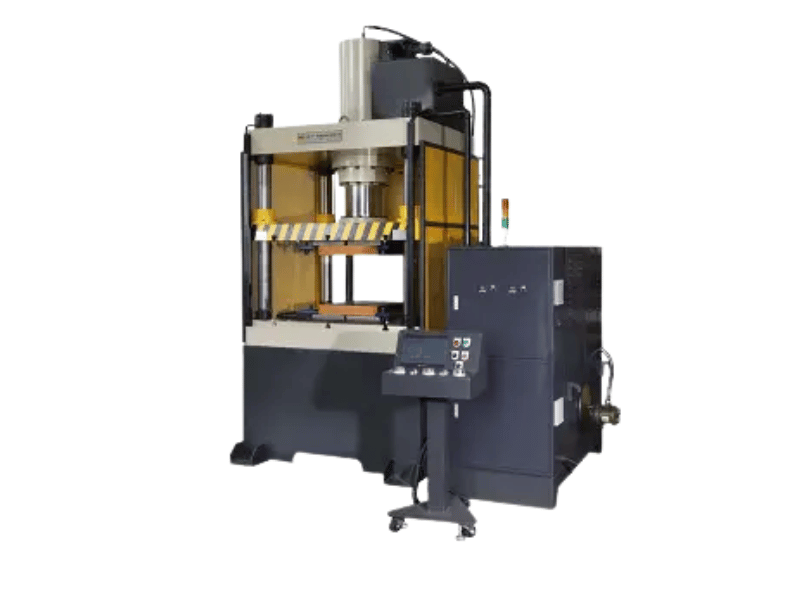
Hydraulic models use pressurized fluid to generate a high, evenly distributed clamping force across the platen surface. This makes them the go-to choice for heavy-duty applications such as plywood production, composite molding, and large laminated panels, where consistent pressure across a wide area is critical. Their ability to maintain a steady, powerful force throughout the pressing cycle ensures strong, uniform bonds. For manufacturers handling thick or large-format materials, hydraulic hot press machines deliver the reliability and strength demanding production runs require.
Learn More: Multilayer Hot Press Machine (The system produces foam, which is injected into layers of board, then heated and cured in place.)
Pneumatic Hot Press Machines
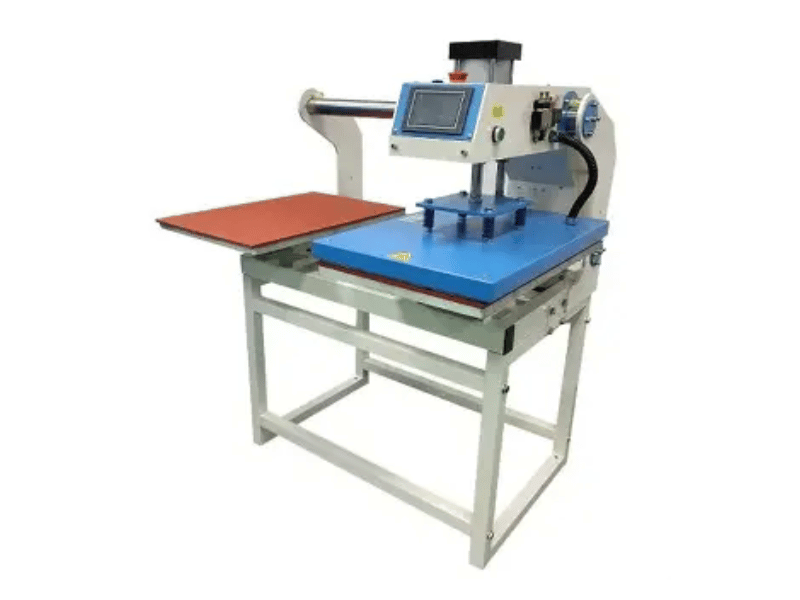
Pneumatic models rely on compressed air to apply pressure, offering faster cycle times and lighter-duty performance than hydraulic systems. They suit smaller parts, textile bonding, and electronics applications where speed and precision matter more than maximum force. Because compressed air responds quickly, these machines support rapid, repeatable pressing for high-frequency tasks. For businesses producing smaller components or working with delicate materials, pneumatic hot press machines provide an efficient, cost-effective solution without the heavier infrastructure of hydraulic alternatives.
Mechanical and Specialty Hot Press Machines
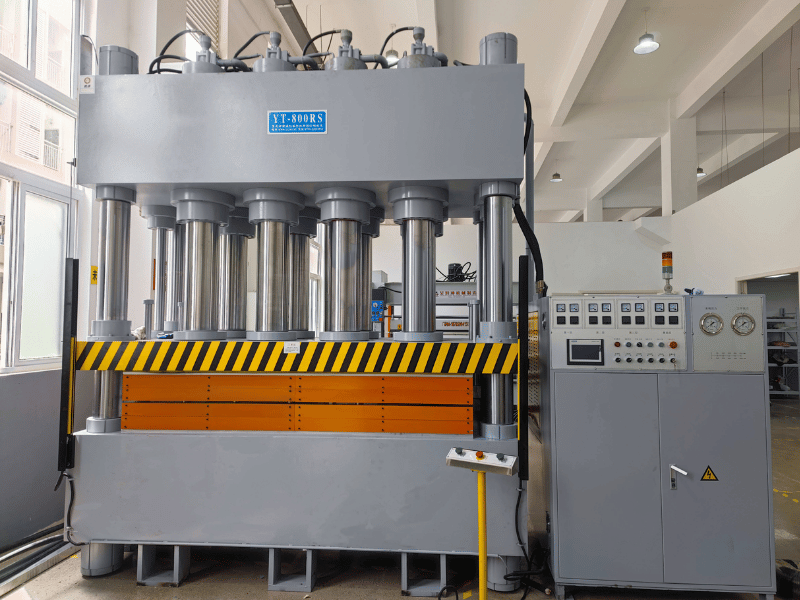
Mechanical hot press machines use screw-driven or cam-based mechanisms to deliver controlled force, often favored for high-speed, repetitive production. Specialty designs—such as vacuum and rotary presses—address specific needs, including curved surfaces, continuous feeding, or air-free bonding. Vacuum presses excel at conforming materials around contours, while rotary models support continuous, high-volume output. These machines balance speed, force, and product shape to handle niche applications or large-scale runs, giving manufacturers options tailored to specialized or high-throughput requirements.
Applications of Hot Press Machines Across Industries
Hot press machines serve a wide range of industries where heat-and-pressure bonding or forming is essential to the final product. Here are some of the most common applications and the value they bring.
Woodworking and Furniture
In woodworking and furniture manufacturing, hot press machines laminate plywood, veneers, doors, and decorative panels. The combination of heat and pressure bonds multiple layers into strong, stable products with smooth, attractive finishes. This process improves durability and surface quality while speeding up production. For furniture makers and panel producers, the machine turns raw layers into finished components ready for assembly or sale.
Composites, Electronics, and Textiles
Beyond wood, hot press machines power production across composites, electronics, and textiles. In composites, they mold fiber-reinforced parts into precise, durable shapes for automotive and aerospace use. In electronics, they handle printed circuit board (PCB) lamination and membrane switch assembly, where exact heat and pressure protect sensitive components. In textiles, they enable heat-transfer printing and fabric bonding for apparel and technical materials. Across all three, precise control of temperature and force delivers consistent, high-quality results that meet strict industry standards and support reliable, repeatable manufacturing.
Key Benefits of Hot Press Machines
Hot press machines offer clear advantages for businesses focused on quality, efficiency, and growth. Here are the key benefits that make them a smart investment.
Consistent Product Quality
The precise control of heat, pressure, and dwell time produces uniform, repeatable results across every batch. This consistency reduces defects, minimizes rework, and ensures that finished products reliably meet specifications. For manufacturers, that translates into less wasted material, fewer customer complaints, and a stronger reputation for quality. When every piece comes out the same, you can confidently scale production while protecting your brand and bottom line.
Production Efficiency and Labor Savings
Automated pressing cycles speed up production and reduce the manual labor traditional methods demand. Operators set the parameters, and the machine handles the work consistently, freeing staff for higher-value tasks. This efficiency lowers per-unit costs, especially in high-volume operations where small savings add up quickly. The result is faster throughput, reduced labor expense, and a more predictable, streamlined manufacturing process.
Versatility and Scalability
A single hot press machine can handle multiple products thanks to adjustable temperature, pressure, and cycle settings, as well as various platen sizes. This versatility lets you adapt to new materials or product lines without buying separate equipment. As demand grows, the machine scales with your operation, supporting larger runs and broader output. For businesses planning to expand, that flexibility protects your investment over the long term.
How to Choose the Right Hot Press Machine for Your Business
The right hot press machine depends on your materials, production volume, and budget. Carefully weighing a few key factors helps you choose equipment that fits your workflow and supports your goals without overspending.
Key Selection Factors
Start by assessing the factors that matter most: the material type and size you’ll process, the temperature and pressure range your application requires, and the pressing mechanism that best suits your work—hydraulic, pneumatic, or mechanical. Then consider your production volume, automation needs, equipment cost, and ongoing maintenance requirements. Matching these elements to your actual workflow prevents two common mistakes: overspending on capacity you don’t need, or buying an underpowered machine that can’t keep up. A clear-eyed assessment leads to equipment that performs reliably and delivers strong long-term value.
Get Expert Guidance Before You Buy
Before you finalize a purchase, consult equipment specialists who can assess your production needs and confirm that specifications align with your goals. They can help you verify temperature, pressure, and platen requirements, plan for future scalability, and avoid costly missteps. Request a tailored quote and compare hot press machine configurations side by side to find the option that fits your materials, output targets, and budget—ensuring your investment supports your business reliably for years to come.