
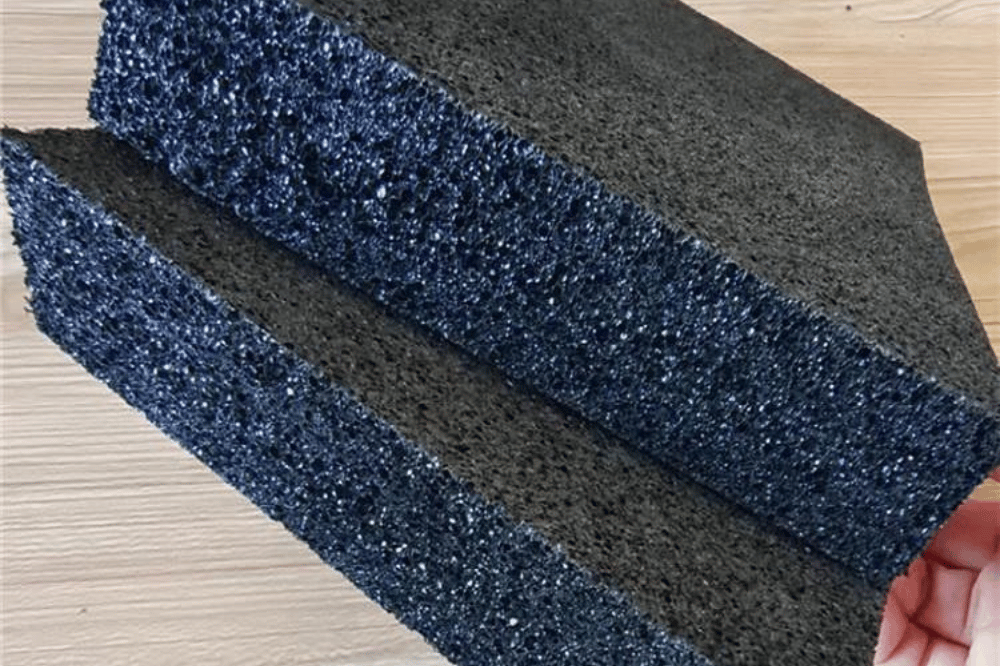
Closed-cell spray foam is a rigid, two-part polyurethane insulation that delivers R-6.0 to R-7.0 per inch, blocks moisture as a Class II vapor retarder, air-seals your home, and even adds structural strength to walls and roofs. It costs more than fiberglass or open-cell foam, but it’s often worth it in crawlspaces, basements, rim joists, and humid or coastal climates. The catch: it only performs as promised when a qualified contractor installs it correctly. This guide helps you decide where it makes sense to sign, where it doesn’t, and what to ask before you sign.
Most insulation research starts and ends with two questions: how well does it work, and what does it cost? Closed-cell spray foam ranks high on the first and higher than most options on the second. That makes it the premium choice—but the reasons why often get lost in vague talk about “superior performance.”
Let’s fix that. This guide explains what closed-cell foam actually is, where it beats the alternatives, where it’s overkill, and how to spend your money wisely. Whether you’re finishing a basement, sealing a drafty crawlspace, or building new, you’ll walk away knowing exactly what to ask your contractor.
What Is Closed-Cell Spray Foam?
Closed-cell spray foam is a two-part polyurethane. On-site, your installer sprays two liquids—a polyol resin and an isocyanate—that remain separate until they meet at the gun’s nozzle. When they mix, they react and expand fast, forming a rigid material packed with millions of tiny, fully sealed pockets.
Those sealed cells are the whole story. Because gas can’t move through them, the cured foam is dense, stiff, and moisture-resistant. It weighs about 2 pounds per cubic foot—roughly four times denser than open-cell foam, which is soft and spongy at around 0.5 pounds per cubic foot.
The foam bonds tightly to wood, concrete, metal, and most other surfaces. It expands to fill gaps and odd shapes that batt insulation can’t reach, and once it cures, it stays put. No sagging, no settling, no compressing over the years.
Closed-Cell vs Open-Cell: A Quick Comparison
Both are spray foams, but they solve different problems. Here’s the fast version.
|
Feature |
Closed-Cell |
Open-Cell |
|---|---|---|
|
R-value per inch |
R-6.0 to R-7.0 |
R-3.6 to R-3.9 |
|
Density |
~2.0 lb/ft³ |
~0.5 lb/ft³ |
|
Vapor retarder |
Yes (Class II at ~2″) |
No |
|
Moisture resistance |
Excellent |
Poor |
|
Structural reinforcement |
Yes |
No |
|
Sound dampening |
Good |
Excellent |
|
Cost |
Higher |
Lower |
|
Below-grade use |
Yes |
No |
The rule most experienced installers follow is simple: anywhere moisture could be a problem, use closed-cell. Open-cell earns its place above grade, especially where soundproofing matters more than moisture control—think interior walls between living spaces. Many projects use both: closed-cell on foundation walls and rim joists, open-cell in interior partitions and the ceiling.
Pros and Cons of Closed-Cell Spray Foam
No insulation is perfect for every job. Here’s the honest balance sheet.
|
Pros |
Cons |
|---|---|
|
Highest R-value per inch of common insulation |
Higher upfront cost than any alternative |
|
Acts as a vapor retarder—controls moisture |
Requires professional installation |
|
Air-seals and insulates in one step |
Can be overkill in dry, above-grade spaces |
|
Adds structural racking strength |
Hard to remove or modify later |
|
Won’t sag, settle, or lose R-value over time |
DIY kits are limited to small jobs only |
|
Resists mold and blocks pest entry points |
Off-ratio installs fail quietly |
Best Places to Use Closed-Cell Spray Foam
This is where closed-cell foam earns its price. If your project matches one of these, it’s usually the right call.
- Crawlspaces. Humidity spikes hard in crawlspaces. Closed-cell foam on the walls and rim joists creates a continuous moisture barrier that keeps the space dry and protects the floor structure above it.
- Basements and foundation walls. Ground moisture constantly pushes toward the interior. Open-cell foam lets it through, where it can condense and cause mold or rot. Closed-cell blocks that migrate cold.
- Rim joists. The rim joist—where your foundation meets the floor framing—is one of the leakiest, most moisture-prone spots in a house. A couple inches of closed-cell foam seals and insulates it in a single pass.
- Exterior walls with limited depth. Because closed-cell delivers about twice the R-value per inch of conventional insulation, it’s often the only way to hit code-required performance when cavity space is tight.
- Humid and coastal climates. Where vapor control and moisture resistance are constant concerns, closed-cell foam handles both. Its structural adhesion also adds racking strength—a real advantage in high-wind and hurricane-prone areas. The Insurance Institute for Business & Home Safety has noted that foam-insulated homes perform better in high-wind events than conventionally insulated ones.
Where It May Not Be Worth the Cost
Being honest about the limits is part of making a smart decision.
- Large attic floors in dry climates. If blown-in cellulose or fiberglass meets code and moisture isn’t a concern, closed-cell foam is often more than you need.
- Interior sound-control walls. Open-cell foam absorbs sound better and costs less. For a home office or media room, it’s the smarter pick.
- Tight budgets where code is easily met. In assemblies with ample cavity depth and low moisture risk, cheaper insulation can meet the same target. Save the closed-cell for the spots that actually demand it.
You don’t have to spray foam the whole house. A common, cost-smart approach is closed-cell where it matters most—crawlspace, basement, rim joists—and a lower-cost material everywhere else.
How Much R-Value and Thickness Do You Need?
R-value measures resistance to heat flow. Higher means better insulation per inch. Here’s how closed-cell stacks up:
- Closed-cell spray foam: R-6.0 to R-7.0 per inch
- Open-cell spray foam: R-3.6 to R-3.9 per inch
- Cellulose (blown-in): R-3.2 to R-3.8 per inch
- Fiberglass batts: ~R-3.1 per inch
Your target R-value depends on your climate zone and local code. As a general benchmark, walls usually target R-13 to R-21, and attics often call for R-38 to R-60.
At R-6.5 per inch, about 2 inches of closed-cell foam gives you an R-13 rating inside a standard 2×4 wall. A 2×6 wall gives you room for R-21 and up. Don’t rely on rules of thumb, though—your installer should calculate thickness based on your specific climate zone and assembly.
Two things drive that strong thermal number. First, the sealed cells trap low-conductivity gas that resists heat transfer better than plain air. Second, the foam bonds directly to surrounding surfaces, closing the air gaps and thermal bridges that quietly drain performance from batt insulation.
The payoff shows up on your energy bill. Research from Oak Ridge National Laboratory found that homes insulated with spray foam use 15–20% less energy for heating than homes with conventional insulation. The U.S. Department of Energy notes that proper insulation combined with air sealing can cut heating and cooling costs by up to 25%—which matters, since heating and cooling make up roughly 56% of energy use in a typical American home.
Cost and ROI
Closed-cell foam costs more, and it’s worth understanding why. You’re paying for a material that insulates, air-seals, controls moisture, and adds structural strength all at once—work that would otherwise take several products.
Here’s what to expect:
- Minimum thickness: $2.30 to $3.50 per square foot
- Greater depths (attic or roof): $6.90 to $10.50 per square foot
- Fiberglass batts, for comparison: $0.50 to $1.00 per square foot
- Blown-in cellulose: $0.80 to $1.50 per square foot
The payback depends on your climate, energy prices, and which areas you treat. Most homeowners see a return in three to seven years through lower heating and cooling bills, and the savings keep compounding after that.
There’s also a tax incentive worth checking. The Inflation Reduction Act offers a tax credit of up to 30% for qualifying home insulation improvements. Confirm eligibility with your tax advisor before you file.
The smartest way to spend? Target the highest-impact areas first—the spots leaking the most air and inviting the most moisture—rather than blanketing the whole house.
Why Installation Quality Matters
Here’s the part that decides whether you get what you paid for: closed-cell foam only performs when it’s mixed and applied correctly.
The two liquid components must combine at a precise ratio and controlled temperature. Off-ratio foam—even slightly off—won’t cure right. It can look perfectly fine and still fail to reach its rated R-value, moisture resistance, or structural strength. You wouldn’t know until problems show up later.
Temperature control matters just as much. The reaction is sensitive to ambient conditions, so a professional actively manages the material temperature throughout the spraying process to maintain consistent viscosity and reaction behavior. That kind of control isn’t possible with consumer DIY kits, which are fine for small gaps and rim joists but not for whole rooms.
When you’re hiring, look for certification from the Spray Polyurethane Foam Alliance (SPFA). Ask what equipment they use, how they handle temperatures in summer and winter, and whether they run a post-installation blower-door test to verify the air seal. The contractor’s process discipline—not just the product—determines whether the foam performs.
Red Flags When Hiring an Installer
A few warning signs are worth watching for. Any of these should make you pause:
- No SPFA certification or vague answers about training. Skilled installers are happy to talk credentials.
- No plan for temperature control in hot or cold conditions. This is a core part of getting the ratio right.
- Foam that shrinks or pulls away from framing after curing—a classic sign of an off-ratio mix.
- A lingering chemical smell beyond 48 hours, which can point to an incomplete cure or bad mixing.
- Uneven thickness, gaps, or missed voids. Sloppy coverage undercuts both the air seal and the R-value.
- No offer of post-install testing. A blower door test proves that the work actually sealed your home.
Frequently Asked Questions
How long does it take to cure, and when can I re-enter my home?
The surface sets within seconds and reaches handling strength in a few hours. Full cure takes 24 to 72 hours, depending on temperature, humidity, and thickness. Most installers and EPA guidance recommend staying out of the treated space for 24 to 48 hours, since the reacting foam releases VOCs during application. Once fully cured, the foam is chemically inert and safe. If you still smell a strong chemical odor after 48 hours, call your installer—it may signal an off-ratio or incomplete cure.
Will it attract insects or rodents?
No. Cured closed-cell foam offers no food source and no pathway for pests. It physically seals the entry points rodents and insects use. Most homeowners who foam their crawlspaces and rim joists report fewer pests, not more.
Is closed-cell spray foam waterproof?
It’s highly moisture-resistant, but that’s not the same as waterproof. The foam resists vapor and surface water, but it isn’t a structural waterproofing membrane against standing water or hydrostatic pressure—that’s the job of drainage and waterproof coatings. In basements and crawlspaces, treat foam as one part of a broader moisture plan that includes proper grading, drainage, and soil vapor barriers.
Can I use a DIY kit?
For small jobs—sealing rim joists, filling isolated cavities, patching air leaks—yes, DIY kits work. For anything bigger, like a full crawlspace, exterior walls, or an attic, skip it. The ratio precision, temperature control, and technique that make foam perform are hard to maintain with portable gear. Foam that doesn’t cure right, or coverage that misses voids, costs more to fix than you’d save.
Does it lose R-value over time?
No. Once cured, properly installed closed-cell foam holds its R-value for the life of the structure. It doesn’t settle, compress, or soak up moisture the way fiberglass can. That durability is a big reason the higher upfront cost pays off.
How does the cost compare to other insulation?
Closed-cell runs $2.30 to $3.50 per square foot at the minimum thickness and $6.90 to $10.50 at greater depths for attics or roofs. That’s well above fiberglass ($0.50–$1.00) and blown-in cellulose ($0.80–$1.50). The difference reflects everything closed-cell does at once—insulate, air-seal, control moisture, and reinforce the structure.
Your Decision, Made Simple
Insulation is a once-and-done choice for most homeowners. You do it once, and it either solves your problem or it doesn’t. Closed-cell foam routinely outlasts the buildings it’s installed in, so the decision you make now will keep paying off for decades.
Here’s the quick call:
- Choose closed-cell when the job is below grade, moisture is a real concern, cavity space is tight, you’re in a humid or coastal climate, or high-wind resilience matters.
- Skip it when you’re insulating a large attic floor in a dry climate, prioritizing soundproofing, or working within a tight budget where cheaper insulation meets code.
- Ask your contractor: Are you SPFA certified? How do you control material temperature? Will you run a blower door test? What R-value and thickness are you targeting for my climate? What’s your plan if the foam doesn’t cure right?
Fiberglass batts insulate. Closed-cell spray foam insulates, air-seals, manages moisture, and strengthens the assembly it’s in—a different category of performance, which is why it costs more and, in the right spots, is worth it.
Not sure where to start? Book a blower-door test with a certified energy auditor. It’ll show you exactly where air is escaping and where moisture is getting in, so you and your installer can target the highest-impact areas first—and measure the results once the work is done.