

Polyol and isocyanate can make foam on their own. But that foam rarely rises evenly, cures on time, or holds its shape.
Additives fix that. They set reaction speed and build the cell structure. They also shape curing, fire behavior, and long-term durability.
I work with formulators who want to know why their foam collapses or cures too slowly. The answer usually sits in the additive package. This guide skips the name list. It shows what each additive type solves, how to choose it, and how to adjust it.
What PU Foam Additives Actually Do
In many formulas, additives make up less than 5% of the total weight. Yet they often decide whether a pour becomes sellable foam or scrap. Start with the chemistry you need, then look at the problems additives fix on the line.
Why Base Raw Materials Are Not Enough
Two reactions start the moment polyol meets isocyanate. The gelling reaction builds the polymer. The blowing reaction, mostly water with isocyanate, releases CO₂ and expands the mix.
Those two reactions must stay in step. If gas forms faster than the polymer gains strength, cells burst. If the polymer sets first, the foam stops rising too early.
Raw materials alone can’t hold that balance. Without a catalyst, the reaction runs too slowly for production. Without a surfactant, bubbles merge and the foam can split.
That’s why I treat additives as control tools. Catalysts set the timing. Surfactants hold the cells together. Other additives bring fire resistance, color, or durability.
Which Production Problems Additives Are Really Solving
When a plant calls me about bad foam, the cause usually traces back to one of these:
- Collapse: The foam rises, then sinks. Cell walls opened before the polymer could support them.
- Uneven cells: Coarse patches and voids weaken the part. In rigid foam, they also raise lambda.
- Slow demold: Parts stay soft in the mold, so each mold runs fewer cycles per shift.
- Shrinkage: Cells lose pressure as they cool, and panels or cushions pull in days later.
- Scorch: Excess heat discolors or degrades the core of large blocks.
Each problem costs money. Scrap wastes raw material. Slow cycles cut output. Shrinkage that slips past QC can return months later as warranty claims.
A small additive change often fixes these faster than a raw material switch. A few tenths of a part of catalyst or surfactant can be enough to move a formula from unstable to stable. Additives aren’t extras. They’re the levers you pull when production goes wrong.
The Three Additive Groups That Shape Foam Most
A typical formula holds a dozen ingredients, but three groups decide whether the foam forms at all. Catalysts set the timing. Blowing agents supply the gas. Surfactants hold the bubbles together.
When I troubleshoot a line, I check these three first. A change in one almost always shows up in the other two. Here’s how the main additive types compare before we look closer at the core three.
|
Additive type |
What it mainly controls |
Common risk if misused |
|---|---|---|
|
Catalysts |
Reaction speed, blow/gel balance, cure |
Collapse, poor flow, slow demold |
|
Blowing agents |
Density, cell formation, insulation value |
Scorch, shrinkage, high aged lambda |
|
Silicone surfactants |
Cell stability, cell size, open or closed cells |
Collapse, coarse cells, shrinkage |
|
Flame retardants |
Fire behavior and test performance |
Softer foam, fogging, compliance trade-offs |
|
Fillers and pigments |
Cost, stiffness, viscosity, color |
Poor flow, damaged cells, machine wear |
|
Stabilizers and specialty additives |
Aging, UV resistance, hygiene, softness |
Property drift, migration, durability loss |
Catalysts: They Set the Clock
Two catalyst families split the work:
- Amine catalysts mainly push the blowing reaction between water and isocyanate. BDMAEE is a classic blowing amine. DMCHA is common in rigid foam, and TEDA leans more toward gelling.
- Tin catalysts drive the gelling reaction that builds the polymer. Stannous octoate is standard in flexible slabstock. Some dibutyltin compounds now face EU limits in consumer goods, so check before you specify them.
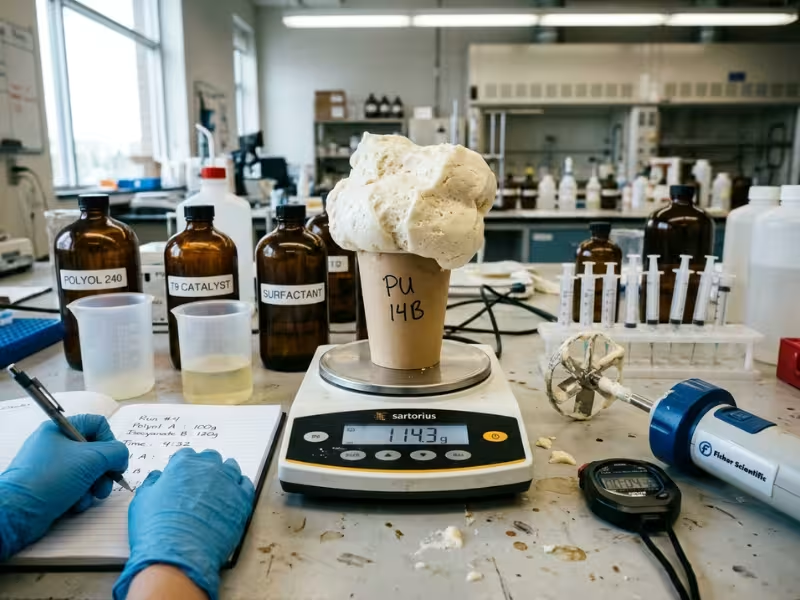
The amine-to-tin ratio sets your reaction profile. Track three numbers on every pour: cream time, rise time, and tack-free or demold time.
Too much amine, and gas forms before the polymer is strong. The foam may split or collapse. Too much tin, and the foam gels early, stays tight, and may shrink or fail to fill.
Delayed-action catalysts, often acid-blocked amines, stay quiet during the pour and become active as heat builds. That gives the mix more time to flow into long molds. Reactive catalysts bond into the polymer, which reduces VOC and fogging. Many automotive interior programs now rely on them.
The trade-off rarely disappears. A faster package shortens demold but reduces flow. Adjust in small steps, around 0.05 to 0.1 parts per hundred polyol, and record all three times after each change.
Blowing Agents: They Build the Cells
Water is the most common blowing agent. It reacts with isocyanate, releases CO₂, and forms urea. Each extra part of water lowers density, but it also raises exotherm, isocyanate demand, and firmness. In large slabstock blocks, high water levels can scorch the core.
Physical blowing agents work differently. They boil off as the reaction heats up, and that boiling absorbs some of the heat. Rigid foam mainly uses cyclopentane, pentane blends, and HFO-1233zd(E).
In closed-cell foam, the trapped gas sets much of your insulation value. Cyclopentane offers low cost but needs a plant built for flammables. HFOs can deliver lower lambda at a higher price.
Dimensional stability depends on the gas too. CO₂ leaves rigid cells fairly quickly, so cell pressure drops. Water-heavy rigid foam can shrink weeks after production. Physical agents stay in the cells longer and help the foam hold its shape.
Regulations now narrow the choice. The US AIM Act and EU F-gas rules restrict high-GWP HFCs in most foam uses. For new formulas, plan around HFOs, hydrocarbons, or water.
Keep one point in mind. A new blowing agent changes solubility and boiling point, so your catalyst and surfactant usually need retuning as well.
Silicone Surfactants: They Keep the Foam Standing
Most PU surfactants are polyether-polysiloxane copolymers. Typical doses run from about 0.5 to 2.5 parts per hundred polyol, and they do three jobs:
- Lower surface tension so the mix forms many small bubbles instead of a few large ones
- Emulsify raw materials that don’t mix well on their own
- Stabilize thin cell walls during rise, until the polymer can support itself
Foam type decides what “stable” means. Flexible foam needs its cells to open at the end of rise, so air can pass through. Rigid foam needs its cells to stay closed and hold the blowing gas. That’s why rigid and flexible grades aren’t interchangeable.
Dose errors show up fast:
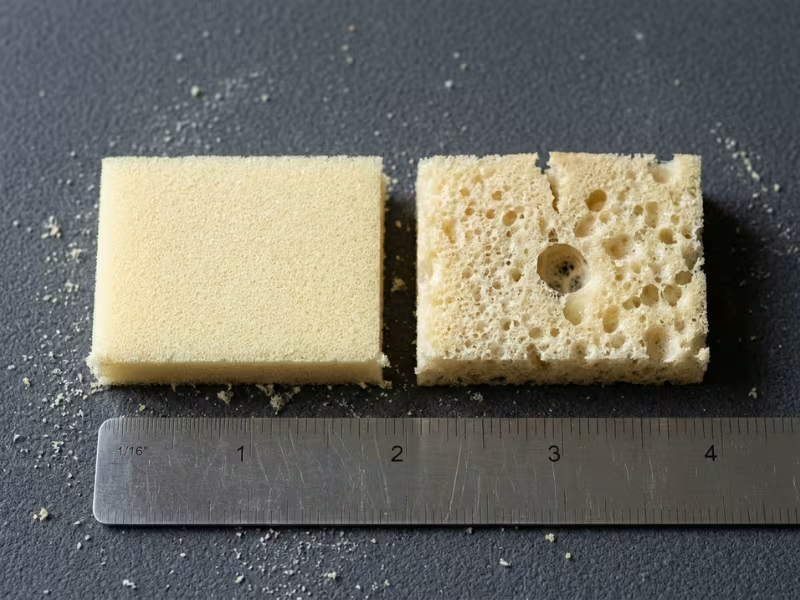
- Underdosing: Bubbles merge, cells coarsen, and the foam may split or collapse.
- Overdosing in flexible foam: Cells stay too closed. The foam feels tight and can shrink as it cools.
- Overdosing in rigid foam: It rarely improves anything and adds cost.
Cell size affects the final product. Rigid insulation needs fine, even cells because they cut radiant heat transfer and lower lambda. In flexible foam, cell size changes airflow, feel, and resilience. High-resilience foam often needs a weaker surfactant, since its polymer partly stabilizes itself. A strong grade can make it shrink.
When foam quality drifts, check the surfactant grade before you raise the dose. A grade built for your blowing agent and foam type often fixes problems that extra silicone can’t.
Other Additives That Tune Performance After the Foam Forms
Catalysts, blowing agents, and surfactants get the foam to stand up. The additives below decide whether it passes a fire test, hits a cost target, and still performs years later. Each one brings a trade-off, so I always ask what it costs the foam before I add it.
Flame Retardants and Fire Compliance
Halogenated options such as TCPP stay popular because they’re liquid, affordable, and easy to blend. Non-halogenated options include TEP, melamine, ammonium polyphosphate, and expandable graphite.
None of them come free:
- Liquid FRs can soften the polymer, lower compressive strength, and raise fogging.
- Melamine needs high loadings and thickens the polyol.
- Expandable graphite works well in rigid foam, but it darkens the foam and can wear pumps.
Design to the exact standard your customer names. Common examples include TB 117-2013 for furniture, FMVSS 302 for vehicle interiors, and EN 13501-1 or DIN 4102 for building products. Also keep an eye on TCPP. EU regulators continue to review it, and some buyers already ask for alternatives.
Fillers, Pigments, and Cost-Driven Adjustments
Calcium carbonate cuts cost and adds stiffness. Fumed silica adds thixotropy, which helps on vertical surfaces.
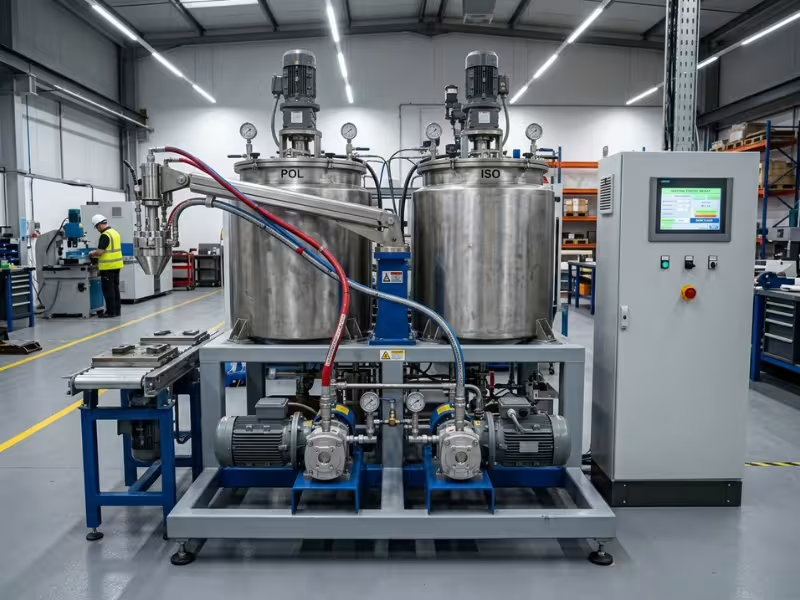
Watch the side effects. At higher loadings, fillers raise viscosity sharply, so the mix flows less and may fill molds unevenly. Coarse particles can break cell walls and leave voids. Hard fillers also wear metering pumps and mixing heads, so confirm your machine can handle them. On lines that run higher filler or specialty additive loadings, the design of your polyurethane foaming machine directly affects mixing stability and long-term wear.
Fillers also add weight. A cheaper kilo can still cost you more per part.
Pigments usually come as paste dispersions in a polyol carrier at about 0.5 to 2 parts. Count that carrier’s hydroxyl value in your index. Some pigments also nudge catalyst activity, so rerun cream and rise times after a color change.
Durability and Specialty Additives
Antioxidants, usually hindered phenols, protect foam from oxidation. In large slabstock blocks, they also help prevent core scorch.
UV stabilizers such as HALS slow yellowing and surface chalking. They can’t stop it completely, though. Aromatic foam still yellows in sunlight, so exposed parts usually need a coating or pigment.
Antimicrobials suit mattresses, medical cushions, and HVAC insulation. Check biocide rules in each market, such as the EU Biocidal Products Regulation.
Plasticizers soften foam without changing the index. But they can migrate, fog, and weaken the foam over time. I usually adjust the polyol blend first.
How Additive Choices Change Production in Practice
A formula can look balanced on paper and still fail on the line. Additives react to each other, and a production line behaves very differently from a lab bench. Here’s how those effects show up in real plants.
Why One Change Rarely Stays Small
Catalysts, blowing agents, and surfactants work as a closed loop. If you move one, the other two shift.
Say you add water to cut density. The blowing reaction speeds up, and gas now outruns the polymer. You add gelling catalyst to catch up. Stronger gelling tightens the cells, so your flexible foam may now need a different surfactant grade to open properly.
The chain also runs the other way. If you switch to a delayed-action amine for better flow, cure slows. Demold time stretches unless you rebalance the tin.
I ask clients to plan every change as a package. Pick the main lever first. Then budget trials for the two components it will likely pull along.
What This Looks Like on the Shop Floor
Three problems come up again and again.
Slow demold in molded seating foam. Parts tear or deform as they leave the mold. Check mold temperature before you touch the formula, because a cold mold slows surface cure. If the temperature is right, raise the gelling catalyst in small steps. Record demold time after each change.
Collapse in high-resilience slabstock. The block rises, then settles. HR foam partly holds itself up, so the polymer has to build strength on time. Check the gel catalyst balance first. Then consider an HR-specific surfactant. Simply adding more silicone often causes shrinkage instead.
Overwatering to chase low density. Each extra part of water adds heat. Push too far, and the core of a large block may yellow or scorch. The extra urea also leaves the foam harsh, with poor resilience. Auxiliary blowing or a slightly higher density target usually works better.
Why Lab Wins Can Fail on the Line
A 200-gram cup foam loses heat quickly. A full slabstock block or a large appliance shot holds that heat. Core temperatures in large blocks can climb above 150°C, which may trigger scorch that the cup never showed.
Line conditions add more variables. Raw material temperature, humidity, mixing head pressure, and mold release all shift the reaction. A conveyor or mold carrier also runs on a fixed schedule. A few seconds of drift that went unnoticed in the lab can ruin a production run.
Scale up in steps. Move from cup foam to a box pour, then to a full shot. Run trials across different shifts before you lock in the formula.
How to Choose the Right Additives for Your Foam System
Good additive choices start with a clear question, not a supplier catalog. I walk clients through three filters in order: what foam they make, what problem they need to fix, and where the foam will ship.
Start With the Foam Type and Its Biggest Risk
Each foam type fails in its own way. That decides which additive group gets your attention first.
- Flexible slabstock: Collapse and core scorch carry the most risk. Focus on the amine-to-tin balance, water level, and antioxidants for large blocks.
- Molded foam: Flow and demold time drive output. Delayed-action and reactive catalysts usually matter most, especially for low-VOC automotive parts.
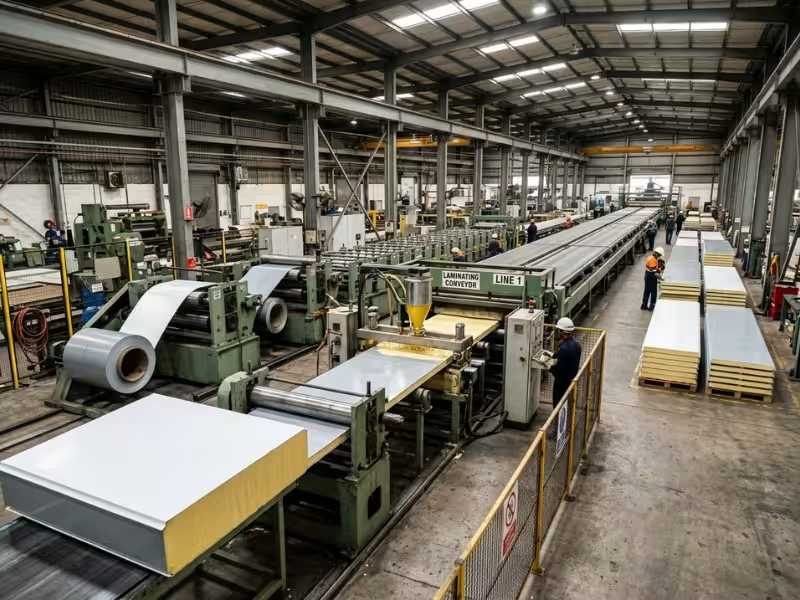
- Rigid insulation: Aged lambda and dimensional stability decide the sale. Choose the blowing agent and a fine-cell surfactant first. In continuous insulation products, those same targets shape both the formulation and the operating setup of a polyurethane sandwich panel line.
- Spray foam: The mix must react within seconds on vertical surfaces. Fast catalysts, a matched blowing agent, and flame retardants lead the list.
Name your main failure risk before you open a datasheet. That one step narrows your options quickly.
Match the Additive to the Problem
Once you know the risk, trace each symptom to the group most likely behind it. Use this table as a starting point, not a final diagnosis.
|
Production or performance problem |
First additive group to check |
What to confirm first |
|---|---|---|
|
Foam collapses during rise |
Silicone surfactant, water-to-gel balance |
Raw material temperatures |
|
Slow cure or soft demold |
Catalyst package |
Mold and chemical temperatures |
|
Core scorch in large blocks |
Water level, catalyst speed, antioxidants |
Block size and core temperature |
|
Coarse or uneven cells |
Surfactant grade, blowing agent compatibility |
Mixing head pressure and mix quality |
|
High aged lambda in rigid foam |
Blowing agent, fine-cell surfactant |
Closed-cell content |
|
Failed fire test |
Flame retardant strategy |
The exact standard and test method |
|
Cost too high |
Fillers, blowing efficiency, overall balance |
Cost per part, not per kilo |
A few of these deserve more detail:
- Collapse during rise: Check the surfactant grade and dose, then the water-to-gel balance. Gas is usually outrunning polymer strength.
- Slow cure or soft demold: Adjust the catalyst package. Confirm mold and raw material temperatures first.
- Failed fire test: Rework your FR strategy. Rigid foam often needs a solid FR, such as expandable graphite, alongside a liquid one. Flexible foam may need melamine for stricter standards.
- Cost pressure: Consider fillers, but cap the loading. Run viscosity and flow checks before machine trials.
Change one lever at a time. Then plan to retune the other two core groups.
Check Compliance Before You Cut Cost
A low-cost formula that fails regulation can cost far more than any additive savings.
Three groups carry the most regulatory risk:
- Catalysts: The EU restricts some dibutyltin compounds in consumer goods. Amine emissions also face tight VOC limits in car interiors.
- Flame retardants: EU reviews of TCPP continue, and some furniture and building buyers already ask for halogen-free foam.
- Blowing agents: The AIM Act and EU F-gas rules limit high-GWP HFCs in most foam uses.
Design for the strictest market you sell into. If even one export customer follows EU rules, it’s safer to build the formula to EU limits.
Avoid fixes that only work this year. Swapping one restricted additive for a close chemical cousin can force a second reformulation within a few years. Ask suppliers for their regulatory outlook before you approve a trial.
Common Formulation Mistakes With PU Foam Additives
Most struggling formulas I review come from three avoidable habits. Each one seems reasonable when it starts.
Trying to Cut Density Too Aggressively
Density targets tempt formulators to add water or cut the physical blowing agent quickly. Both moves shift more of the expansion onto the water reaction. That adds heat and urea at the same time.
In a large flexible block, the core can exceed 160°C and start to discolor. The foam feels harsh and loses resilience. Rigid foam may turn friable, especially at the surface.
Drop density in steps of about 1 kg/m³. Check core temperature and compression after each step.
Changing One Additive in Isolation
Here’s a common case. A plant switches to a cheaper surfactant to save cost. The cells coarsen, so the team raises the dose. Now the flexible foam stays closed and shrinks overnight. In that case, a slightly faster gel catalyst was the better fix, not more silicone.
Catalysts, blowing agents, and surfactants share one balance. Move one, and the other two drift. Before any change, list which of the three it will affect. Then run trials that adjust them together, and record cream, rise, and demold times.
Skipping Production-Scale Validation
A cup foam passes, so the formula goes straight to the line. In my experience, this is one of the most expensive shortcuts a plant can take.
Small cups lose heat fast. A full block or appliance shot traps that heat, so scorch and shrinkage may appear only at full scale. Real lines also bring cold drums, humid days, and fixed cycle times that the lab never tests.
Validate on your production machine at full shot size. Run trials across at least three shifts before you approve the formula.
A Practical Checklist Before You Reformulate
A reformulation without a written goal quickly turns into guesswork. Before the first trial pour, I ask every client to complete two lists. The first defines success, and the second proves you reached it.
Questions to Answer First
Write a short answer to each question before you order samples:
- Target property: Which number must change, and by how much? Be specific, such as 10% more airflow or a 0.5 mW/m·K drop in lambda.
- Processing issue: What fails on the line today? Note the symptom, the shift, and where it shows up on the part.
- Compliance requirement: Which standard or restriction applies, and in which market?
- Cost target: What cost per part, not per kilo, must the new formula meet?
If you can’t answer one of these, hold off on changing the formula.
Data to Record in Every Trial
Log these results for every pour, including the ones that fail:
- Cream, rise, and tack-free or demold times: These show whether the reaction balance shifted.
- Density: Record both core and overall values.
- Cell structure: Note cell size and any voids, splits, or pinholes.
- Dimensional stability: Measure parts again at 24 hours and after aging.
- Key end-use property: Test the property your customer checks, such as hardness, lambda, or compression set.
Also note raw material temperatures and room humidity. Without them, you can’t reliably repeat a good result.
Common Questions About PU Foam Additives
Formulators ask me these four questions more than any others. Here are short, practical answers.
What Is the Difference Between Amine and Tin Catalysts?
Amine catalysts mainly speed up the blowing reaction, where water meets isocyanate and releases CO₂. Tin catalysts mainly drive gelling, which builds the polymer. Their ratio sets your cream, rise, and demold times. More amine speeds the rise. More tin speeds the cure but can reduce flow.
Why Does Foam Collapse During the Rise Phase?
Usually, gas forms faster than the polymer gains strength. The cell walls burst before they can hold the foam up. Check the surfactant grade and dose first. Then look at your gel catalyst, because a small increase often lets the polymer catch up. Also check raw material temperatures, since warm chemicals speed up blowing.
Can Bio-Based Polyols Work in High-Performance Foam?
Yes, with limits. Many formulators blend in soy, castor, or other bio-based polyols as a partial replacement. The new polyol should match the functionality, OH value, and viscosity of the one it replaces. A mismatch changes crosslinking and flow. Expect to retune catalysts, and check odor, color, and aged properties.
How Do Fillers Affect PU Foam Cost and Quality?
Fillers like calcium carbonate cut material cost and add stiffness. But they raise viscosity quickly, which can hurt mixing and flow. At high loadings, coarse particles can break cell walls and leave voids. Hard fillers also wear pumps and mixing heads. Compare cost per part, not per kilo, because fillers add weight.
Balancing Additives for Foam That Runs Right
Every additive in your formula has a job. Catalysts set the timing, and blowing agents build the cells. Surfactants hold the foam up while it rises. Flame retardants, fillers, and stabilizers decide how the foam performs once it leaves the line.
These additives don’t work alone. Change one, and the others shift with it. The best formulas come from balancing the whole package, not from pushing one ingredient to its limit.
Before your next change, define the goal in writing. Run controlled trials on your production machine. Log cream, rise, and demold times, density, and cell structure for every pour. Then confirm that each additive meets the rules in every market you sell into, and only then scale up.