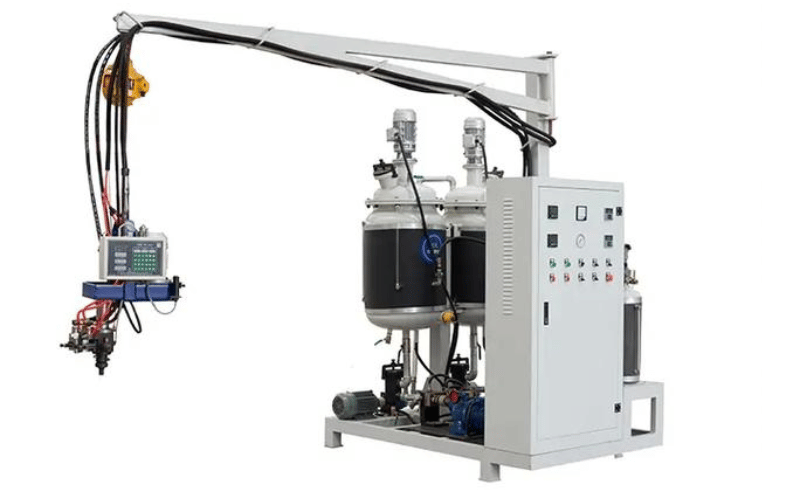
Choosing the wrong polyurethane foaming machine ties up capital, raises scrap rates, and limits the products you can profitably make. Both high-pressure and low-pressure systems produce polyurethane foam, but they differ in how they mix material, how fast they run, what they cost, and where they fit best. Understanding the high-pressure vs low-pressure PU foaming machine question helps you avoid a mismatch between your equipment and your real production needs. This guide walks through definitions, key differences, pros and cons, application scenarios, selection factors, and common mistakes—so you can invest with confidence as a B2B manufacturer.
What Is a High-Pressure PU Foaming Machine?
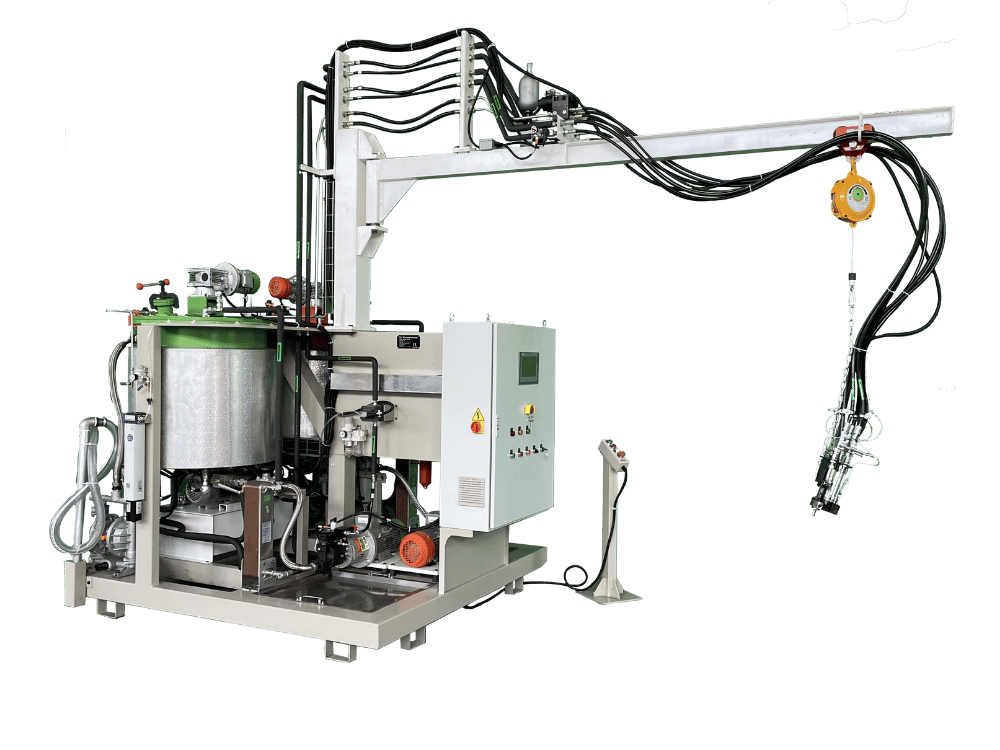
A high-pressure PU foaming machine mixes polyol and isocyanate at high pressure—typically 100 to 200 bar—inside a self-cleaning mixing head. Instead of a mechanical stirrer, the two components impinge at high velocity, creating fast, thorough mixing in a fraction of a second. Because the mixing chamber self-cleans between shots, the machine avoids the solvent flushing required by older methods, reducing both waste and the use of cleaning chemicals. This design suits continuous, high-volume production lines that demand precision and speed. You’ll find high-pressure polyurethane foaming machines at the heart of insulation panel lines, refrigerator and appliance foaming, automotive part production, and molded foam manufacturing, where consistency and throughput drive profitability.
Key Features of High-Pressure Machines
Several features define a high-pressure system. The self-cleaning mixing head eliminates solvent flushing, cutting waste, and cleaning labor. Precise, repeatable metering gives you tight density control across every shot. Fast cycle times make the machine a natural fit for automated lines that can’t afford slow handling between parts. It also handles large outputs and complex mold filling with ease. On top of that, high-pressure systems support multiple mixing heads and integrate smoothly with conveyors and robotics. Together, these features make the machine a strong choice for manufacturers who prioritize throughput, consistency, and low long-term material waste at scale.
What Is a Low-Pressure PU Foaming Machine?
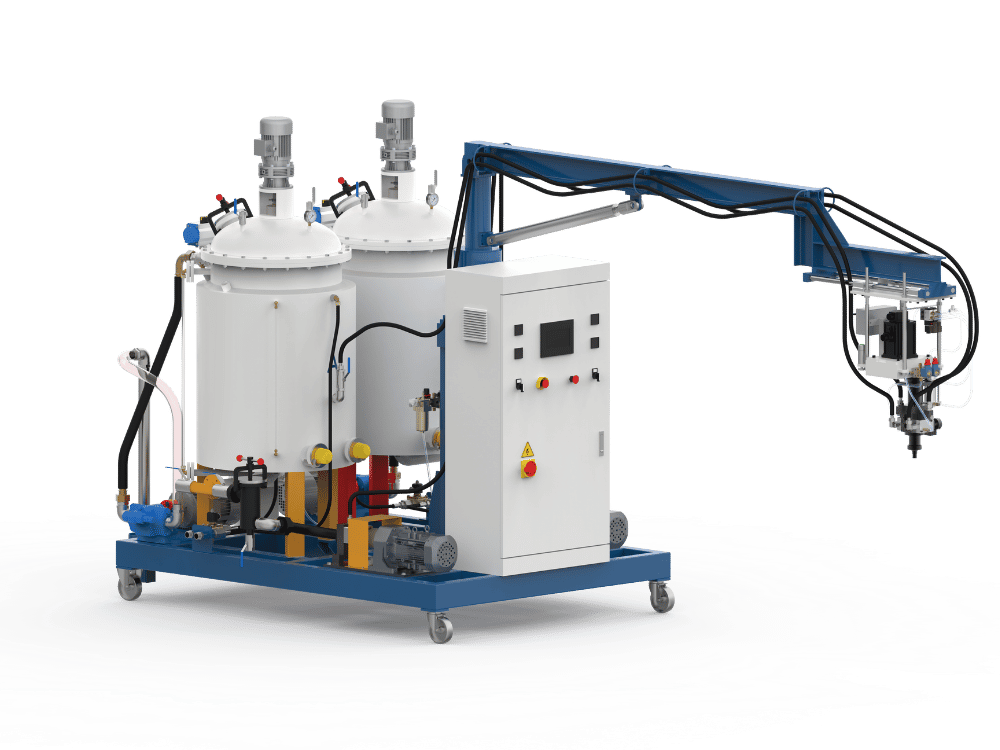
A low-pressure PU foaming machine mixes polyol and isocyanate at low pressure—typically 2 to 40 bar—using a mechanical stirrer inside the mixing chamber. The stirrer blends the components physically rather than through high-velocity impingement. After each shot, the head must be flushed with solvent or air to prevent material from curing inside the chamber and clogging it. This adds a cleaning step, but the trade-off comes with a lower upfront cost and simpler operation. That combination makes low-pressure systems popular for smaller batches, prototyping, and a wide range of flexible and rigid foam applications, including cushions, gaskets, filters, and small molded parts. For many businesses, it’s an accessible entry point into polyurethane production.
Key Features of Low-Pressure Machines
The defining features center on flexibility and affordability. Mechanical mixing with adjustable speed lets you tune the blend for different formulas. Lower equipment cost and simpler maintenance reduce the barrier to entry. The system handles smaller, varied production runs well, and it adapts easily to additives, fillers, and color pigments. The main trade-off is solvent flushing, which adds material cost and extra cleaning steps to each cycle. Even so, low-pressure systems work well for businesses with moderate volumes, frequent recipe changes, or budgets that favor lower initial investment over maximum throughput. They reward flexibility more than raw speed.
Key Differences Between High-Pressure and Low-Pressure PU Foaming Machines
Both machines produce polyurethane foam, but they diverge across several decision-critical factors—mixing method, material waste, output, cost, and maintenance. Understanding these differences helps you see which system aligns with your products and production goals. The four areas below most clearly capture where the two approaches part ways.
Mixing Method and Foam Quality
High-pressure impingement mixing blends the components at high velocity, producing a finer, more uniform cell structure and tightly consistent density across parts. Low-pressure mechanical mixing is reliable and proven, but it can show slightly more variation from shot to shot. For products with strict density tolerances or demanding customer specifications, consistency matters. If your buyers require certified, repeatable foam properties, high-pressure mixing gives you an edge. For products with looser tolerances, low-pressure mixing remains perfectly capable.
Material Waste and Operating Cost
The self-cleaning high-pressure head needs no solvent flushing, so it generates less waste and avoids ongoing solvent purchases. Over thousands of cycles, that adds up to meaningful savings and fewer disposal concerns. The low-pressure head, by contrast, requires solvent cleaning after each shot. That cleaning adds material cost, generates waste solvent that you must handle responsibly, and consumes operator time. At low volumes, the difference is modest, but as output rises, the operating-cost gap widens in favor of high-pressure systems.
Output, Speed, and Automation
High-pressure systems run fast and integrate cleanly with automated, high-volume lines. Their quick cycle times and self-cleaning heads keep production flowing without manual intervention between shots. Low-pressure systems operate more slowly and handle moderate volumes with manual or semi-automatic setups. If your production plan depends on continuous, hands-off operation across large batches, high-pressure equipment is built for it. If you produce in shorter runs with more operator involvement, low-pressure speed is usually sufficient.
Initial Investment and Maintenance
High-pressure machines cost more upfront and carry greater technical complexity, but they lower per-unit waste and labor over time. Their maintenance calls for skilled technicians familiar with high-pressure components. Low-pressure machines cost less to buy and are simpler to maintain, which appeals to tighter budgets. The catch is that solvent, cleaning labor, and slower cycles can raise long-term operating cost. The right comparison weighs the purchase price against the total cost over the machine’s full service life.
Advantages and Disadvantages of High-Pressure PU Foaming Machines
High-pressure machines deliver strong efficiency and quality benefits, but they carry trade-offs in cost and complexity that buyers should weigh honestly before committing.
Advantages of High-Pressure Machines
The benefits are compelling for the right operation. You get superior, consistent foam quality with tight density control, which protects product performance and customer trust. The self-cleaning head means no solvent flushing, cutting material waste, and cleaning labor with every shot. Fast cycle times and high throughput support large-scale production without bottlenecks. The system also pairs naturally with automation, conveyors, and multiple mixing heads, so you can build sophisticated, continuous lines. At volume, lower per-unit waste translates into a real cost advantage. These strengths make high-pressure equipment the standard for manufacturers serving automotive, appliance, and insulation markets, where consistency and efficiency directly drive profitability and long-term competitiveness.
Disadvantages of High-Pressure Machines
The trade-offs are equally real. A high-pressure PU foaming machine requires a higher initial investment, which can strain budgets for smaller operations. Its technical complexity calls for skilled operators and trained maintenance staff to keep it running reliably. It’s also less practical for very small batches or production that involves frequent recipe changes, since the setup favors steady, repeatable work. Payback depends on sustained throughput, so the machine rewards companies with consistent, high-volume demand. For businesses without that steady volume, a high-pressure system can be over-specified, tying up capital that would serve the operation better elsewhere.
Advantages and Disadvantages of Low-Pressure PU Foaming Machines
Low-pressure machines offer affordability and flexibility that make them attractive to many businesses, though they come with real limitations worth considering before you buy.
Advantages of Low-Pressure Machines
The strengths center on accessibility and adaptability. A lower upfront cost makes the investment reachable for startups and growing manufacturers. Simpler operation and maintenance reduce the demand on technical staff, so you can run the machine without a specialized team. The system handles smaller, varied production runs and frequent recipe changes with ease, which suits businesses serving diverse customers. It also readily accommodates fillers, pigments, and additives, giving you formulation flexibility. On top of that, it works well for prototyping and product development, where speed of iteration matters more than raw output. These qualities make low-pressure systems a practical entry point for startups, small- to midsize manufacturers, and any business producing a variety of foam products in moderate volumes.
Disadvantages of Low-Pressure Machines
The limitations grow more visible as you scale. Solvent flushing adds material cost, cleaning time, and environmental handling responsibilities you can’t ignore. Slower cycle times cap your throughput, which constrains how much you can produce in a shift. Foam quality can also show slightly more variation than high-pressure output, which may not meet the strictest specifications. And the system is less suited to fully automated, high-volume lines. While a low-pressure machine is cost-effective at moderate scale, a growing business may outgrow it—facing rising operating costs and, eventually, the expense of upgrading to higher-capacity equipment as demand climbs.
Main Business Application Scenarios for Each Type
The right machine depends heavily on what you produce and at what scale. Matching equipment to your actual application prevents both under-investment and over-investment. The scenarios below show where each system performs best.
Best Applications for High-Pressure Machines
High-pressure equipment shines in large-scale, quality-sensitive production. It’s the standard for insulation panel and sandwich panel lines, where speed and uniform density are essential. Refrigerator and appliance foaming rely on it for consistent fill and reliable insulation performance. Automotive seating, headrests, and interior parts also depend on high-pressure systems to meet strict density and dimensional standards run after run. Continuous and automated molded foam lines round out the list. In each case, high throughput, consistent quality, and low material waste make high-pressure the natural fit for industries that produce in volume and can’t compromise on repeatability.
Best Applications for Low-Pressure Machines
Low-pressure equipment fits smaller-scale and varied production well. Gaskets and sealing foam are a common use, along with filters that benefit from flexible, controlled dispensing. Small molded parts suit the system’s adjustable, hands-on approach. Cushions and packaging in moderate volumes also work well, as do prototyping and short production runs where iteration speed matters. In these scenarios, affordability, flexibility, and easy recipe changes outweigh the need for maximum throughput. For businesses producing diverse products or testing new designs, a low-pressure machine delivers the adaptability that high-volume equipment simply isn’t built to provide.
Quick Application Comparison
Use this table as a quick reference to match common scenarios to the recommended machine type.
| Application / Scenario | Best Machine Type |
|---|---|
| Large-scale insulation panels | High-pressure |
| Appliance/refrigerator foaming | High-pressure |
| Automotive interior foam | High-pressure |
| Gaskets and seals | Low-pressure |
| Filters | Low-pressure |
| Small molded parts and prototyping | Low-pressure |
| Moderate-volume cushions/packaging | Low-pressure |
How to Choose the Right PU Foaming Machine for Your Business
Choosing between the two systems comes down to weighing a few key factors against your products, volume, budget, and growth plans. Work through the points below before you commit, so your decision reflects real needs rather than assumptions.
Production Volume and Throughput Needs
Start with output. High, steady volume favors a high-pressure machine, which is built to run fast and continuously without manual intervention. Moderate or variable volume favors a low-pressure system, which handles shorter runs cost-effectively. Be honest about your realistic demand rather than your most optimistic projection. Over-buying capacity ties up capital, while under-buying forces an early upgrade. Match the machine to the volume you can confidently sustain.
Product Type, Quality, and Recipe Flexibility
Next, consider what you make. Foam type, density tolerances, and surface requirements all shape the decision. If your products demand tight, certified density consistency, high-pressure mixing delivers the repeatability you need. If you change recipes often, add fillers and pigments regularly, or produce a varied mix of parts, low-pressure flexibility serves you better. Weigh how often your formulations change against how strict your quality specifications are.
Budget and Total Cost of Ownership
Look beyond the purchase price. A low-pressure machine costs less upfront, but solvent, waste handling, cleaning labor, and slower cycles add to long-term cost. A high-pressure machine costs more initially but reduces per-unit waste and labor at volume. Model the total cost of ownership over the full service life—including materials, energy, labor, and maintenance—rather than relying on the sticker price alone. The cheaper machine isn’t always the cheaper investment over time.
Automation, Space, and Future Growth
Finally, think ahead. Consider your automation needs, available floor space, and how the machine integrates with existing lines. High-pressure systems pair well with conveyors and robotics, while low-pressure setups suit more manual workflows. Then weigh scalability. Choose equipment that supports your realistic five-year growth so you avoid premature replacement. A machine that fits today but can’t grow with you becomes a costly constraint sooner than you expect.
Common Mistakes to Avoid When Comparing High-Pressure vs Low-Pressure Systems
Even experienced buyers make avoidable errors when comparing these systems. Watching for the pitfalls below helps you make wise choices and protect your budget.
Choosing on Price Alone
The most common mistake is choosing the cheaper, low-pressure system without accounting for its operating costs. Solvent, waste disposal, cleaning labor, and slower cycles add up steadily over the years. A machine that looks affordable on day one can quietly become the more expensive option at volume. Compare the total cost of ownership across the full service life, not just the purchase price, so your decision reflects the complete financial picture.
Ignoring Volume and Growth Plans
Buying only for today’s volume is another frequent slip. A system sized for current demand can’t always keep pace as your business grows, and outgrowing it forces a costly upgrade and disruptive changeover. Plan around realistic future output, not just present orders. Matching the machine to where your production is headed over the next few years saves you from replacing equipment far sooner than you intended.
Overlooking Process Fit and Support
Finally, don’t ignore process fit and supplier support. Confirm that the machine matches your foam types, density requirements, and your operators’ skill level. A capable machine that doesn’t suit your products or staff creates daily friction. Just as important, verify that spare parts and responsive service are reliably available. Strong after-sales support directly affects uptime and operating cost, and it protects your investment long after installation.
Summing Up: Choosing the Right PU Foaming Machine
High-pressure PU foaming machines suit high-volume, quality-sensitive, automated production, delivering consistent foam and lower long-term waste for industries like automotive, appliances, and insulation. Low-pressure machines suit smaller, varied, or budget-conscious operations that value flexibility, affordability, and easy recipe changes. The right choice between high- and low-pressure PU foaming machines depends on your production volume, product type, quality requirements, budget, automation plans, and growth trajectory. Above all, match the machine to your realistic current and future needs rather than to price alone. That disciplined approach—weighing total cost and long-term fit—delivers the strongest value and protects your investment over years of production.
Get Expert Guidance Before You Invest
Before you commit capital, consult PU foaming equipment specialists for a thorough needs assessment. They can confirm specifications against your foam products and output targets, help you balance throughput, quality, and budget, and steer you clear of costly missteps. Request a tailored quote and compare high-pressure and low-pressure configurations that fit your production goals, budget, and growth plans. Reach out to our team or request a quote today to make a confident, well-matched investment in your PU foam production equipment.