
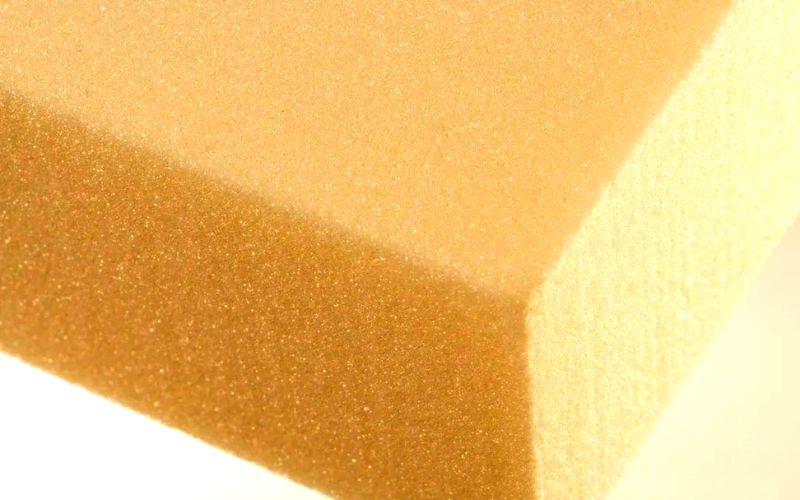
Polyurethane rigid foam, widely recognized in the industrial sector as PU rigid foam, is a highly versatile and structurally robust cross-linked polymer produced by the reaction between liquid polyols and liquid isocyanates. Using specialized blowing agents makes polyurethane rigid foam production distinct from that of many other standard plastics, which are produced primarily through simple thermal extrusion or injection molding of solid petrochemical pellets.
Despite the unique reactive liquid raw materials, polyurethane rigid foam can be processed with highly automated dispensing equipment, making manufacturing relatively cost-efficient for large-scale industrial operations. Polyurethane rigid foam is one of the most widely produced cellular plastics worldwide and offers vastly superior thermal insulation compared to expanded polystyrene (EPS), extruded polystyrene (XPS), or mineral wool, while being exceptionally lightweight. It provides critical structural support and energy efficiency to modern buildings and appliances, proving its value as a foundational material for future sustainable development.
How is it made?
Polyurethane rigid foam is a type of thermosetting polymer made from carefully blending a specific polyol resin with a reactive diisocyanate or polymeric isocyanate. The chemical compounds in these reactive liquid materials are vigorously mixed and formed into a rapidly expanding cellular plastic, which is then cured into solid polyurethane rigid foam.
During this chemical reaction, specialized blowing agents are introduced to create the closed-cell structure that gives the foam its insulating properties. Historically, these blowing agents included fluorocarbons, but modern formulations use hydrocarbons such as cyclopentane or water-blown systems to minimize environmental impact. The heat generated by the exothermic reaction causes the blowing agent to vaporize, expanding the liquid mixture into a rigid foam that fills molds or completely covers surfaces.
More detailed information on polyurethane rigid foam production methods is provided below.
What is it Used For?
The exceptional material properties of polyurethane rigid foam make it well-suited for manufacturing insulated building panels, commercial roofing systems, and heavy-duty refrigeration units, including domestic refrigerators, commercial freezers, and refrigerated transport trucks designed to maintain strict cold-chain temperatures.
Polyurethane rigid foam can be used as a structural reinforcement material because it bonds strongly to metal, wood, and concrete during expansion. This ease of adhesion and expansion also makes polyurethane rigid foam suitable for specialized spray foam insulation applications in residential and commercial construction.
However, many types of polyurethane rigid foam have specific temperature tolerances, making them unsuitable for applications involving direct exposure to open flames or continuous, extreme high-heat environments without the addition of specialized thermal barriers or chemical fire retardants.
Is it Environmentally Friendly?
Polyurethane rigid foam production creates materials that dramatically reduce global energy consumption during their functional lifespan, often saving far more energy in heating and cooling applications than is used to manufacture the chemicals. It can also remain environmentally manageable if the correct end-of-life scenario is carefully followed by industrial recycling facilities.
However, the rate of natural degradation is very slow at ambient temperatures, with studies showing that there is virtually no degradation over several decades when the material is buried in standard landfills or exposed to mild environmental conditions.
However, polyurethane rigid foam can be degraded by chemical glycolysis, thermal degradation, or photodegradation:
- Glycolysis: The molecular structure is broken down by treating the foam with glycols at high temperatures to recover the original polyol components.
- Thermal Degradation: This process produces various chemical compounds by breaking urethane bonds when exposed to extreme heat in oxygen-free environments.
- Photodegradation: UV radiation causes surface degradation, particularly where polyurethane rigid foam is exposed to direct sunlight without protective coatings.
There are currently four common end-of-life scenarios for polyurethane rigid foam:
- Recycling
This is either chemical or mechanical. Waste material can contain contaminants, but polyurethane rigid foam can be chemically recycled via glycolysis or hydrolysis to produce recovered polyols that can then be manufactured into virgin foam. Polyurethane rigid foam can also be mechanically recycled by grinding it into a fine powder for use as a filler in new polymer products. - Composting
Standard polyurethane rigid foam is not compostable. However, emerging bio-based polyurethane rigid foams are being researched to allow for eventual chemical hydrolysis followed by specialized microbial digestion. - Incineration
End-of-life polyurethane rigid foam can be incinerated in waste-to-energy plants, producing significant thermal energy to generate electricity, while advanced scrubbers capture any harmful emissions. - Landfill
While polyurethane rigid foam can go to a landfill, this is the least environmentally friendly option due to the material’s incredibly slow degradation rates at ambient temperatures and the sheer volume of space the cellular foam occupies.
Types
Due to the highly adaptable nature of polyurethane chemistry, there are several distinct forms of rigid foam. These include high-density structural foams, which come from the rapid polymerization of heavily cross-linked polyether polyols and polymeric MDI.
In addition, while polyurethane rigid foam can be produced from various petrochemical feedstocks, it can also be enhanced by adding other materials to provide radically different properties. This is particularly true for specialized industrial foams, where additional materials allow the foam to be used in demanding acoustic or fire-rated applications.
There are many polyurethane rigid foam blends available, although adding heavy materials to the liquid mixture can make dispensing more difficult and even reduce the foam’s thermal properties. Using filler blends may also require altering the mixing temperature and pressure when pouring or spraying.
- High-Density Structural Foams
The polyurethane mixture is formulated to expand less, creating a dense, wood-like material. This can, for example, be used to provide molded furniture components with a highly durable structural core that mimics traditional carved wood. - Fire-Retardant Foams
Mixing polyurethane precursors with specialized chemicals, such as halogenated compounds or expandable graphite, can make the cured foam far more resistant to ignition and slow the spread of flames. - Bio-Based Foams
Polyurethane rigid foam can also be mixed with other materials and substances, including polyols derived from soy, castor, or rapeseed oil. Bio-based foams can also be equipped with specific catalyst packages to replicate the performance of traditional petroleum-based counterparts.
Properties
Polyurethane rigid foam is highly resistant to most common solvents, including dilute acids, alkalis, and aliphatic hydrocarbons. The physical and mechanical properties vary with the specific polymer formulation, ranging from a lightweight insulating core to a highly dense structural polymer with excellent compressive strength, a closed-cell content exceeding 90%, and a thermal conductivity as low as 0.020 W/m·K.
Heat-resistant polyurethane rigid foam can withstand continuous use at 100 °C, and its dimensional stability can be maintained at high humidity levels by adjusting the polymer cross-linking density and selecting appropriate blowing agents.
Adding nucleating agents, adjusting the isocyanate index, or forming sandwich composites with metal facings can all change the mechanical properties of polyurethane rigid foam. However, the basic mechanical properties of polyurethane rigid foam far exceed those of standard expanded polystyrene, offering superior thermal properties but requiring precise chemical processing.
The high surface adhesion energy of polyurethane rigid foam makes it ideal for continuous panel production. Polyurethane rigid foam cannot be easily solvent-welded once fully cured due to its thermosetting nature, while mechanical fasteners or specialized polyurethane adhesives are typically utilized to bond it to another surface. Mechanical cutting and shaping can be used as an effective sizing solution, making it a highly adaptable material for custom insulation jobs.
Here are the general properties of polyurethane rigid foam:
| Propiedad | Value |
|---|---|
| Closed Cell Content | > 90% |
| Densidad | 30 – 60 kg/m³ |
| Resistencia a la compresión | 150 – 300 kPa |
| Thermal Conductivity | 0.020 – 0.025 W/m·K |
| Water Absorption | < 2% by volume |
| Maximum Service Temperature | 100 °C (212 °F) |
Advantages
Polyurethane rigid foam provides several advantages over other materials, including:
- Superior thermal insulation properties that outperform almost all other commercial building materials.
- Incredibly lightweight yet offers massive structural rigidity to wall panels and refrigeration units.
- Safe for use in applications such as food storage facilities and domestic water heating tanks.
- Comes with a wide range of density and formulation options to provide different mechanical properties and physical strengths.
- Bonds seamlessly to wood, metal, and concrete during the expansion phase, eliminating the need for secondary adhesives.
Disadvantages
There are, however, some disadvantages to using polyurethane rigid foam, including:
- Environmental concerns regarding the disposal of thermosetting plastics in standard landfills.
- Comparatively high raw material costs when contrasted with cheaper expanded polystyrene products.
- Machine processing requires highly specialized plural-component proportioning equipment and strict temperature control.
- Potential health risks during the application process require the strict use of personal protective equipment to avoid isocyanate exposure.
- Vulnerable to UV degradation if left exposed to direct sunlight without protective coatings.
Production Methods
There are several industrial methods for producing usable polyurethane rigid foam with a high degree of cellular consistency. Polyether or polyester polyols and polymeric methylene diphenyl diisocyanate (pMDI) are the two main liquid components used for this process.
The most common method for creating polyurethane rigid foam panels is the continuous lamination process, which uses various amine and tin catalysts. The chemically catalyzed reaction tends to lead to rapid expansion of the polyurethane matrix, which traps the blowing-agent gas within millions of microscopic closed cells. This continuous process involves dispensing the reacting liquid onto a moving substrate, such as flexible paper or rigid steel, which then travels through a heated double-belt press to cure the material perfectly flat.
It is also possible to produce polyurethane rigid foam through discontinuous block molding or spray application. The discontinuous process is carried out by injecting the liquid mixture into a closed mold, at which point the expanding foam completely fills the complex cavity. This process generates massive internal pressure equivalent to the volume of the expanding gas. The mold needs to be tightly clamped to promote proper foam density and achieve high structural integrity. Spray applications involve heating and pressurizing the liquid components with a specialized spray gun, which react instantly upon contact with the target surface to achieve seamless, airtight building insulation.
Aplicaciones
Polyurethane rigid foam has a number of common uses, including commercial construction and food preservation. It is also widely used as an insulating core for continuous metal-insulated panels. Polyurethane rigid foam is popular for building envelopes as it can easily seal drafts, prevent moisture intrusion, and lower energy costs. A highly adaptable material, this cellular plastic works effectively across various climates, and there is no need for extensive structural support due to its lightweight. Another benefit is that polyurethane rigid foam performs better than many heavier traditional insulation materials and does not settle or sag over time.
Because polyurethane rigid foam provides unmatched thermal resistance, it is widely used in cold chain logistics, including refrigerated shipping containers, walk-in commercial freezers, insulated transport trucks, and cryogenic storage facilities. It ensures stable temperatures over long journeys, depending on the exact thickness of the material used. This means that these products can safely transport perishable food and sensitive medical vaccines across the globe without spoilage.
Polyurethane rigid foam, produced by injection molding or continuous pouring, is also used as a buoyant material in marine applications. It is used for floating docks, boat hull reinforcement, and offshore buoys. As a highly rigid core material, polyurethane rigid foam is widely used for automotive dashboard panels, lightweight vehicle doors, and sound-damping engine covers.
Future of Polyurethane Rigid Foam
Made increasingly from chemically recycled components and bio-based polyols, polyurethane rigid foam has many positives for the future, and with rising global energy prices, it is an ultra-efficient insulation material with massive financial benefits. Despite these positives, the thermosetting nature of polyurethane rigid foam, compared to easily melted thermoplastics like PET, means that end-of-life recycling has not been perfected in as many global markets yet.
The cost of producing bio-based polyurethane rigid foam has also decreased over the decades, but care is needed when handling the raw isocyanates, which require specialized industrial facilities capable of safely handling volatile chemicals. However, while this requires advanced chemical engineering, it is by far preferable to continue relying strictly on fossil-fuel-based polyols.
While polyurethane rigid foam is not quite a perfect zero-waste substance, the incredible energy savings it provides to homes and businesses, and its lower carbon emissions during its functional lifetime, mean it certainly has a vital place in the sustainable future of materials.
Conclusión
Used in a wide range of essential industrial applications, polyurethane rigid foam offers many mechanical and thermal advantages over other plastics – including significant energy efficiency benefits. Widely used for architectural insulation and as part of highly durable structural composites, polyurethane rigid foam is also heavily utilized in the critical food preservation and cold storage industries.