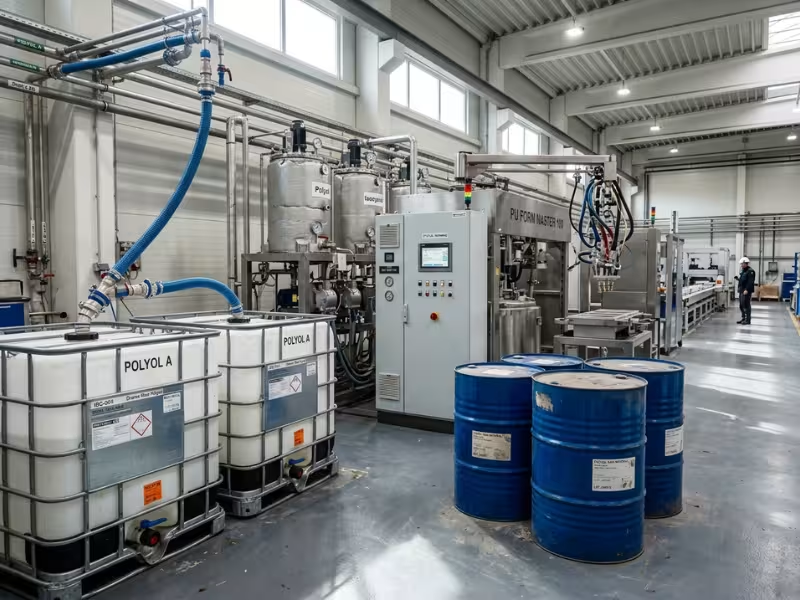
Polyols sit behind almost every polyurethane product. They shape flexible foam, rigid insulation, and CASE applications like coatings, adhesives, and sealants.
I work with procurement teams and PU processors across the industry. In 2025, their question goes beyond who makes polyols. They want to know which suppliers stay reliable, where prices are shifting, and whether bio-based grades are finally real.
Asian capacity keeps growing. Regional price gaps remain wide. Supply often feels less predictable than it did a few years ago.
This isn’t another supplier list. It shows you who matters, what’s changing, and how to choose.
What Polyol Manufacturers Actually Supply
“Polyol” sounds like one product, but it isn’t. Before you compare suppliers, you need to know which polyol family your process runs on.
Polyether vs. Polyester Polyols
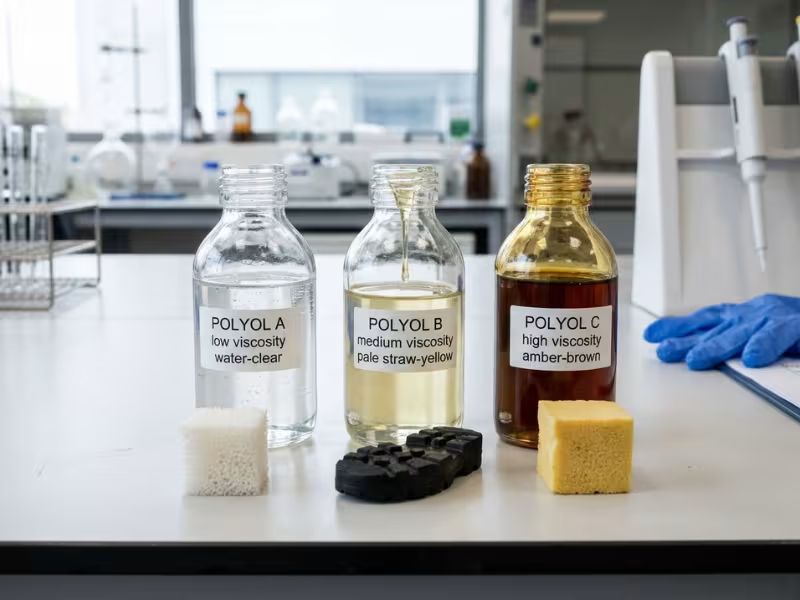
Polyether polyols make up most of the global volume. Producers build them mainly from propylene oxide. They resist moisture and stay flexible, so they dominate mattress foam, car seats, and many rigid insulation systems.
Polyester polyols usually handle oil, abrasion, and solvents better. You’ll find them in shoe soles, coatings, adhesives, and elastomers. They often cost more and can break down faster in humid conditions.
Aromatic polyester polyols have one main job: rigid insulation. Panel and boardstock makers choose them for fire performance and their strong fit with PIR foam.
Start with your end product. It tells you which suppliers belong on your shortlist.
Why Supplier Choice Matters More Than Many Buyers Expect
Two polyols with the same name and hydroxyl value can still run differently on your line. Small gaps in water content, viscosity, or reactivity can shift cream time and cell structure. On the shop floor, those shifts also show up in mixing stability and foam rise, which is why processors watch both their raw materials and the polyurethane foaming machine that meters them.
I’ve seen plants switch suppliers to save a few cents per kilo. They then lost more than that to scrap and rework.
Check these points before you approve a switch:
- Batch consistency: Ask for certificates of analysis from several lots, not just one.
- Technical support: A good supplier helps you adjust the formula when foam goes wrong.
- Lead time: Confirm real delivery times, including during peak season.
- Sustainability documents: More customers now ask for bio-based content or carbon footprint data.
Where the Global Polyol Supply Base Is Strongest in 2025
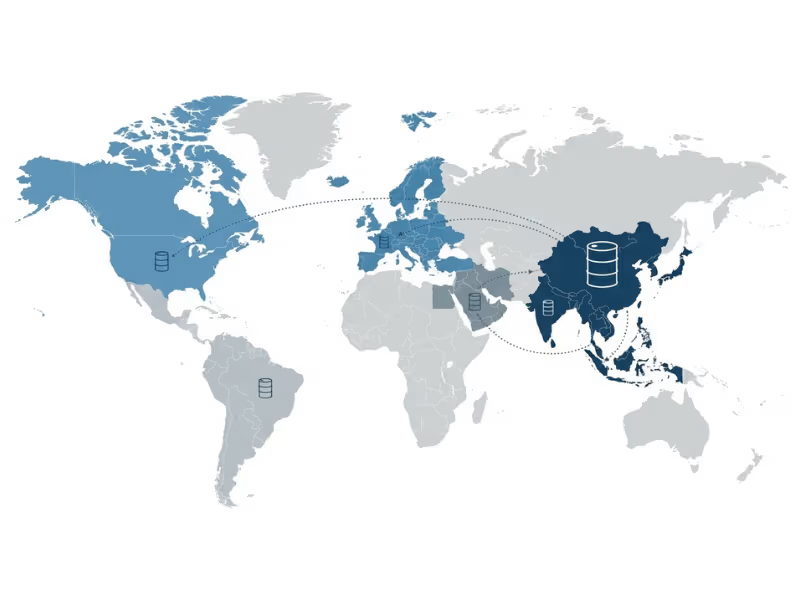
Polyol supply is not spread evenly. Each region has its own strengths, and those strengths shape your price, your lead time, and your risk. I look at regions the way a buyer should: who leads there, what they do well, and what that means for your next order.
Asia-Pacific: The Volume Center
China remains the largest production base for polyether polyol, and its producers continue to add capacity. Wanhua Chemical, Sinopec, and Bluestar Dongda are among the leading names. They run large plants and often price aggressively for export.
Japan and South Korea play a different game. Producers such as KPX Chemical and MCNS, the Mitsui Chemicals and SKC joint venture, tend to focus on specialty grades, tight specs, and steady quality rather than raw volume.
For buyers, Chinese supply often wins on price. But that price can move fast. Domestic oversupply can push export offers down. Then a plant outage or a new tariff can push them back up within weeks.
Plan for roughly 6 to 10 weeks of sea freight to Europe or the Americas. Keep safety stock if your line can’t stop. Ask Japanese or Korean suppliers for quotes when you need specialty performance and tight batch control more than the lowest cost.
North America: Integrated Supply and Feedstock Strength
North America relies heavily on integrated producers. Dow, Covestro, Huntsman, and BASF run large polyol operations, many of them along the US Gulf Coast. Stepan adds depth in aromatic polyester polyols for rigid insulation, while Lubrizol brings specialty strength in TPU and coatings materials.
Their edge starts upstream. Shale gas supports competitive propylene, which feeds propylene oxide. Many of these companies make PO themselves or source it close to their plants, so they control much of the cost from feedstock to finished polyol.
For buyers in the US, Canada, and Mexico, this usually means short transit by rail or truck. You also get local technical teams who can visit your plant when foam goes wrong. A delivery in days, not weeks, lets you run leaner inventory.
The trade-off is price. Domestic polyol often costs more than Asian imports. But once you add freight, duties, and the cost of a stopped line, that gap frequently shrinks.
Europe and Other Regions: Sustainability Pressure and Selective Growth
Europe competes on sustainability more than on cost. Covestro sells CO₂-based polyols under its cardyon brand. BASF offers biomass-balanced grades. Repsol produces polyols with recycled content from end-of-life foam.
High energy costs have pushed some producers to trim European capacity, so supply there can tighten quickly.
If your customers need lower-carbon or recycled-content claims, start your search in Europe. Ask for certification documents, not just marketing sheets.
The Middle East has the opposite profile. Sadara and SABIC use low-cost local feedstock to produce polyether polyols at scale. They serve regional buyers and ship competitive volumes to Asia, Africa, and Europe.
Latin America makes limited polyol of its own. Brazil and Mexico import much of what they use, mainly from the US and Asia. If you buy there, watch currency swings and port delays closely. Longer contracts with at least two suppliers from different regions can soften both risks.
What Is Changing in the Polyol Market in 2025
Supplier lists don’t change much from year to year. The forces behind your quotes do. These four shifts have the biggest effect on what you pay, what you can get, and how you should plan.
Price Pressure Still Starts With Feedstocks
Propylene oxide drives most of the cost of polyether polyol. When PO moves, your polyol quote usually follows within a few weeks.
MDI adds a second link. Many large producers sell both polyol and MDI, so they often price the two together. A tight MDI market can firm up polyol offers even when PO stays flat.
Regional gaps remain wide. New PO capacity in China has pushed many export polyol offers well below Western domestic prices.
Before you switch, compare landed cost, not ex-works price. Ask suppliers to index contracts to PO so you can see what drives each increase.
Bio-Based and Recycled-Content Polyols Are Moving Into Real Sourcing Decisions
A few years ago, buyers asked about green polyols out of curiosity. Now many ask because their customers require them.
Commercial options do exist. Covestro sells CO₂-based polyols. BASF and others offer mass-balanced grades with ISCC PLUS certification. Several specialists make recycled polyester polyols from PET or old foam.
Demand comes from two main places. Furniture, bedding, and footwear brands have carbon targets to meet. Green building programs also reward lower-carbon insulation.
Adoption still has limits:
- Cost: Expect a premium over standard grades.
- Volume: Supply remains small compared to fossil-based polyol.
- Claims: Mass balance doesn’t mean the molecule itself is bio-based.
Run a trial batch on your own line first. A new grade can react differently at the mix head, even when the data sheet looks similar. Then confirm that the certificate matches the claim your customer plans to make.
Consolidation Is Making Scale Matter More
Integrated majors make their own PO, and sometimes their own MDI. Smaller merchant producers buy feedstock on the open market. When margins shrink, the merchants tend to feel it first.
That pressure shows up in deals and closures. ADNOC’s acquisition of Covestro reshaped ownership of one of the largest PU players. High energy costs have also pushed several producers to shut or review older European units.
For buyers, fewer suppliers can mean less room to negotiate. It can also mean thinner technical service from producers who are cutting costs. Check the health of your supplier’s plant, not just its price sheet.
Demand Is Shifting by Application, Not Just by Region
Growth isn’t even, so your supplier’s priorities may not match yours.
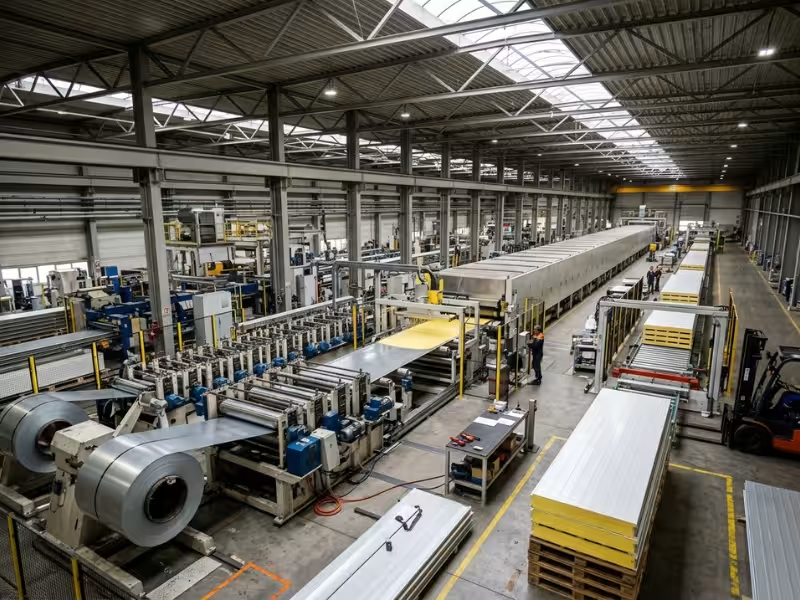
Rigid insulation stays strong. Stricter energy codes and cold-chain expansion keep panel and spray foam lines busy. For producers in this segment, steady polyol supply matters just as much as a well-tuned polyurethane sandwich panel line, because even small reactivity shifts can affect foam density and skin bonding across long panels.
Flexible foam moves with furniture, bedding, and car production. Those markets have been soft in many regions, which has freed up some polyether capacity and eased prices.
CASE grows steadily and tends to pay better margins. Many producers now push more R&D and attention toward coatings, adhesives, sealants, and elastomers.
If you run flexible foam, you may hold more buying power right now. If you make insulation, lock in supply early.
How to Compare Polyol Manufacturers in Practice
No single supplier fits every buyer. The right choice depends on your volume, your markets, and how much help your line needs. I sort candidates into two groups first. Then I run every one through the same checklist.
When Global Majors Make More Sense
Consider a major like Dow, BASF, Covestro, or Huntsman when you run several plants in different countries. One supplier can ship the same grade to Ohio, Poland, and Thailand. That keeps your formulas and machine settings stable across every site.
Breadth helps too. Majors carry polyether, polyester, and specialty grades, often with full systems. You can approve one vendor for several inputs and cut your qualification work.
Their compliance systems save time. REACH dossiers, local-language safety data sheets, and audit-ready quality records usually arrive without a chase.
Support is often the biggest reason. When foam collapses on a night shift, their application labs can help you trace the cause within hours, not weeks.
When Regional Suppliers Can Be the Better Choice
Regional producers often quote lower prices because they carry less overhead. They can also move faster.
Need a custom hydroxyl value or a two-drum trial? A regional plant will often say yes. A major may ask for a full truckload first.
Shorter routes cut freight costs and transit time. A plant a few hundred kilometers away can often refill your tank in two or three days. That lets you hold less stock.
Small foam shops, CASE formulators, and buyers running trials gain the most here. The trade-off is resilience. One plant means one point of failure, so ask about their backup plan for outages.
What to Verify Before You Approve a Supplier
Price gets a supplier onto your shortlist. These seven checks decide whether it stays there. The table shows why each one matters. The list below shows how to check it.
|
Checkpoint |
Why it matters |
|---|---|
|
Grade consistency |
Lot-to-lot drift changes reactivity, foam rise, and scrap rates |
|
Lead time reliability |
Late deliveries stop lines and force costly emergency buys |
|
MOQ |
Large minimums block trials and tie up cash in stock |
|
Documents and certification |
Missing paperwork can delay customs or fail customer audits |
|
Technical service |
Fast support shortens downtime when foam defects appear |
|
Sustainability data |
Customers increasingly need proof behind green claims |
|
Export experience |
Poor packaging or paperwork adds risk on long shipments |
Here’s how I verify each point:
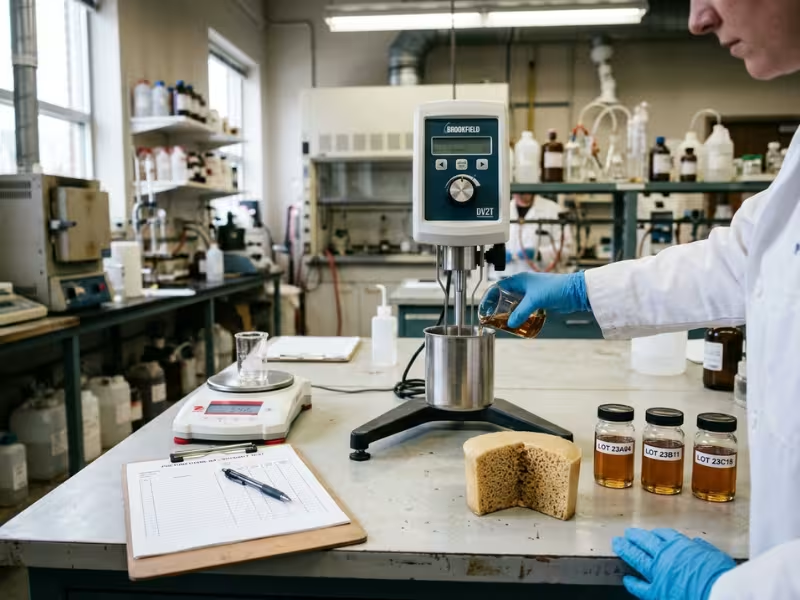
- Grade consistency: Request certificates of analysis from three to five recent lots. Compare OH value, water content, and viscosity. Then run a trial on your own line and equipment.
- Lead time reliability: Ask for their on-time delivery rate over the last 12 months, including peak season.
- MOQ: Confirm the minimum per order and per grade. Check whether they ship drums, IBCs, or bulk only.
- Documents and certification: Look for ISO 9001, REACH or TSCA status, a current SDS, and clean customs paperwork.
- Technical service: Ask who visits your plant and how quickly they respond.
- Sustainability data: Request ISCC PLUS certificates or product carbon footprint figures if your customers need them.
- Export experience: Ask for buyer references in your country and details on packaging for long voyages.
A supplier that passes all seven usually costs less over a full year than one that wins only on unit price.
How to Source Polyols More Safely in 2025
Safe sourcing starts with your biggest risk, not the lowest quote. Find the situation that matches your plant, and build your plan around it.
If You Buy Mainly on Price
Import offers from China or the Middle East often look much cheaper. That gap can shrink fast at your dock.
Add ocean freight, import duties, insurance, and port fees. Then add the cost of holding six to eight extra weeks of stock. A cheap spot cargo can also turn expensive if propylene oxide jumps before it ships.
Compare landed cost over three months, not a single quote.
If Supply Continuity Matters Most
Never let one plant decide whether your line runs. I advise most buyers to split volume between one global major and one regional producer. A split of around 70/30 works well for many plants.
The major brings steady quality and backup sites. The regional supplier brings speed when ocean freight stalls.
Qualify both grades on your line now. Approving a backup during a shortage usually takes far too long.
If Sustainability Claims Affect Your Customers
Your customer’s claim depends on your paperwork. Ask each supplier for three things:
- Bio-based or recycled content percentage
- The certification behind it, such as ISCC PLUS
- A product carbon footprint per kilogram
Check whether the figure comes from mass balance or physical content. Each one supports a very different marketing claim. Make sure the documents cover the exact grade you buy.
If Technical Service Affects Your Yield
A cheaper polyol can cost you more. If a new grade pushes your scrap rate from 2% to 5%, the savings can disappear.
Pick suppliers whose application engineers will visit your plant. They should help you adjust catalysts, water levels, or index, and check how the grade behaves under your actual mixing and metering conditions. Ask how fast they respond to a foam defect.
For molded seating, panels, or tight-tolerance parts, yield usually matters more than a few cents per kilo.
Questions Buyers Still Ask in 2025
These four questions come up in almost every sourcing review I join. Here are short, direct answers.
Who Are the Largest Polyol Manufacturers in 2025?
Dow, Covestro, BASF, and Huntsman lead in the West. They run integrated plants on several continents and offer broad portfolios. Wanhua Chemical leads in China and now competes globally on both scale and price. Sinopec, SABIC, and Sadara also ship large volumes.
For a shortlist, start with these names. Then add a regional producer close to your plant.
Which Region Produces the Most Polyols?
Asia-Pacific produces the most, and China holds the largest share. Chinese plants have added polyether capacity faster than local demand has grown. That surplus tends to push export offers lower and makes China a price benchmark for many buyers worldwide.
Are Bio-Based Polyols Available at Commercial Scale?
Yes, but volumes remain limited. Covestro sells CO₂-based polyols, and BASF offers mass-balanced grades. Several specialists make recycled polyester polyols.
Expect a price premium and often longer lead times. Most buyers start by blending a share into one product line. Check that the certificate supports the exact claim your customer wants to make.
Is Chinese Polyol Supply Reliable for Export Buyers?
That depends on the supplier, not the country. Top producers like Wanhua generally deliver consistent grades and handle export paperwork well. Smaller plants can vary more from lot to lot.
Logistics adds risk. Sea freight takes weeks, and port delays happen. Prices can also swing with tariffs and domestic demand.
Qualify grades on your own line, hold safety stock, and keep a backup supplier ready.
Where the Polyol Market Leaves Buyers in 2025
Asia-Pacific now sets the pace on volume. Chinese producers like Wanhua keep adding capacity, and their export offers shape price talks in many markets.
Western majors still earn their place. Dow, BASF, Covestro, and Huntsman bring integrated feedstock, clean compliance records, and engineers who show up when foam fails.
The bigger change is in how you buy. Price alone rarely wins the contract now. Backup supply, steady lead times, consistent grades, and solid sustainability documents carry real weight, because every weak link eventually shows up on your production line.
Review your supplier mix before the next contract cycle. Check where each grade comes from, who backs it up, and which documents your customers will ask for. Then rebalance before a shortage forces your hand.