

Many building owners watch their utility bills climb but rarely look at the roof. On a low-slope commercial building, the roof faces the sun all day. Every bit of heat it lets in makes your HVAC system work harder.
Aging roofs make it worse. Seams split, air slips through gaps, and wet insulation stops doing its job.
I work with facility managers who want to know whether spray foam roofing is worth the money. This guide skips the material lecture. It shows how SPF cuts energy costs, where it fits, and how to judge it for your building.
What Spray Foam Roofing Actually Does
Spray foam roofing builds insulation and waterproofing into one layer, right on your roof. Before we talk savings, here’s what actually goes up there.
How an SPF Roof System Works
The crew sprays two liquids through a heated proportioner. One side is isocyanate, and the other is polyol resin. In any polyurethane process, consistent mixing and metering decide foam quality, whether the foam ends up on a roof or inside a factory mold. That’s why PU processors pay close attention to the polyurethane foaming machine behind every shot.
On the roof, the two sides meet at the spray gun and expand up to about 30 times in seconds. The foam cures into a firm, closed-cell layer that bonds directly to the deck.
Most commercial roofs get 1 to 3 inches of foam. I often add thickness at low spots so the foam builds slope toward drains and reduces ponding.
Next comes an elastomeric coating, usually silicone, acrylic, or urethane. It shields the foam from UV and weather.
You end up with one seamless layer with no laps or fasteners. It works over metal, concrete, built-up roofing, or sound single-ply membranes.

Why Closed-Cell Foam Matters on Roofs
Roofing foam typically runs at about 2.5 to 3 lb/ft³. That density lets crews walk on it and helps it resist wind uplift.
Its sealed cells trap a gas that moves heat poorly. That gives you roughly R-6 to R-7 per inch, about twice what open-cell foam delivers.
Those same cells block water. A puncture usually lets moisture in at one spot instead of spreading it across the roof. Dry foam keeps its R-value, while wet board insulation can lose much of it.
Open-cell foam weighs about 0.5 lb/ft³ and acts more like a sponge. It absorbs water, crushes underfoot, and can’t hold up outdoors. On a commercial roof, insist on closed-cell, roofing-grade foam.
Why Spray Foam Roofing Can Lower Energy Bills
Spray foam doesn’t save energy through one feature. It stacks four advantages in a single layer: dense insulation, seamless coverage, a tight air seal, and a reflective surface.
When I walk a roof with a facility manager, I check each one separately. Each one blocks a different path your energy dollars take out of the building.
More Insulation in Less Space
Closed-cell SPF delivers roughly R-6 to R-7 per inch. Expanded polystyrene (EPS) board gives you about R-4 per inch. To reach R-20, you need about 3 inches of foam, compared to 5 inches of EPS.
That gap matters most on retrofits. Older commercial roofs often come with fixed limits:
- Parapet walls that leave little room above the roof surface
- Flashing heights at walls and curbs that codes and warranties require
- Rooftop door thresholds that a thick new assembly would block
- HVAC curbs that cost money to raise
Every inch you add can force changes to these details. Because SPF packs more R-value into each inch, you can often meet energy code targets without rebuilding the roof edge. On many projects, that alone keeps the budget on track.
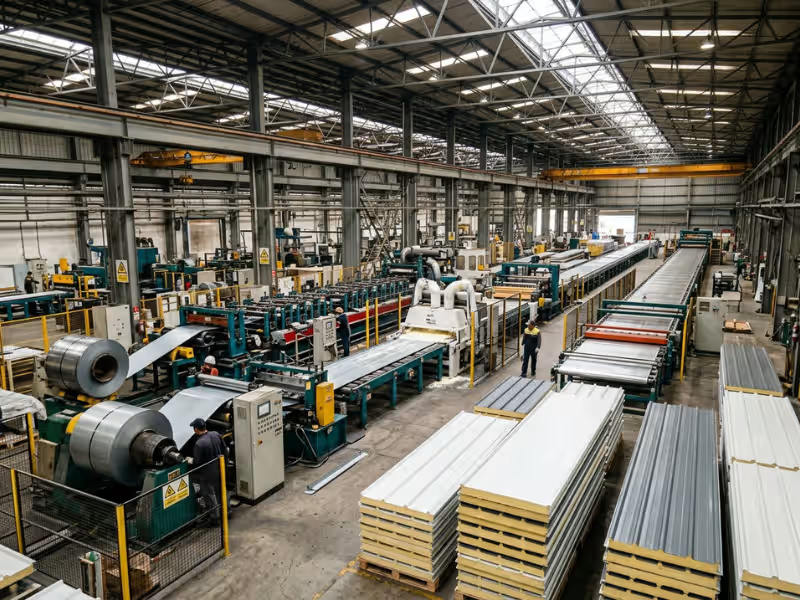
The same logic drives polyurethane use across the rest of the building envelope. Insulated wall and roof panels made on a polyurethane sandwich panel line rely on rigid PU foam for the same reason: high thermal performance without bulky thickness.
No Seams, No Fasteners, No Weak Spots
The R-value on a product label assumes perfect conditions. Real roofs fall short of that.
Board insulation goes down in panels, and the joints between them can open as the roof heats and cools. Mechanically attached systems also drive hundreds of metal fasteners through the insulation. Each fastener carries heat toward the deck.
Over a large roof, those small losses add up. The insulation you paid for and the insulation that actually works can differ by a noticeable margin.
SPF goes on as a liquid, fills the gaps, and cures into one continuous layer. It bonds to the deck by itself, so it needs no fasteners. When I compare bids, I ask for effective R-value, not just nominal R-value.
A Tighter Seal Around Every Penetration
Insulation slows heat that moves through the roof. Air leakage moves heat around it, and it can cost you just as much.
Commercial roofs leak air at the hardest details:
- Pipe and conduit penetrations
- HVAC curbs and vents
- Parapet walls and the roof-to-wall joint
- Skylights, drains, and odd-shaped transitions
Membrane crews flash each of these by hand, and every flashing adds one more seam that can fail. Spray foam wraps these details in the same pass as the rest of the roof. It expands into cracks and bonds to metal, wood, and masonry.
That seal matters year-round. In winter, warm indoor air rises and escapes through the roof. In summer, hot, humid air leaks in, and your cooling system has to remove both the heat and the moisture. Seal the roof, and your rooftop units cycle less and handle peak loads more easily.
A Cooler Surface Under the Summer Sun
The coating does more than protect the foam. It also controls how much solar heat the roof absorbs.
A black roof can reach roughly 150°F to 180°F on a summer afternoon. A white elastomeric coating often reflects 80% or more of sunlight when new. That keeps the surface much closer to the outdoor air temperature. The effect shows most in long cooling seasons and on large single-story buildings.
When you compare coatings, check Cool Roof Rating Council listings. Look at both the initial and the three-year aged solar reflectance. The aged number better shows what you’ll get after dirt and weathering.
Recoating every 10 to 15 years restores much of that reflectance. It also renews your weather protection, so one step maintains both your savings and your roof.
Where the Savings Usually Come From in Real Buildings
Spray foam doesn’t cut bills by the same amount on every roof. The biggest returns show up in a few building types I see again and again. If your building matches one or more of them, the numbers often work in your favor.
Old Roofs That Leak Air and Water
A 20-year-old membrane roof often fails quietly. Seams lift, flashings crack, and rain soaks the insulation below. Wet insulation may lose half or more of its R-value.
These roofs give SPF its best starting point. The foam seals split seams and penetrations in one pass. If an infrared scan shows wet zones, you remove only those sections and foam over the rest. You stop the leaks and restore the insulation in the same project.
Big, Flat Roofs in Hot Climates
A single-story warehouse, big-box store, or school puts most of its envelope on the roof. In Texas, Arizona, or Florida, that roof bakes for six months or more each year.
Here, the reflective coating and dense foam work together. They cut peak cooling loads, so rooftop units run shorter cycles. When a unit reaches replacement age, the lower load may also let you buy a smaller one.
Retrofits Where Tear-Off Gets Expensive
Tearing off an old roof costs you twice. You pay for labor and landfill fees, and you risk leaks while the deck sits open.
SPF can often go over a sound existing roof. It keeps the old insulation in place, adds new R-value on top, and lets tenants keep working below. Many codes allow only two roof layers, so have your contractor confirm what’s already up there.
A Quick Way to Estimate Payback
Start with the extra cost, not the full cost. Here’s a simple example.
A 40,000 sq ft distribution center spends $70,000 a year on heating and cooling. An SPF retrofit trims that by 15%, or about $10,500 a year. If the SPF option costs $50,000 more than a basic recover, it pays back that gap in under five years.
Run the same math with your own utility bills and a contractor’s energy model. Your climate, roof condition, and energy rates will shift the result.
How SPF Roofing Compares With Other Commercial Roofing Systems
Most owners I work with already have a membrane or built-up roof. So the real question isn’t whether SPF is good. It’s whether SPF beats what’s on your building now.
|
System |
Energy performance |
Seams |
Maintenance focus |
Retrofit fit |
|---|---|---|---|---|
|
SPF |
Continuous insulation plus air seal |
None |
Recoat every 10–15 years |
Strong, often over the old roof |
|
TPO/PVC |
Reflective, relies on boards below |
Heat-welded laps |
Seams and flashings |
Moderate |
|
EPDM |
Black surface absorbs heat |
Taped or glued laps |
Seam adhesion, shrinkage |
Moderate, needs prep |
|
BUR/Mod Bit |
Depends on insulation, dark unless coated |
Multiple plies and laps |
Cracks, blisters |
Heavy, often tear-off |
SPF vs. TPO or PVC
TPO and PVC start with a white, reflective surface, so they handle the sun well. The difference sits underneath.
These membranes rely on rigid boards for insulation. Crews fasten those boards to the deck, which leaves joints and metal fasteners across the roof. SPF combines insulation and air seal in one continuous layer.
Repairs differ too. A punctured membrane needs a cleaned, heat-welded patch, and water can travel under the sheet before you spot it. On foam, I fill the spot and recoat it. The water usually stays local.
On a simple roof with few penetrations, good TPO comes close. On a detail-heavy roof, SPF usually pulls ahead.
SPF vs. EPDM
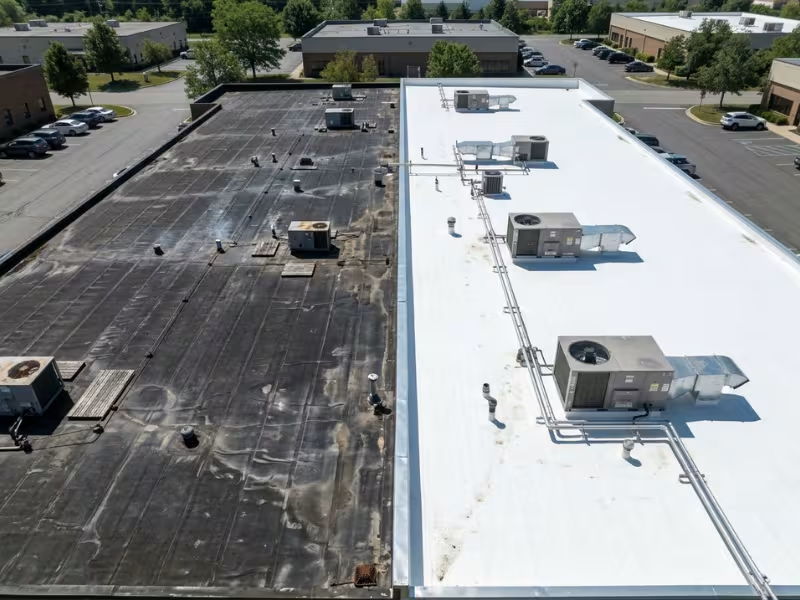
Standard EPDM is black. On a summer afternoon, it can run 50°F to 60°F hotter than a white coated roof. That heat pushes into the building and your cooling load.
Seams are the other weak point. EPDM laps depend on tape or adhesive. After years of heat cycling, I often find seams peeling at corners and around curbs.
Foam doesn’t bond well to EPDM, so crews usually add a cover board or remove the sheet first. That step adds cost. But you trade a hot, seamed roof for a reflective, seamless one.
SPF vs. BUR or Modified Bitumen
Weight comes first. A gravel-surfaced built-up roof can weigh 5 to 6 lb per square foot. A typical SPF roof adds well under 1 lb. On older steel decks, that difference can spare you a structural upgrade.
Disruption comes next. Replacing BUR often means tear-off, hot kettles or torches, strong odors, and open roof sections for days. If the existing roof stays dry and well adhered, SPF can often go right on top. Crews remove loose gravel and wet spots, then spray.
Renewability matters to many owners. Asphalt systems eventually wear out and head to the landfill. SPF renews with a fresh coat.
BUR still holds one edge. Its thick plies resist punctures under heavy foot traffic. On SPF, walkway pads along service routes close most of that gap.
What It Costs and How Long It Lasts
Price is the first question every owner asks me. A better question is what the roof costs you over 20 years.
What Drives the Installed Price
Many commercial SPF roofs fall in the range of $4 to $7 per square foot installed. Five factors decide where your project lands:
- Foam thickness: Each extra inch adds material and labor. Going from 1.5 to 3 inches can raise the foam portion of your bid sharply.
- Coating system: Silicone usually costs more than acrylic, but it handles ponding water better. Thicker coats and embedded granules add both cost and lifespan.
- Substrate condition: Crews must remove wet insulation first. An infrared scan before bidding helps prevent surprise change orders.
- Tear-off needs: Full removal can add $1 to $3 per square foot, plus disposal fees.
- Access and height: Tall buildings, tight sites, and crane lifts all push labor costs up.
Why Recoating Sets the Service Life
The foam rarely wears out. The coating does. Sun and weather slowly thin it, and once the foam is exposed, UV starts breaking it down.
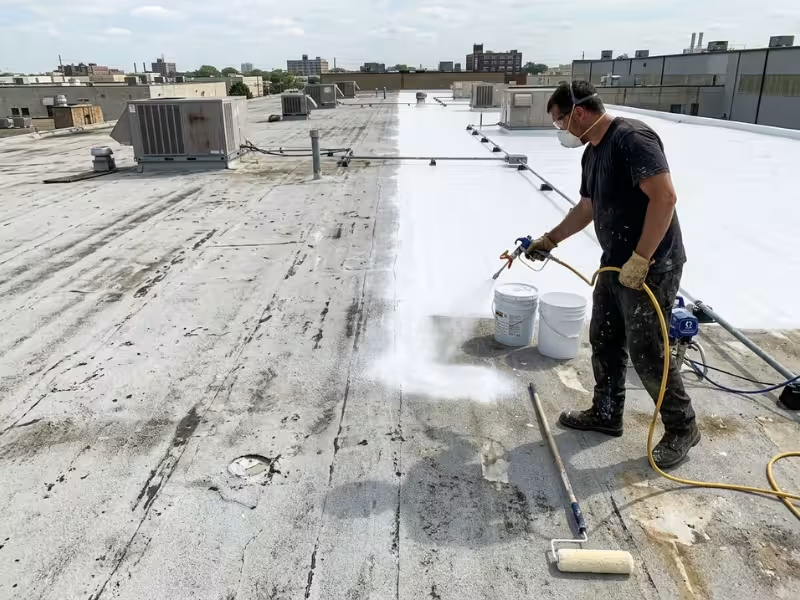
Recoat every 10 to 15 years, and a well-built SPF roof often lasts 20 to 30 years or more. Each recoat typically costs around $1.50 to $3 per square foot. The crew cleans the surface, repairs any damage, and applies a fresh layer.
You skip a full tear-off, keep waste out of the landfill, and leave your insulation in place.
What Maintenance Looks Like
Plan two inspections a year, in spring and fall. Add one after any major hailstorm. Your contractor checks for punctures, blisters, worn coating, and clogged drains.
Most small damage is a quick fix. Clean the spot, fill it with sealant or foam, and recoat it. Watch walkways and HVAC areas, where foot traffic hits hardest.
Skip the inspections, and a $50 repair can turn into a section of wet foam.
When Spray Foam Roofing Makes Sense, and When It Doesn’t
SPF isn’t the right answer for every roof. I turn down some projects because the building, the site, or the timing works against the foam. Here’s how I separate strong candidates from risky ones.
Where SPF Usually Pays Off
Low-slope roofs give SPF its best results. The foam can build slope where water ponds, and the reflective coating faces the sun all day.
Detail-heavy roofs gain even more. If your roof has dozens of pipes, curbs, and vents, foam seals them all in one pass.
Reroofing is another strong case. When the existing roof stays mostly dry and well attached, SPF can go right on top and skip the tear-off.
Then check your bills. Buildings with high cooling loads, long operating hours, or steep energy rates usually earn back the cost fastest.
Where You Should Slow Down
Overspray comes first. Wind can carry foam mist onto cars, windows, and rooftop air intakes. Near busy parking lots, hospitals, or food plants, ask for wind monitoring, screens, and shut-down intakes. Some sites simply need a different system.
Weather sets hard limits. Crews need a dry deck, moderate wind, and temperatures within the product’s range. A short or rainy season can stall the job for weeks.
A soaked roof needs more than foam. If wet insulation covers large areas, plan for partial or full tear-off. Heavy foot traffic also needs walkway pads or a granule-embedded coating.
Why the Crew Matters as Much as the Foam
SPF gets made on your roof, not in a factory. The crew’s skill decides the result. Before you sign, ask four things:
- Experience: How many commercial SPF roofs have they finished in the last three years? Do they hold manufacturer approval or SPFA accreditation?
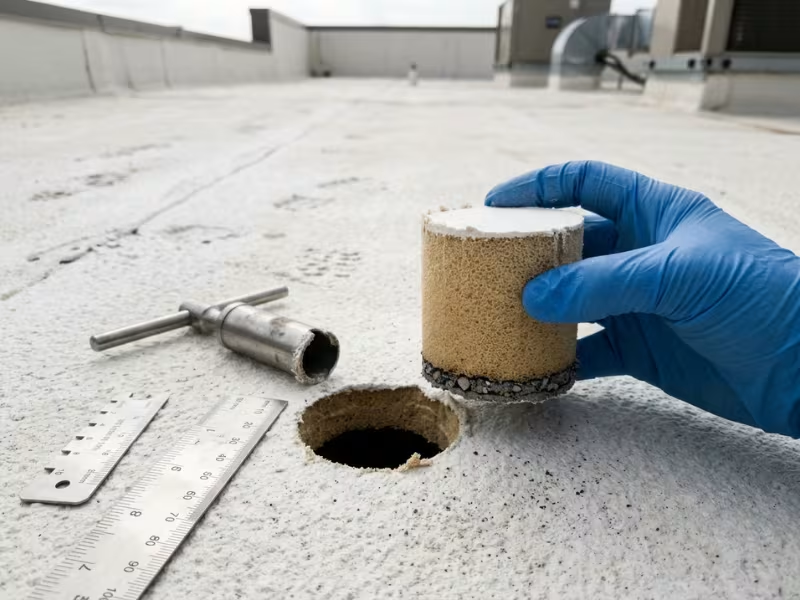
- Testing: Will they run an infrared scan and pull core samples before bidding?
- Coating details: Which coating, how many coats, and what dry film thickness? How will they verify it?
- Warranty: Who covers the foam, the coating, and the workmanship? What maintenance keeps the warranty valid?
Vague answers often lead to a roof that underperforms.
Common Questions About Spray Foam Roofing
Owners usually ask me the same four questions before they approve a bid. Here are straight answers.
How Much Can SPF Roofing Reduce Energy Bills?
Savings on the retrofits I review often fall in the range of 10% to 30% of heating and cooling costs. That covers HVAC spending, not your whole utility bill.
Buildings with wet insulation, leaky seams, or dark roofs tend to see the biggest drops. Ask for an energy model based on your actual bills, not a brochure number.
Can SPF Roofing Go Over an Existing Roof?
Often, yes. The old roof must stay mostly dry, well attached, and structurally sound. Crews remove wet sections, loose gravel, and blistered areas first.
Check the layer count too. If your building already has two roof coverings, plan for a tear-off.
How Long Does a Spray Foam Roof Last?
A well-installed SPF roof often lasts 20 to 30 years or more. The coating sets that timeline.
Recoat every 10 to 15 years to keep the foam protected from UV. Two inspections a year and quick spot repairs keep you at the longer end of that range.
Does SPF Roofing Work in All Climates?
It works in most climates, but the payoff changes. Hot, sunny regions gain the most because the reflective coating cuts cooling loads.
Cold climates still benefit from the high R-value and air seal. Humid areas need careful timing, since crews can’t spray on damp decks or dewy mornings.
Is Spray Foam Roofing Right for Your Building?
Spray foam doesn’t cut energy costs with one trick. Continuous insulation, a tight air seal, and a reflective coating work together year-round. Regular recoating keeps all three performing for decades.
Still, the payoff varies. Your roof’s current condition, your climate, your budget, and your contractor’s skill decide whether SPF earns its cost on your building.
So start with facts, not brochures. Schedule a roof assessment with an infrared scan and core samples. Ask for an energy savings estimate based on your actual utility bills. Then review the payback math line by line before you approve a bid.